
Travel Insurance for the USA and Safety Tips for Visitors

Find the Best Coverage for Your American Adventure
As the United States marks its 250th birthday in 2026, the country has become one of the world’s most iconic destinations. Many travelers visit to see where beloved movie, music, and TV magic happens. Others come for business, family, or special events and places.
Whatever brings you to the States, it’s important to be prepared so that you can enjoy a smooth trip. Here, we have compiled tailored advice on staying safe and healthy, managing immigration security, and why travel insurance for the USA is essential.

Find the Best International Travel Insurance
- Compare top-rated travel insurance providers
- Get quotes for Travel Medical, Trip Cancellation, and more
- Choose the best plan for your trip and budget
Do I Need Travel Insurance for the USA?
Depending on your visa type, travel insurance may be required for entry into the U.S. Visitors using a B-1 (business) or B-2 (tourist) visa are allowed to enter without coverage.
If your country has a visa waiver agreement with the U.S., you can also visit for short periods without insurance. However, certain visas, such as the J-1 exchange visa or teacher exchange visa, do require proof of travel health insurance that meets minimum coverage limits set by your program sponsor.
Even if you are from a visa waiver country and do not need a visa, you must still complete the Electronic System for Travel Authorization (ESTA). While travel insurance is not required for ESTA, it is strongly recommended, as medical care in the U.S. can be extremely costly.
Typical Medical Costs in the United States
The U.S. has the most expensive healthcare system in the world, and since it does not have reciprocal healthcare agreements with other countries, visitors must pay for any necessary care. Travel insurance for the USA helps protect you from potentially high costs during your visit.
To give you an idea, a forearm X-ray costs approximately $100–$300, while surgery to repair a fracture can cost $10,000–$35,000. Similarly, a basic consultation with a doctor can cost $100–$200, while specialists can charge $250–$500.

Insurance is especially important if you plan to participate in adventure activities or high-risk sports, such as skiing, hunting, white-water rafting, or rock climbing.
Even if you plan a safe trip, you may suffer an allergic reaction or an accident that requires a visit to the emergency room. Having coverage ensures you are protected and gives you peace of mind throughout.
We’ll Help You Choose the Right Plan
Compare top-rated travel insurance plans for your upcoming trip abroad.
Travel Insurance for Common Risks in the USA
People like to say that everything is bigger in America — and that includes the food, the fun, and the risks of travel.
Here are some risks specific to the USA to be mindful of:
- Crime and Theft: Americans invented Air Tags to track bags for a reason. According to the 2025 Global Peace Index, the United States is a riskier destination than Canada, China, and Australia. Vehicle theft rates are high, and luggage theft is a serious concern for travelers. Having a comprehensive policy that covers theft and loss, as well as vehicle cover, can offer peace of mind.
- Expensive Healthcare: Healthcare in the U.S. can quickly become expensive. Emergency hospital treatment is especially costly. The cost of treating a broken ankle starts from $7,000, not including medical transport or hospital time, while treatment for a heart attack can cost up to $34,000. Most visitors to the States consider travel health insurance essential to protect them from these costs.
- Snowstorms and Hurricanes: America’s big skies can hold some wild weather. In the East Coast, summer is hurricane season, while snowstorms often delay winter travel in the northern states. Cancellation coverage makes these delays manageable.
- Extreme Heat: Throughout most of the USA, summer temperatures are hotter than those in Europe. And, American deserts have some of the hottest temperatures on Earth. Visitors are often surprised by how quickly heat can affect them, leading to dehydration and heatstroke, further reasons for comprehensive health insurance.

Travel Insurance
What Does United States Travel Insurance Cover?
Travel insurance for the USA provides essential protection against unexpected expenses and disruptions, including both travel mishaps and medical emergencies.
As in most countries, key benefits typically include travel medical coverage for illness or injury, emergency medical evacuation to the nearest hospital or back home, and repatriation of remains in the event of death.
Comprehensive travel plans may also include coverage for trip cancellation or interruption, protection against lost, stolen, or delayed luggage, travel delays, and benefits to replace a lost or stolen passport or visa.

Some U.S. travel plans may also include benefits not commonly found in other countries, such as border entry protection (rare and usually limited to B-2 visa holders) and personal liability coverage, which protects you if you injure someone or damage property while in the U.S.
Exclusions and Limitations
While travel insurance provides essential protection while visiting the U.S., it’s important to understand what is not included in most policies. Some protections are completely excluded, while others may be limited or voided based on your behavior.
For example, most policies will not cover pre-existing medical conditions or non-emergency medical treatments, self-inflicted injuries, or alcohol- and drug-related incidents.
Similarly, injuries from high-risk activities, such as American football, ice hockey, skiing, and hunting, are usually excluded, unless you add an adventure sports rider.
Your policy will not cover any losses or delays resulting from illegal activity. In the U.S., this includes breaking rules at national parks, ignoring driving or parking fines, or failing to comply with airport security regulations.
Policies also typically have strict limitations on personal liability coverage and may exclude delays caused by incorrect or missing visas.

Planning to Visit National Parks? Pay attention to signs and park ranger instructions. Certain areas, such as grassy regions, mountain trails, and rivers, are off-limits and often marked accordingly. These rules are in place to protect both you and the environment, preventing pollution, the introduction of non-native flora and fauna to the area, and potential animal attacks.
How Much is Travel Insurance for the USA?
The cost of travel insurance for the USA depends on several factors, including your age, trip length, and the type of coverage you choose.
Other factors that influence price include the deductible (the amount you pay out of pocket before coverage starts), co-pays for specific services, the extent of emergency and trip disruption coverage, and any policy exclusions.
Travel insurance for the United States is often more expensive than for other destinations, due to the high cost of medical care in the country.
As a rough guide, a traveler in their 30s might pay around $5 per day, or $75 for a 15-day trip, for comprehensive coverage of up to $1 million. Conversely, a senior traveler over 60 could pay approximately $16–$17 per day, or about $250 for the same benefits and coverage.

Actual costs can vary depending on the insurer, coverage limits, and optional add-ons. Adding coverage for cruises or adventure activities can further increase the price.
It’s a good idea to compare multiple plans to find one that best fits your budget and coverage needs.
5 Tips for Choosing a Travel Plan for the USA
Choosing the right visitor insurance for the U.S. requires careful planning.
Use these five tips to make sure your coverage meets your needs:
- Assess Your Health Needs: Ensure the policy covers emergency medical care, any pre-existing conditions, and the high medical costs in the U.S.
- Consider Activities: Be honest about plans for extreme sports, adventure travel in national parks, or activities involving firearms. Standard medical insurance may not cover these, but an adventure coverage add-on can.
- Plan for Trip Length: Tailor your coverage to the duration of your trip. Longer trips may require more comprehensive coverage for extended medical needs or trip cancellations.
- Account for Destination-Specific Risks: Big cities like New York and Los Angeles face risks different from those in more remote areas, such as the mountains and deserts. Depending on where you go, you may encounter extreme weather, high crime, or natural disasters, such as storms, floods, tornadoes, and wildfires. Ensure your policy covers potential local issues and includes luggage protection based on the value of your travel gear.
- Understand Coverage Limits: Review the policy’s limits to ensure you have sufficient protection and avoid potentially hefty U.S. medical bills. Check details for emergency evacuation, medical treatment, and exclusions, and compare quotes from different insurers to find the best value.
Share Your Itinerary! Let your insurer know your travel plans to ensure you get the best coverage for all your adventures. For example, if you plan quick trips to nearby countries, such as Canada, Mexico, or Caribbean nations, which is common for cruise travelers, you may benefit from an international plan or one with special cruise coverage.
The Best Travel Insurance Plans for Visitors to the USA
Below are our recommendations for the best travel insurance for the USA, including coverage for extras such as personal liability.
The Best Medical Insurance for Travel to the USA
Medical insurance for U.S. visitors should provide robust coverage to match the high cost of healthcare in the country. The insurers listed below can also assist in navigating complex medical billing if needed.

Patriot Platinum Travel Insurance
- Maximum limits up to $8,000,000
- IMG pays 100% of medical expenses in-network
- Evacuation due to Natural Disasters & Political Unrest

Safe Travels USA
- Designed for non-U.S. citizens traveling to the U.S. and other countries
- Includes comprehensive medical, evacuation, & repatriation coverage
- Coverage from 5 days to 364 days – extensions are available

Atlas Travel Insurance
- Emergency medical, evacuation, and repatriation benefits
- Choose between basic or more extensive coverage
- Meets Schengen visa insurance requirements
Preparation for Your Trip to the USA
Many travelers wonder, “Is it safe to travel to the U.S.?” The answer is yes, though it may be slightly less safe than in recent years.
According to the 2025 Global Peace Index, the U.S. ranks 128th out of 163 countries in terms of safety.
With this in mind, it’s essential to plan ahead for your health and personal safety during your visit.
Medical Preparation for Travel to the USA
It’s worth noting that U.S. residents who can afford it typically rely on private health insurance to cover their healthcare costs. As of 2025, publicly funded healthcare is minimal and generally available only to U.S. citizens.
If you need healthcare of any kind as an international visitor, whether for a routine doctor’s visit or emergency care, you will likely face significant out-of-pocket expenses. As mentioned, travel insurance can help lower these costs.
Rent, Don’t Buy! Travelers to the U.S. can rent medical equipment like CPAP machines, insulin support devices, and mobility aids. Renting lets you travel lighter and ensures compatibility with U.S. electrical standards. Some companies even offer cruise rentals from U.S. ports. Check online for availability, but note that travel insurance usually doesn’t cover rental costs.
What Vaccinations Do I Need for Travel to the USA?
According to the Centers for Disease Control (CDC), “There are no vaccination requirements for visitors to the U.S., and U.S. residents traveling abroad do not need any vaccines to reenter the United States.”
However, it may be prudent to have the usual precautionary vaccines, including Hepatitis, Polio, MMR (Mumps, Measles, and Rubella), and Tetanus.

You and anyone traveling with you should also be vaccinated against any current outbreaks, such as the measles outbreak in the U.S. in March 2025.
For up-to-date information on U.S.-based infectious disease outbreaks, refer to the CDC’s Current Outbreak List.
How to Bring Medications to the United States
Non-U.S. citizens may bring a 90-day supply of personal medications, accompanied by a valid prescription or doctor’s note in English.
Medications should remain in their original containers, and travelers must follow TSA and U.S. Customs and Border Protection guidelines.
Not all medications are approved for use in the United States, so check the DEA list of controlled substances to confirm specific items.
Rules for Narcotics or Stimulant Medications
The U.S. strictly regulates certain medicines under the Controlled Substances Act, which is overseen by the Drug Enforcement Administration (DEA).
Some narcotics and stimulants commonly used in other countries are allowed in the U.S, but under strict rules. These include:
- Oxycodone (Schedule II narcotic)
- Morphine (Schedule II narcotic)
- Codeine (Schedule II narcotic)
- Tramadol (Schedule II narcotic)
- Amphetamine salts (Schedule II stimulant used in Adderall)
- Methylphenidate (Schedule II stimulant used in Ritalin)
If there is a medical necessity for you to have these substances with you, they should be in their original packaging and accompanied by a prescription and a note from your doctor.
Banned and Restricted Substances
As with many other countries, certain drugs and substances are completely banned in the U.S. You should not bring these items into the country, even if they are legal in your home country, as you could face severe penalties.
Examples include:
- MDMA (Ecstasy/Molly)
- LSD
- Heroin
- Fentanyl (illegal forms)
- Rohypnol
- GHB
It is important to note that cannabis is technically illegal under federal law, although 49 states have legalized it for medicinal use, and 24 states, including New York, California, New Jersey, and Nevada, allow recreational use.
Therefore, travelers should avoid carrying or using cannabis while in the U.S.
How to Access Medical Care as a Visitor
If you need same-day care while visiting the U.S., you have several options. For non-emergency issues, you can visit an urgent care clinic, a doctor’s office, or a pharmacy clinic.
In many states, large pharmacy chains, such as CVS or Duane Reade, operate clinics staffed by nurse practitioners. Telehealth appointments are also widely available and are typically paid at the time of booking.
For true emergencies, dial 911 or go to a hospital emergency room. Emergency rooms in the U.S. are required to accept patients, but keep in mind that you will receive a bill upon discharge.
Watch Out for State Laws! In some states, such as Pennsylvania, specific laws (including the Filial Support Law) could potentially make relatives financially responsible for unpaid medical bills, though this is rare and usually applies to U.S. residents. To avoid unexpected costs, ensure you and your visiting relatives have adequate coverage.

US Travel Advisories and Alerts
Check these official government sources for any travel advisories related to the U.S.:
- Government of Canada: United States Travel Advice: Advisory page for Canadians, including information on health and safety, visas, and natural disasters.
- Gov.UK Foreign Travel Advice: Advice for UK citizens that covers information about staying healthy and safe in the U.S., entry and exit requirements, and practical information for emergencies.
- France Diplomatie: Practical, up-to-date advice for French citizens, including current news, health and safety, and more.
- Smartraveller.gove.au (Australia): Safety and security information for Australian citizens, including health, safety, local laws, and local contacts.
- New Zealand Government SafeTravel: Detailed safety and travel advisories for New Zealand citizens, covering entry processes, terrorism and civil unrest, natural hazards, and regional health advice.
- Gobierno de México Guía de Viaje: Detailed advice for citizens of Mexico, including information about travel, safety, and even mental health.

Emergency Contact Information for the USA
The United States has a well-organized emergency system, and with a bit of preparation, you can access help quickly when needed.
All emergency services, including police, fire, and ambulance, can be reached by dialing 911. When you call, be ready to provide:
- The location of the emergency
- The type of emergency
- The phone number you are calling from
- Details of the emergency
The call taker will guide you through the next steps. You can learn more about this service at 911.gov.
Embassies in the USA
Your nation’s embassy can assist with lost documents, visa extensions, and other consular services. Many also offer support in other U.S. cities.
Key embassies include:
Canadian Embassy in Washington, D.C.
Phone: 202-682-1740
Address: 501 Pennsylvania Avenue NW, 3rd Floor, Washington, D.C. 20001
British Embassy in Washington, D.C.
Phone: 202-588-6500
Address: 3100 Massachusetts Ave NW, Washington, D.C. 20008
French Embassy in Washington, D.C.
Phone: 202-944-6000
Address: 4101 Reservoir Rd NW, Washington, D.C. 20007
Australian Embassy in Washington, D.C.
Phone: 202-797-3000
Address: Scott Circle, 1601 Massachusetts Ave NW, Washington, D.C. 20036
New Zealand Embassy in Washington, D.C.
Phone: 202-328-4800
Address: 37 Observatory Circle NW, Washington, D.C. 20008
Embassy of Mexico, Washington, D.C.
Phone: 202-728-1600
Address: 1911 Pennsylvania Avenue NW, Washington, D.C. 20006
10 US Travel Safety Tips
Whether you’re visiting iconic attractions like Disney parks or exploring vibrant urban neighborhoods, staying safe in the U.S. is essential.
Here’s how to enjoy your trip while avoiding common risks:
1. Be Courteous at Customs
You’ll encounter a range of procedures and staff when entering the United States. Your passports and visas will be checked, and your luggage and person scanned for security.
These checks and scans may be more thorough than in your home country. They may also vary across locations, depending on security alerts and available technology.
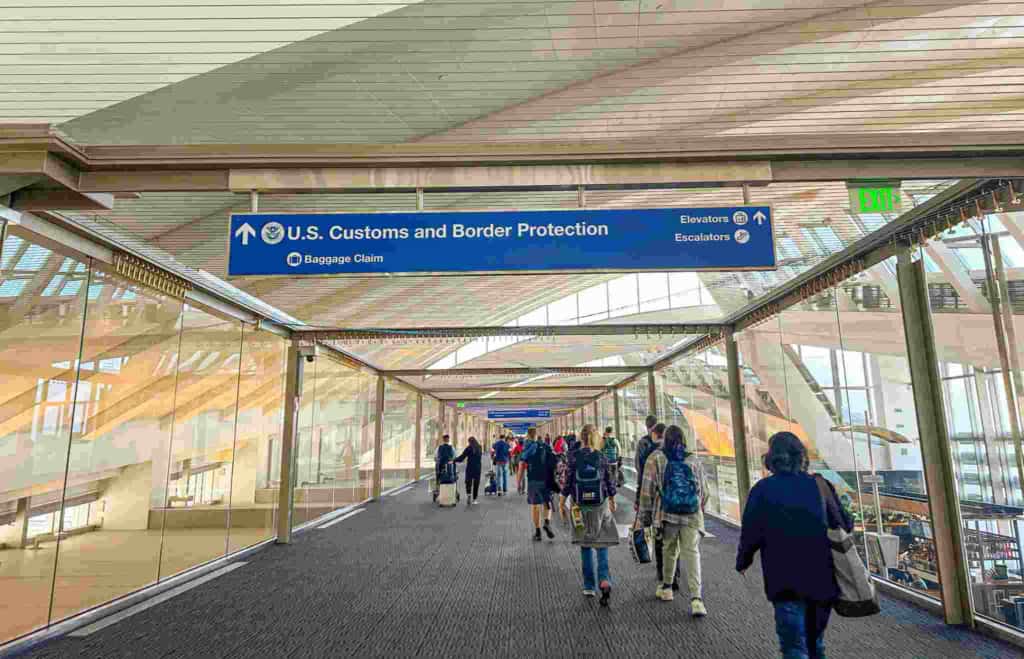
Stay patient and courteous. You may be asked to provide information about the purpose of your visit, where you are staying, and when you plan to depart.
Consider bringing printouts with these details, such as hotel reservations, to ensure a smooth process. And always answer honestly. If you’re concerned about phone and laptop data, read about device security at U.S. Customs.
2. Guard Your Valuables and Technology
There may be more casual theft in the U.S. than in your home country. It’s almost a rite of passage for a tourist to have a bag or phone stolen in New York City!
Don’t be that tourist – look after your valuables. This includes carrying bags, wallets, and phones securely and keeping them in your line of sight.
You can keep valuables, such as extra cash and your passport, in your hotel safe; however, it’s advisable to keep a copy of your passport handy. When you’re driving, put your luggage in your car trunk, keep your valuables out of sight, and always lock your car.
3. Follow Alcohol Guidelines
Alcohol consumption is more regulated in the United States than in many parts of the world. Drinking is prohibited for anyone under 21 years old.
It’s common for servers to request identification from patrons of any age – even at a concert or basketball game. For the most part, you cannot drink in public areas such as streets and parks.
4. Drive and Park Within the Law
Check the rules and laws around driving in the specific US states you visit, as these can vary. There can be stiff penalties for traffic violations. If you park illegally in a U.S. city, local authorities may tow your rented car, impound it, or clamp it.
You’ll spend time and money to get on the road again – and your difficulties won’t be covered by travel insurance.
5. Be Street Smart
Urban and remote locations in the U.S. can both be risky. But use your common sense. Avoid dark streets, alleyways, and areas where homeless people are encamped.
Consider doing a quick search of specific neighborhoods to avoid in the cities you’re visiting. Don’t go to strangers’ homes for late-night parties or encounters. And when you’re in a parking lot, keep your car doors locked until you’re ready to get out.
6. Plan Bathroom Breaks
Finding a public restroom in cities like New York and Los Angeles can be difficult, and restaurants are not obliged to let non-customers use their facilities.
Use restrooms when you can – most cafes will let you if you purchase a bottle of water – and consider using a restroom-finding app on your phone.
7. Watch for Extremes of Weather
The United States includes nearly every kind of ecosystem. Depending on the time of year and your destination, you may need to dress and plan for intense heat or deep winter chill.
Listen to weather warnings and climate advisories for each state you visit. If you need to cancel travel due to wildfires, hurricanes, or other extreme conditions, trip cancellation insurance can help cover your costs.
8. Prepare for Long Drives
Many visitors to the USA want a classic American road trip, but what they don’t realise is that it’s a vast country, and road trips can be far longer than they’re used to. Check your drive times before you leave.
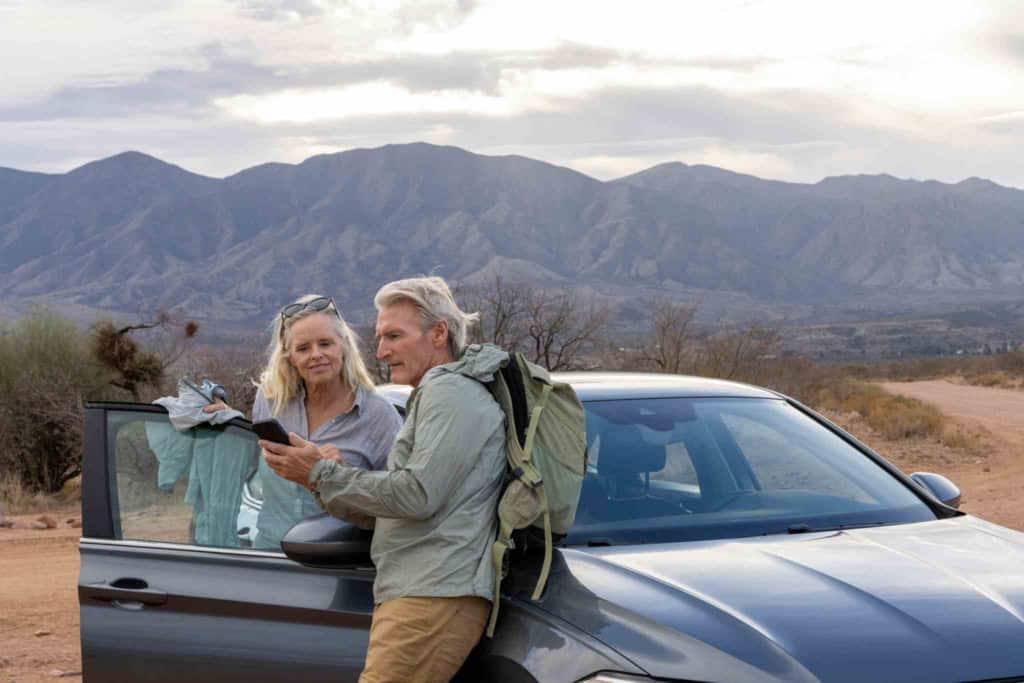
You may be on the road for a long time, with few rest stops. Some popular road trips can take you across arid areas or wilderness. Bring extra water, food, and gasoline with you, and let someone know about your travel plans.
Ensure you have comprehensive vehicle insurance to cover any potential accidents.
9. Take Care in the Great Outdoors
Exploring the great outdoors is one of the most popular activities for visitors to the United States. Prepare for outdoor adventures based on the location and climate.
The National Park Service provides safety guides for high-risk locations, such as Death Valley National Park. Double-check that your insurance covers your activities and consult with a park ranger or beach lifeguard to discuss safety precautions.
10. Consider Your Own Personal Security Requirements
The USA has increased its measures to reduce illegal immigration. At times, these measures affect lawful travelers. If you are coming from a country under immigration scrutiny, ensure that all your visas and travel information are in order.
Monitor your home country’s travel advisories. Consider contacting a personal safety service in both the U.S. and your home country – share your detailed itinerary with them.
Travelers concerned about their safety due to religion, ethnicity, or gender will find valuable resources from the Southern Poverty Law Center and the American Civil Liberties Union.
Stay Safe While Exploring America
Each visitor to the United States has their own unique journey, whether it’s exploring iconic national parks, discovering Native American culture, or enjoying the energy of cities from New York to Los Angeles.
From savoring pizza in New York, listening to jazz in New Orleans, or experiencing Las Vegas nightlife, to connecting at local events, every adventure is different.
By staying prepared, aware of your surroundings, and taking simple safety precautions, you can navigate challenges confidently and focus on what matters most: creating memorable experiences. With thoughtful planning, your trip can be exciting, safe, and truly unforgettable.
Don’t forget to secure the right coverage to protect your health and peace of mind while exploring the U.S.
Find the Best International Travel Insurance
- Compare top-rated travel insurance providers
- Get quotes for Travel Medical, Trip Cancellation, and more
- Choose the best plan for your trip and budget
Frequently Asked Questions
-
Yes, you can. Use your departure date as the start date for your insurance, and your return date to your home country as the end date.
-
No, travel insurance is not mandatory for entry on a tourist visa or under the visa waiver program. However, some other visas may require proof of travel health coverage.
-
Most travelers need to complete an Electronic System for Travel Authorization (ESTA). Unless your country has a visa waiver agreement with the U.S, you may also require a visa.
-
You may need medical evacuation within the United States if you have an emergency in a remote or rural area. You may also need it to return to your home country. Both can be very expensive, so be sure to check your travel policy for medical evacuation coverage.
-
It depends on your trip. Medical costs in the U.S. can be high; therefore, comprehensive coverage is recommended for any medical emergency. You may also want extra coverage if you plan to engage in adventure activities or take a cruise.