How Travel Can Boost Your Mental Health
Discover how travel boosts mental health by reducing stress, improving mood, and refreshing your mind with new experiences and perspectives.

International medical cover for expats and their families.
Medical and trip cancellation coverage for international travel.
Life insurance for globally mobile individuals living or working abroad.
Comprehensive benefits for international teams.
Insights on international relocation and global mobility.
Download our brochures or follow us on socials.
Most Popular Country Guides
Healthcare, insurance, and living insights to plan life and travel in each destination.
Healthcare, safety, and practical guidance for living abroad.
Tips and guidance for safer, smarter international travel.
Resources for global mobility, HR, and international teams.
Popular and recently published guides from our team.
Learn how to protect yourself from malaria with practical prevention steps, antimalarial guidance, and expert travel advice.
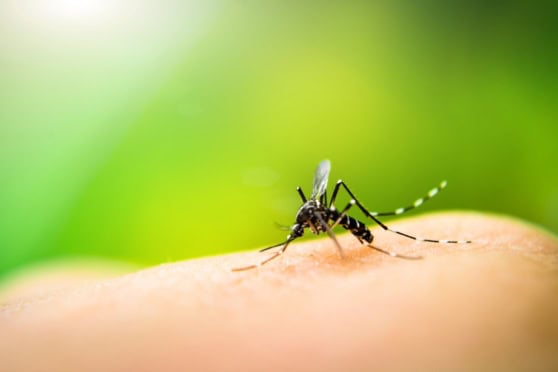
Every year, there are more than 200 million cases of malaria worldwide. This debilitating illness, transmitted by mosquitoes, causes those infected to experience severe flu-like symptoms. They include high fever and chills, headaches, nausea, vomiting, abdominal pain, intense sweating, and tremendous fatigue. Patients are unable to work, support their families, and contribute economically to their communities when they are ill and in recovery. And that isn’t the worst of it. In 2017, there were 435,000 deaths from malaria.
In short, it’s a global health crisis, a socio-economic calamity, and a source of fear and frustration for travelers. Thankfully, there have been tremendous strides in the fight to improve malaria prevention. There are several easy steps travelers can take to minimize their risk and exposure.

Find the Best International Travel Insurance
Remarkably, over the past decade, dozens of countries have been certified as malaria-free by the World Health Organization. However, there is still a long way to go.
Malaria is found in more than 100 countries. And it is most strongly concentrated in tropical regions. This includes large areas of Africa and Asia, as well as Central and South America, Haiti and the Dominican Republic, parts of the Middle East, and some Pacific islands. 70% of malaria cases are found in just 11 countries, 10 in Africa plus India.
All travelers visiting malarial zones are at risk of contracting malaria. However, some population groups are at considerably higher risk of developing severe disease.
These include pregnant women, infants and children under 5, patients with HIV/AIDS, and those who are immunocompromised, such as cancer patients.
As well, refugees and economic migrants are more susceptible to malaria. This population has limited access to preventive, diagnostic, and treatment services.
In particular, according to the CDC, malaria in pregnancy increases the risk of maternal and fetal anemia, stillbirth, spontaneous abortion, low birth weight, and neonatal death.
Pregnant travelers who are headed to a malaria zone need to speak with a travel medicine physician before they go.
What are the symptoms of Malaria? The person with malaria will typically exhibit some or all of the following symptoms:
Additional symptoms of a Malarial infection include:
Malaria signs and symptoms typically begin within a few weeks after being bitten by an infected mosquito. However, some types of malaria parasites can lie dormant in your body for up to a year.” (Mayo Clinic)
Anti-malarial medication can be a lifesaver – literally. But obtaining it isn’t as simple as heading to the pharmacy.
Travelers should schedule an appointment with a travel medicine clinic. Most family doctors and general practitioners won’t prescribe it. That’s because there’s no single medication to prescribe.
There are multiple antimalarial medications available on the market. The best medication can depend on the region you’re traveling to.
It can also depend on your health history and even your gender. Some antimalarials are strongly contraindicated for people with certain health conditions, including a history of depression.
Another good reason not to put off that appointment with the travel clinic? Some antimalarial medication requires you to start taking them well before you enter the malaria zone. You want to have plenty of time.
Three simple preventive steps go a long way in preventing mosquito bites. The first is to wear long, loose clothing.
Preferably, the clothing is treated with permethrin for added protection. Additionally, pale, neutral colors are ideal, as they both minimize heat and deter flies.
Long, loose clothing is also a great way to minimize sun exposure and ensure you’re appropriately attired in countries that encourage modest clothing.
The second is to use a bug repellent that contains DEET. Unfortunately, all-natural bug repellents aren’t very effective against malaria-spreading mosquitoes.
DEET-based formulas are the most effective. In affected areas, many hotels also provide a spray repellent designed to treat your room.
The third is to sleep underneath a mosquito net. These airy, lightweight nets keep mosquitoes and other critters away from you as you sleep.
However, you need to use them correctly. The nets should be completely tucked in around the mattress to ensure that mosquitoes don’t find a way in.
In lieu of a net, running fans or air conditioners at full capacity can help deter mosquitoes from biting.

Travel Insurance
Ask any veteran traveler about malaria prevention, and you’re likely to hear a wide variety of responses, each more improbable than the last. There’s very little scientific evidence to support the claims that any of these methods work.
Therefore, when you hear people talk about home remedies, consider them with a grain of salt. Some common ‘remedies’ include:
Promising news is on the horizon! There IS a malaria vaccine that is slowly being implemented in South-East Africa.
The vaccination program is being gradually rolled out in select regions of Kenya in 2019, building on the success of the program’s launch in Ghana and Malawi.
However, this is a trial program. The vaccine, known as “RTS, S”, has proven to be effective in providing partial protection against malaria in small children.
However, it’s not intended to replace existing best practices, such as using bed nets and DEET-based bug repellents. “RTS, S” will be evaluated for use as a complementary malaria control tool that enhances existing preventive measures.
What does this mean for travelers? For the time being, nothing has changed significantly. It will be years, maybe decades, until a vaccine is widely available across Africa. Standard preventative measures are still recommended.
However, everyone from travelers to tour operators to school and community services will see the widespread benefits that come from enhanced malaria prevention.
Find the Best International Travel Insurance