
Living in Rome as an Expat
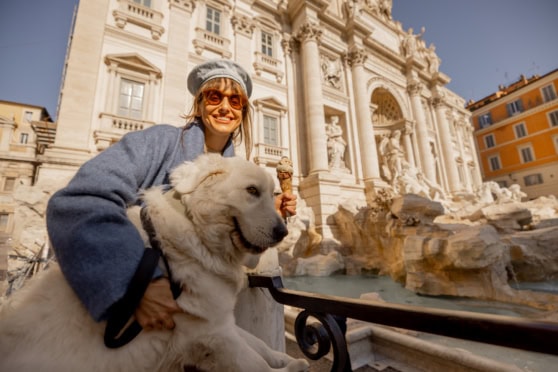
Expat Guide to Visas, Jobs, and Cost of Living
Living in Rome is the ultimate dream for many expats. Italy’s historic capital offers a perfect mix of ancient wonders, modern amenities, and a vibrant cultural scene. With over half a million foreign residents, Rome has become a welcoming home for people from all over the world. From its breathtaking architecture to world-class cuisine, the city offers an unparalleled lifestyle.
If you’re considering making that dream a reality, this article will guide you through everything you need to know, from the best neighborhoods to the cost of living, job market, healthcare, and more.

Get Covered Before You Move to Italy
Compare international health insurance plans designed for expats living in Italy. Get personalized quotes based on your move, budget, and coverage needs.
What to Know About Italian Culture
Many expats fall in love with Rome’s rich culture and history, which dates back thousands of years. For a smooth transition, newly arrived immigrants should become familiar with Italy’s distinct cultural practices before they move. Below is an overview of what to expect.
Family is Everything
Italian life is centered around the family. It’s not uncommon for several generations of a family to live together under one roof.
Most adults live at home with their parents, either well into their thirties or until they get married. This practice can seem rather different from what’s typical in other Western cultures.
Language Barriers
Italian is the official language of Italy, and more than 90% of the city’s residents speak it. Many people in Rome also speak English, but learning some Italian will serve you well because it can open up job opportunities and help you make friends.
Keep in mind that even immigrants who do speak fluent Italian often find it difficult to understand what the locals are saying.
People in Rome speak many regional dialects of Italian, each significantly different from the others. It can take time to get used to the region-specific language differences.
How People Communicate
Romans are known for having passionate conversations and debates. However, that passion should not be mistaken for anger.
Many immigrants assume that because Romans tend to shout or speak loudly, they must be aggressive or angry. The truth is that Romans are simply more expressive than people in most other European cities.
You may notice that Italians use many hand gestures when they speak. They also tend to stand much closer together when talking to one another than people in other parts of the world.
Expect to Eat Later (and Longer) Meals
Romans are serious about their food and how they eat. In Italy, meals are often long and very filling, and lunch and dinner typically conclude with fruit.
Most locals eat lunch between 1 and 2:30 p.m. and eat dinner between 8 and 11 p.m.
Rome Moves at a Relaxed Pace
Daily life moves more slowly in Italy, even in big cities like Rome. Lines can be long, and dealing with bureaucracy can be frustrating for foreigners accustomed to faster service.
Even though Rome has an extensive public transportation system, the city’s traffic is so heavy that buses and trains are often delayed. This is yet another factor that forces locals to move more slowly.
Making Friends in Rome
Immigrants can make friends in Rome if they open themselves up to the culture, learn the language, and welcome conversations.
Rome has many open-air public spaces, and it can feel easier to strike up a conversation with a stranger outdoors than in an indoor space like a bar.
American and British foreign nationals sometimes find this odd because it’s more common to make new friends over a pint in the United States and the United Kingdom.
One great way to make friends in Rome is to participate in an Italian language exchange program. These programs offer opportunities to meet other foreign citizens and locals, and you can learn some Italian at the same time.
You can also meet people by attending local events and taking classes, such as exercise, painting, or cooking classes.
Expats often find it easier to make new friends in Rome if they frequent the same places. For example, you might find that the people you see every day at your favorite coffee bar or open-air market begin to say hello and make conversation once they see you as a regular patron.
Raising a Family in Rome
Rome is a family-friendly city with plenty of activities and events for families with young children. There are many outdoor spaces for kids, and most museums offer discounted rates for children. Some even allow kids to enter for free.
Because Italians place so much emphasis on family, foreign-born families with children feel welcome in Rome.
The primary school education system is good, and public schools are free up to the age of 16. International schools exist, but they can be quite costly.
The Best Neighborhoods in Rome
The beautiful city of Rome, known as “Roma” to the Italians, is home to more than 20 neighborhoods and districts.
Each has its own appeal, but some areas of the Italian capital make better homes for foreign citizens than others.
Prati
Prati is a great neighborhood for young families. This culturally diverse area is home to a large expat community, and it tends to feel more like a small village than part of a big city.
It’s also one of the safest neighborhoods in the city. Prati is conveniently located within walking distance of the Vatican and has no shortage of top-notch restaurants, cafes, shops, and public spaces.
Trastevere
Known for its nightlife, entertainment, and bars, Trastevere attracts students and young adults. It’s also a hip, trendy neighborhood for international residents who want to enjoy the city’s active nightlife.
Be aware that this part of the city attracts many tourists. Some foreigners might love that, while others may not.
Perhaps the biggest upside to living in the tourist-heavy Trastevere neighborhood is that the area restricts most car traffic, making its cobblestone streets even more walkable.
Monteverde
Monteverde is a spacious district of Rome that features one of the city’s largest parks. Its ample green spaces have made it one of the most calm and relaxed places in Rome, perfect for expats who prefer the simpler things in life.
Monteverde is also well connected to Rome’s underground metro system. Similar to Trastevere, it’s a great place to live if you want to get around without owning a car.
Other Great Neighborhoods in Rome
In addition to Prati, Trastevere, and Monteverde, other neighborhoods in Rome that are great for immigrants include:
- Ostiense
- Testaccio
- Centro Storico
- Monti
Neighborhoods to Avoid in Rome
Overall, Rome is considered one of the safest cities to live in Italy. Certain neighborhoods still have higher rates of petty crime and a reputation for pickpockets and scammers.
These include the neighborhoods of:
- Esquilino
- San Basilio
- Corviale
Crowded train stations and landmarks, such as the Colosseum and Trevi Fountain, are hotspots for pickpockets who prey on unsuspecting tourists.
No matter where you choose to live in Rome, you’ll be safer if you remain aware of your surroundings at all times.
The Job Market in Rome
If you’re a foreigner who’s thinking about moving to Rome for work, expect to face some challenges.
Some expats and immigrants may have trouble finding employment in Italy’s capital city. Italy’s nationwide job market isn’t much better, but it has improved in recent years.
That doesn’t change the reality that many Italian employers prefer to hire locals over foreigners. Rome has the highest concentration of immigrants in the country.
This means expats living there must not only compete for jobs against native Italians but also against other expats. Immigrants who speak fluent Italian may have a slight advantage.
If you speak English, you’re most likely to find work in one of the following industries:
- Hospitality and tourism. Because Rome attracts many English-speaking tourists, hotel concierges, restaurant servers, and tour guides are common jobs for English speakers.
- Healthcare. In Rome, medical professionals are in high demand — especially skilled nurses.
- Education. Expats can put their English to good use by working as an English language teacher or translator.
- Technology. If you’re an immigrant who has experience in the tech sector, you may be able to find work as a web developer, software developer, programmer, or software engineer.

The Cost of Living in Rome
Depending on the country and city from which you’re moving, Rome can seem either very affordable or much more expensive than what you’re used to paying.
One way to better understand whether you can afford to live in Rome as an expat is to see where the city ranks on the worldwide cost of living index.
The cost of living index is a theoretical price index that measures how expensive or inexpensive a particular location is in comparison to other regions. The higher the number, the more expensive it is to pay for goods and services in that location. Figures above the cost-of-living baseline of 100 are considered more expensive, while figures below 100 are typically considered less expensive.
The cost of living index in Rome is 59.0, which is close to the Italian national average (58.9). Italy is the most expensive country in southern Europe, but it is considerably less expensive than many other countries worldwide.
Here’s a look at how the cost of living in Italy compares to that of other countries:
- Switzerland: 112.2
- Singapore: 81.9
- Denmark: 75.2
- US: 72.9
- Australia: 72.8
- France: 66.0
- UK: 63.7
- Rome, Italy: 59.0
- Romania: 38.8
- China: 34.1
- Morocco: 29.9
The Cost of Goods and Services in Rome
The estimated cost for one person to live in Rome (excluding rent) is $1,021 USD per month. Here’s what you can expect to pay for rent, groceries, transportation, and other daily expenses:
Rent
- One-bedroom apartment in the city center: $1,262 USD
- One-bedroom apartment outside the city center: $788 USD
Utilities
- Electric/heating and cooling/water/garbage: $253 USD
- Mobile phone plan: $15 USD
- Internet: $33 USD
Transportation
- Monthly public transport pass: $42 USD
- Gasoline: $2.12 USD per liter
Groceries
- Milk: $1.87 USD per liter
- Eggs: $4.28 USD per dozen
- Rice: $3.06 USD per kilogram
- Chicken filets: $12.60 USD per kilogram
- Bottled water: $0.45 USD per 1.5-liter bottle
Sales Tax/VAT Tax
- VAT tax standard rate: 22%
- Electric power and certain medications: 10%
- Healthcare and transport services: 5%
- Certain foods, drinks, and agricultural products: 4%
Note: All cost-of-living data comes from Numbeo. These numbers were up to date as of March 2024.
The difference between sales tax and VAT is that VAT is collected at every stage of the production process, while sales tax is collected only at the point of purchase.
For consumers, they are essentially the same, as they pay the full VAT when they purchase a product or service.
Applying for a Visa to Live in Italy
Italy has a two-tier immigration system that makes it easy for some foreigners to move there, but more challenging for others seeking entry.
Expats who are citizens of the European Union or a country in the European Economic Area (EEA) can enter Italy without a visa and stay for 3 months.
After three months, EU and EEA citizens must register their residence address with the local Italian authority.
Foreigners outside the EU and EEA must obtain a long-stay visa if they intend to stay for more than 90 days. There are several types of long-stay visas for which you may qualify.

Guide
Accessing Medical Care in Rome
Expats who move to Rome will find that Italy has an excellent healthcare system with great patient outcomes.
If you are an immigrant who has a valid visa and residence permit, you may be eligible for Italy’s universal Servizio Sanitario Nazionale (SSN) public insurance plan.
Rome has some of the best doctors and medical facilities in the country. The only downside to this publicly funded system is the long wait times before patients can see a doctor.
A private health insurance plan can help expats avoid long wait times and access private healthcare facilities outside Italy’s public system. Learn more about buying private international health insurance in Italy.
Access Private Healthcare in Italy
Many new residents of Rome, Italy choose private health insurance to reduce wait times and gain faster access to specialists and private hospitals.
Ready to Call Rome Home?
Living in Rome as an expat can offer a high quality of life, not to mention the opportunity to enjoy the beauty, culture, and history of the Eternal City.
If you’re considering moving to Rome and haven’t begun learning the Italian language, begin learning it as soon as possible to increase your job prospects.
It’s also best to look for a job before you arrive. Finally, make sure you comply with the country’s visa requirements by purchasing private coverage.