
Retiring in Italy

How to Live La Dolce Vita in Your Golden Years
If you’re planning to retire in Italy, you’re certainly in for a treat. With its stunning landscapes, rich culture, and slower pace of life, the charming Mediterranean country offers an ideal setting for those seeking to enjoy their golden years. Italy is also known for its tax incentives for foreign retirees, excellent healthcare system, and diverse lifestyle options, making it a popular choice for many expats.
If you’re ready to plan your Italian retirement, this article will walk you through the key aspects, including visa options, healthcare coverage, cost of living, and the best places to call home.

Start Planning Your Healthcare Abroad
Before you retire in Italy, explore international health insurance options that can help you access care and manage costs with confidence.
Retiring in Italy: Pros and Cons
Before relocating to Italy, you’ll need to do your research to find out whether it’s really the right choice for you.
To help get you started, here’s an overview of some of the key positives and negatives of Italian life.
The Pros of Retiring in Italy
Here are some key benefits of retiring in Italy that make it an appealing destination for expats.
Great Food and Culture
Italy is renowned for its world-class cuisine. In fact, it ranks at number one in the world on the 2025/26 Taste Atlas 100 Best Cuisines.
Its pizza, pasta, seafood, meats, cheeses, and desserts are world-famous, and its restaurants have nearly 400 Michelin Stars. Fresh, high-quality produce is widely available in local shops and market stalls.

Italy’s reputation for food is closely matched by that for culture. There is no shortage of art galleries, museums, and opera houses, while Italian cinema has gained a cult following among movie lovers worldwide.
Warm Climate
Italy has a predominantly Mediterranean climate, particularly along its coasts, making it attractive for retirees.
Average summer temperatures typically range from 77–90°F (25–32 °C), with southern regions enjoying up to 300 days of sunshine per year.
This creates ideal conditions for enjoying the beautiful countryside and coastlines. Winter temperatures are generally mild in most areas, though they can drop to around freezing in mountainous regions, offering opportunities for winter sports.
Laid-Back Lifestyle
Italy has a naturally slower pace of life that suits many expat retirees. There is an emphasis on maintaining balance, enjoying la dolce vita (“the sweet life”), and making time for family and friends.
Locals are largely friendly and welcoming, and the streets and cafes often fill up in the afternoons and early evenings with people chatting, taking it easy, and soaking up the relaxing atmosphere.
High Quality Healthcare
The Italian healthcare system is high-quality and ranks 22nd on the 2025 CEOWORLD Healthcare Index.
It provides universal public coverage through the Servizio Sanitario Nazionale (SSN). Legal residents can access the system by registering with their local health authority.
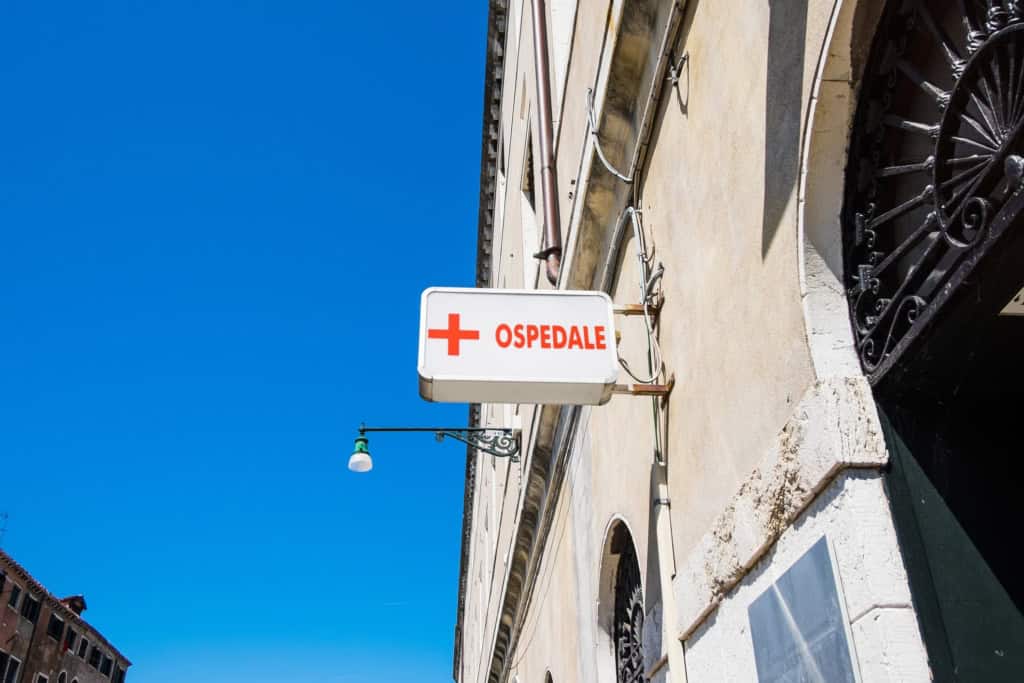
Expats can also purchase private health insurance in Italy, which typically offers faster access to care, a wider choice of providers, and easier access to English-speaking doctors.
Secure Coverage That Works for Your Retirement Abroad
Get matched with plans that provide access to private care, shorter wait times, and coverage that travels with you.
Cost of Living
The cost of living in Italy is more affordable than in many other European countries, and about 29.8% cheaper overall than in the United States (according to Numbeo).
While living in Rome or living in Milan can be expensive, many regions – especially in southern Italy – have much lower housing and daily living costs.
Expats who want to retire in Italy can also benefit from tax benefits, such as flat rates and exemptions on overseas assets.
Central European Location
Italy is a centrally located European country, which is great news for world travelers eager to take weekend trips by car, train, bus, or plane to other countries in Europe.
There are around 30 airports across the country offering flights worldwide. You can reach many European countries in around two hours, while a flight to the US takes 10–13 hours.
The Cons of Retiring in Italy
As with any destination, there are drawbacks to consider when retiring in Italy, and it’s important to weigh these carefully alongside the benefits.
Language Barriers
Italy ranks 59th on the 2025 EF English Proficiency Index, the second lowest in Europe after Türkiye. This can present a challenge for expats who don’t speak Italian.
While English is much more prevalent in bigger cities and tourist areas, smaller towns – particularly in the south – tend to have fewer English speakers.
Learning a basic level of Italian will make it much easier to integrate and carry out daily interactions, such as shopping, banking, and socializing.

Complex Bureaucracy
Italy’s relaxed attitude tends to extend to its public administration. Sorting out matters such as residence permits, healthcare registration, and tax affairs can be a lengthy process and involve filling out multiple forms.
The complexity is compounded by the fact that not many staff speak English. Therefore, you’ll need to arrange an interpreter or translator if you don’t speak any Italian.
Regional Variations
Public services and facilities in Italy are generally of a good standard, but provision can be uneven. Smaller towns and villages are often picturesque, yet may have limited healthcare and public transport.
Infrastructure is also less developed in southern Italy, which retirees will need to weigh against the lower cost of living.
If you relocate outside major urban areas, you will likely need your own transport, as well as private health insurance to ensure quicker and easier access to services.
No Work Rights for Retired Non-EU Expats
Italy’s main retirement visa is the Elective Residence Visa (ERV), which does not permit employment or self-employment.
This means retirees from outside the EU/EEA/Switzerland will have to support themselves through income such as pensions and savings.
In contrast, EU/EEA/Swiss citizens can retire to Italy and take up work if they wish under EU freedom of movement rules.
Retirement Visas for Italy
Whether or not you need a visa to retire in Italy depends on whether you are an EU or non-EU citizen. In short:
- EU citizens: If you are from the European Union (EU), European Economic Area (EEA), or Switzerland, you don’t need a visa to live in Italy. You just need to register with your local municipality (comune) if you stay for longer than three months. You can apply for permanent residence after five years, and Italian citizenship after 10 years.
- Non-EU citizens: If you are from outside the EU/EEA/Switzerland, you will usually need to apply for a long-stay visa to live in Italy. The options are explained below.
The Elective Residence Visa (ERV)
The most common retirement visa for Italy is the Elective Residence Visa (ERV). This isn’t specifically an Italian retirement visa.
It is available to individuals of any age who have enough passive income (e.g., pension, savings, or investments) to support themselves without working.

The ERV doesn’t allow holders to take up employment or self-employment, which makes it ideal for retirees. It is usually valid for one year initially, but you can renew it as long as you continue to meet the requirements.
You can apply for permanent residence after holding the visa for five years and for Italian citizenship after 10 years, subject to meeting the conditions.
If you are a non-EU national and want to relocate to Italy and work in any capacity, you will need to apply for a relevant work, business, or investment visa.
For more information, you can visit the immigration portal on the Ministry of Interior website. You can also complete this short form on the Ministry of Foreign Affairs website to work out your visa requirements (links in Italian).
Italy Retirement Visa Requirements
You need to apply for the ERV through an Italian consulate in your home country. In addition to completing the application form, you will need to provide:
- Valid passport
- One passport-size photo
- Proof that you meet the minimum passive income requirement of €31,000/year ($35,700), or €38,000/year ($43,750) if applying as a married couple/partnership
- Proof of long-term accommodation in Italy, e.g., rental contract or property deeds
- Valid health insurance to cover your initial period in Italy
- Letter explaining your reasons for relocating to Italy
- Criminal record certificate
- Relevant marriage/birth certificates, if you are applying with a spouse/dependent children
How to Retire in Italy as an American
Here are the main steps to follow if you want to retire in Italy from the USA:
- Step 1: Choose the appropriate visa. Retiring in Italy as an American requires a visa. For expat retirees, this is usually the Elective Residence Visa (ERV).
- Step 2: Secure long-term accommodation: You’ll need proof of accommodation, such as a long-term lease or property ownership, to support your residency application.
- Step 3: Apply for residency: Once you arrive in Italy, you should apply for your residence permit from your local police station within 8 days.
- Step 4: Apply for a codice fiscale: This is your tax ID number in Italy, which you also use for social security, healthcare, and carrying out financial activities such as opening a bank account or taking out insurance. You can apply for your codice fiscale through the Italian Tax Office or often at your local police station at the same time as your residence permit.
- Step 5: Register for healthcare: You can register for public health insurance with your local health authority as soon as you have your residency permit or codice fiscale. This enables you to access Italian public healthcare, although it is not mandatory; you can also use private health insurance if you prefer.
- Step 6: Open a local bank account: This will make daily financial transactions much easier.
- Step 7: Renew residency and plan long-term status: Residency permits must be renewed before they expire, leading toward permanent residency after five years and possibly citizenship after 10 years.
Housing in Italy
Expats can choose to buy or rent property in Italy. There are no restrictions on EU/EEA/Swiss citizens buying a home in Italy.
If you are a non-EU national, you can purchase property if your home nation has a reciprocal agreement with Italy.
In other words, can Italians buy property in your country? Fortunately, countries such as the US and the UK have these agreements.
As of March 2026, property prices in Italy are as follows:
Location | Price per Square Meter |
Italy Average | €1,891 ($2,183) |
Rome | €3,369 ($3,889) |
Milan | €5,192 ($5,993) |
Turin | €1,993 ($2,300) |
Florence | €4,602 ($5,312) |
Palermo | €1,412 ($1,630) |
If you buy a home in Italy, you will need to budget for additional costs, including registration tax/VAT, land registry fees, agency and notary fees, plus any mortgage costs. Total additional costs can amount to 10–15% of the purchase price.
Property purchase in Italy can be a lengthy process, taking between two and six months. Many expats choose to rent, especially during the initial period before settling.

You can rent both traditional houses and newly built apartments in Italy, either furnished or unfurnished.
According to Numbeo, the current average rental prices in Italy are $854/month for a one-bedroom apartment and $1,475/month for a three-bedroom apartment.
Average prices for major cities include:
- Rome – $1,327 (1-bed); $2,620 (3-bed)
- Milan – $1,699 (1-bed); $3,452 (3-bed)
- Turin – $839 (1-bed); $1,559 (3-bed)
- Florence – $1,287 (1-bed); $2,379 (3-bed)
- Palermo – $760 (1-bed); $1,143 (3-bed)
Landlords may ask for between one and three months’ rent upfront, plus a deposit of one to three months’ rent. This means you’ll usually have to pay between two and six months’ rent before moving in.
The Cost of Retiring in Italy
Housing aside, you’ll have to budget for various living costs in Italy. These will depend on your lifestyle, but are likely to include groceries, clothing, transportation, internet/mobile phone, and leisure.
Households in Italy spend an average of $3,275/month. According to Numbeo, estimated monthly costs (excluding rent) in 2026 are $1,017 for a single person and $3,633 for a family of four.
The cost of living in Italy (excluding rent) for major cities includes:
- Rome – $988 (single); $3,537 (family)
- Milan – $1,207 (single); $4,347 (family)
- Turin – $1,002 (single); $3,577 (family)
- Florence – $1,124 (single); $4,081 (family)
- Palermo – $922 (single); $3,255 (family)
Day-to-Day Living Costs
Here is a breakdown of the overall cost of living in Italy:
- Housing – $460–3,450 (monthly rent)
- Utilities – $150–370 a month
- Internet and mobile phone – $35–60 a month
- Monthly public travel pass – $35–60
- Basket of groceries (milk, bread, eggs, bananas, potatoes) – $7–20
- Monthly gym membership – $30–90
- Meal for two at a mid-range restaurant – $57–115
Planning Your Retirement Budget?
Compare international health insurance plans that help protect you from unexpected medical costs in Italy.
Healthcare in Italy
Italy’s public healthcare system, the Servizio Sanitario Nazionale (SSN), is universal and tax-funded.
It provides free or low-cost healthcare to legal residents. Services are high-quality, although standards can vary across different parts of the country.
EU/EEA/Swiss citizens can access services with a European Health Insurance Card (EHIC). Since Brexit, UK citizens can use the Global Health Insurance Card (GHIC).

All other nationals can access public healthcare as soon as they have sorted out their residence permit and registered with their local health authority.
Although Italian public healthcare is generally good, there are problems such as:
- Long waits for some treatments, particularly outside larger cities
- Limited choice over primary care providers
- Gaps in coverage for services such as dental and vision care, and limited availability of mental health services
Because of this, many expats opt for private health insurance in Italy. While enrolment for public healthcare is mandatory for employed residents, it is voluntary for others, such as retirees, and costs around $2,300 a year.
Private insurance can provide benefits such as faster access, broader coverage, and greater choice of doctors or Italian hospitals, including English-speaking practitioners. Around 10% of the Italian population has a personal private health plan.
For retirees, factors such as age, existing medical conditions, and renewability can also affect which plan is suitable. See our guide to health insurance for retirees abroad for more information.
Explore Private Health Insurance Options
While public healthcare may be available, many retirees choose private coverage for faster access and broader benefits.
✔ Personalized quotes • ✔ Expert guidance • ✔ No obligation
Taxes in Italy
Italy has a progressive tax system, with national rates ranging from 23% to 43%, plus regional and municipal surcharges.
Tax residents (those who spend at least 183 days a year in Italy or who have their main economic or personal ties there) pay tax on worldwide income, while non-residents are only taxed on Italian income.
Italy has over 100 double taxation treaties in place with other countries to prevent residents from being taxed on the same income in more than one country.
If you retire in Italy and receive a foreign pension, whether it is taxed in Italy or your home country depends on the terms of the tax treaty between the two countries.
Those retiring to certain parts of Italy can benefit from a 7% flat tax on foreign-source income. To qualify, you must receive a foreign pension and register as a tax resident in Italy. You must also live in a municipality with fewer than 20,000 inhabitants in a southern Italian region.
In addition to income tax, residents may also pay VAT (at the 22% standard rate), municipal property tax (mainly on second homes), and inheritance tax.
You can read more information on the Italian Revenue Agency website.
Taxes for US Expats Retiring in Italy
If you are a US citizen retiring in Italy, your tax situation will depend on your income source and tax residency.
Italy taxes most foreign income of tax residents, including Social Security benefits, private pensions, retirement savings, investments, and rental income.
You will have to file an annual tax return in Italy to declare any income you owe tax on. Additionally, you must file an annual tax return with the IRS as a US citizen abroad, although you can claim a Foreign Tax Credit (FTC) to avoid double taxation.
Most forms of retirement income in Italy are taxed at the progressive rate (23–43%), unless you benefit from the 7% flat tax scheme.
Investment income is taxed at a flat 26% rate in Italy. However, taxation can be complex, as U.S. citizens must also report investment income to the Internal Revenue Service, with double taxation usually mitigated through foreign tax credits.
If you are uncertain about your tax situation when relocating to Italy, it is advisable to consult a tax or financial professional with cross-border expertise.
Inheritance Laws in Italy
Italy has a system of forced heirship, which means that a certain percentage of someone’s estate must go to the surviving spouse, children, or (if there are no children) parents.
Who receives what depends on the surviving heirs, but the total allocated share is between 50% and 75%. The remainder of an estate can be allocated according to the deceased’s wishes through a will.
The law of habitual residence applies in Italy. In other words, Italian law will apply to all residents, unless they specify otherwise in their will.
Inheritance tax in Italy is paid by the beneficiaries rather than the estate. For expat retirees, this means that overseas beneficiaries will pay Italian inheritance tax only on assets located in Italy.
The rates of Italian inheritance tax are:
- Spouses, children, parents, and grandparents – 4% on assets over €1 million (approx. $1.15 million)
- Siblings – 6% on assets over €100,000 (approx. $115,250)
- Other relatives up to the fourth degree – 6% on all assets
- Others – 8% on all assets
Ready to Spend Your Golden Years in Italy?
Retiring in Italy offers an incredible blend of natural beauty, rich culture, and a slower pace of life that many dream of.
With tax incentives, an attractive retirement visa program, and top-tier healthcare, Italy provides everything you need to enjoy your golden years in paradise.
Choosing the right city or town will depend on your personal preferences, lifestyle, and budget, but the opportunities are endless across this beautiful country.
Though Italy’s public healthcare system offers excellent care, it’s always a good idea to secure private global health insurance before you move to the country.
This will not only help you meet immigration requirements but also give you more freedom when selecting doctors and reduce wait times for medical services.
Ready to Start Your Next Chapter in Italy?
Get personalized international health insurance quotes and retire abroad with confidence.
Frequently Asked Questions
-
Italy is a desirable retirement location for many reasons – food, culture, weather, natural scenery, affordability, and slower pace of life among them. However, it’s not for everyone. English is not widely spoken, there’s a lot of bureaucracy, and non-EU retirees who need a visa will need to meet fairly high passive income thresholds (e.g., pensions, savings).
When deciding whether Italy is a good place to live as a retiree, you’ll need to weigh the many lifestyle benefits against some of the inconveniences.
-
Yes, Italy is considered a very safe country to live in. It ranks 33rd out of 163 countries on the 2025 Global Peace Index, with a rating of “high”. Violent crime is low, even in busy city areas, and the main risk for most expats is petty thef
-
Living costs in Italy are lower than in the US and many Western European countries. Larger cities such as Rome and Milan are more expensive, and northern regions are generally more costly than the south.
According to Numbeo, estimated average monthly costs for Italy (excluding rent) are $1,017 for a single person and $3,633 for a family of four.
-
Income requirements depend on lifestyle and location, but in general, you will need around $1,700/month for a budget lifestyle, around $2,200/month to live comfortably, and $3,000+ for a luxury lifestyle.
If you are applying for the ERV retirement visa, you will need to show proof of income equivalent to approximately $3,000/month (or approx. $3,650 for a couple).
-
Italy’s public healthcare system (SSN) provides free or low-cost healthcare for legal residents. However, enrolment for non-working retirees is voluntary and costs around $2,300 a year.
Foreign residents can also opt for private health insurance in Italy, which offers broader coverage, quicker treatments, and a better choice of providers.
-
Yes, Americans can retire in Italy. The usual route is through the Elective Residence Visa (ERV), which you can apply for if you meet the minimum income requirements of around $35,700/year.
-
Yes, you can continue receiving Social Security if you move to Italy. This can be paid into a US or Italian bank account.
-
Under the US-Italy tax treaty, your Social Security will usually be taxed in Italy if you are a tax resident there. You will also have to declare the income on your US tax return, but you can claim the Foreign Tax Credit to avoid double taxation.
-
No, the Medicare program generally doesn’t provide healthcare outside the US. However, many Americans living abroad keep Medicare Part A, as it’s free and provides coverage if they return to the US.
To cover their healthcare needs in Italy, they will usually register for Italian public healthcare, with many also taking out private or international health insurance to cover copayments. It’s also possible to maintain Medicare Part B as a US expat abroad, which can be useful if you make frequent trips back home, although the monthly premium rates apply.