
The Cost of Living in Germany

Germany offers a high quality of life. However, its living costs have increased in recent years. Cities like Munich, Düsseldorf, and Frankfurt consistently rank among the world’s best for livability, thanks to excellent public transport, healthcare, and work-life balance, but prices have crept above those of many other Western European nations.
If you’re planning a move, this article outlines the cost of living in Germany as of May 2026, including housing, food, transportation, and more.

Moving to Germany? Get Covered
Germany offers excellent healthcare, but expats often choose private international health insurance for added flexibility, faster access to care, and worldwide coverage.
Is Germany Expensive?
For many years, Germany retained a reputation as one of the more affordable Western European countries. However, it currently sits at 24th on the Numbeo Cost of Living Index, one place behind the United States.
While the cost of living in Germany is above the EU average, it is still cheaper than in countries such as Denmark, the Netherlands, and Ireland. When considering the cost of living in Germany vs. the U.S., you’ll find that the cost of living in Germany is nearly 12% lower.
Munich is the most expensive city in Germany, and yet consumer prices are 23.6% lower than in New York City and 6.7% lower than in Los Angeles.
The Most Expensive and Cheapest Places in Germany
Germany has clear differences in living costs across locations. While major cities tend to be more expensive, smaller towns and eastern regions often offer a more affordable lifestyle without sacrificing quality of life.
Below is an overview of the most expensive and affordable places to call home.
The Most Expensive Cities to Live in Germany
The major cities of a country tend to be the most expensive, and this holds true for Germany. According to the Numbeo Cost of Living Index, the most expensive major cities to live in are:
Munich
Munich, the capital of Bavaria, is the most expensive place to live in Germany, surpassing Berlin. Famous for its multiple breweries and annual Oktoberfest celebration, Munich also offers several additional attractions, from castles to parks to museums.
Although the city has a higher cost of living than the rest of the country, its ranking of 57th in the world far surpasses New York City’s 12th place as a more affordable alternative.
Berlin
Berlin is the biggest city in Germany. There is something for everyone in this capital city, no matter your budget. This includes famous museums, beautiful architecture, world-renowned nightclubs, and delicious street food, just to name a few.
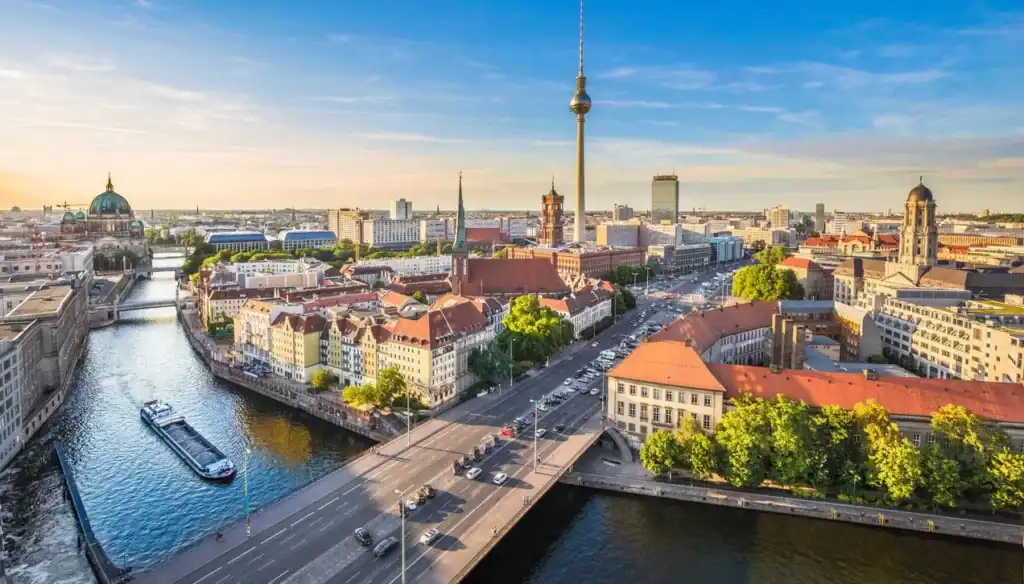
The public transportation runs 24 hours a day, making it a great city for early risers and night owls alike.
Hamburg
Located in the north of the country on the Elbe River, Hamburg is a university port town and the second-largest city after Berlin.
It has a booming economy across industries and a history of being more progressive than cities down south, with its red-light district among its biggest attractions.
Frankfurt
Traditionally known for its frankfurters (sausages), Frankfurt is now a financial center in Europe and home to the country’s largest and busiest airport.
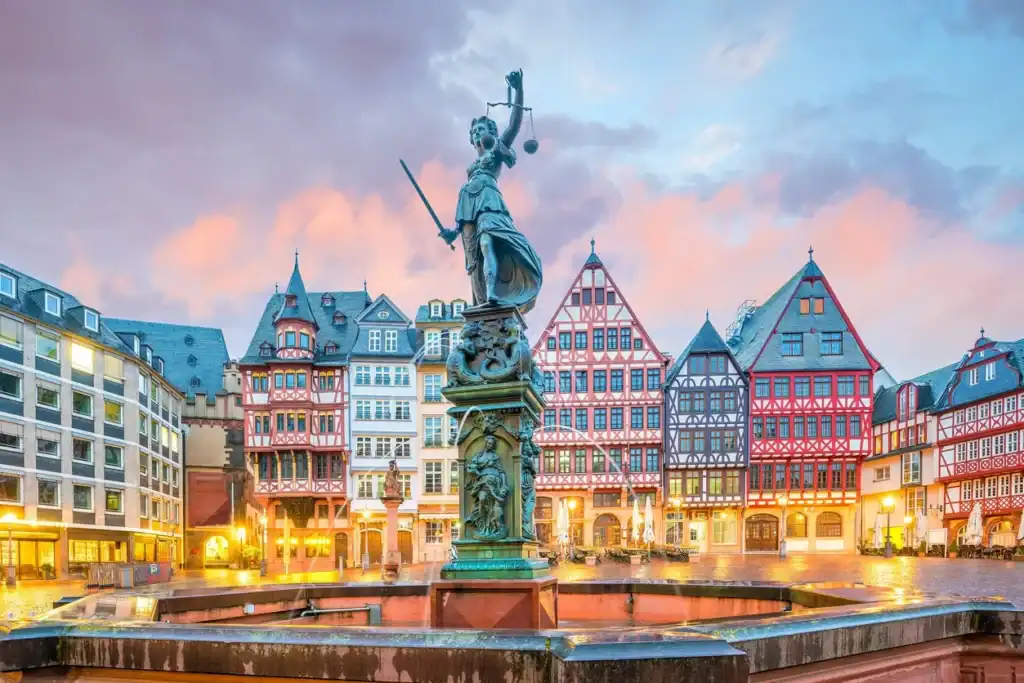
For those who need a break from the bustling city life, Frankfurt boasts the largest urban forest, covering nearly 5,000 hectares, just 15 minutes outside the center.
Stuttgart
Home to Mercedes-Benz and Porsche, Stuttgart is the sixth-largest city in Germany. For immigrants its among the best places to live in Europe.
Though a manufacturing hub, the city still has its fair share of green spaces, and vineyards can even be found right in the city center!
Moving to Germany With Family?
Protect your family abroad with international health insurance that offers flexible coverage, access to quality care in Germany, and worldwide protection while living overseas.
The Cheapest Places to Live in Germany
These cities are a great alternative for those who want to live in cheaper places that still offer many of the same benefits as their better-known counterparts.
Essen
Located in West Germany and the third-greenest city in the country, Essen is far older than both Berlin and Munich. The city offers great contrasts: a long history, modern architecture, and green spaces, set against the former Zollverein coal mine.
Leipzig
Also located in East Germany, Leipzig has a long history and has earned itself multiple nicknames over the years: Little Paris, Athens on the River Pleisse, and the Venice of the North.

Furthermore, the surrounding areas offer great day excursions to fairytale castles or lakes, as well as hiking for nature lovers.
Nuremberg
Nuremberg is the second-largest city in Bavaria after Munich. A commercial hub since the Middle Ages, the city features a mix of historical and modern architecture. It is famous for its Nürnberger Rostbratwürstchen, a small three-sausage sandwich served on a bun with mustard.
Dresden
Located in East Germany on the bank of the Elbe, Dresden is often referred to as “Florence on the Elbe.”
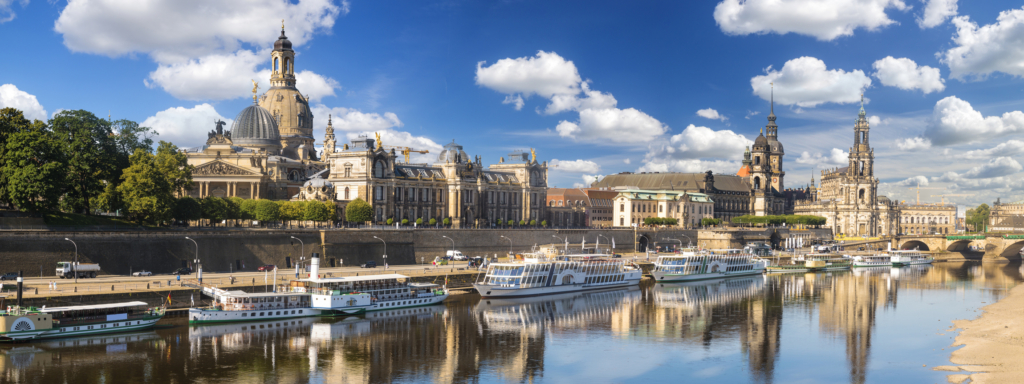
The city has an old town full of beautiful baroque architecture alongside impressive museums, magnificent theatres, and world-class orchestras.
Bremen
A harbor town in northwestern Germany, Bremen is the eleventh-largest city in the country. The historic city was voted as one of the most down-to-earth and friendly cities by fellow Germans. The low cost of living, stress-free lifestyle, and delicious food and drinks are all big draws to the city.
The Average Cost of Living in Germany
The cost of living in Germany varies widely by city and lifestyle. Below is an overview of average monthly living costs in Germany to help expats understand what to expect.
Housing Costs in Germany
Just as in the United States, the cost of living in Germany greatly varies depending on where in the country you live. Munich, for example, is the 57th most expensive city in the world as of 2022. There, you will find prices similar to those in New Orleans, LA (ranked 56th), or Denver, CO (ranked 55th).
A one-bedroom apartment in the city center of the Bavarian capital ranges from USD$1,290 to USD$2,347, while a three-bedroom apartment rents for USD$2,347 to USD$4,694.
Outside the city center, a one-bedroom apartment outside the center ranges from USD$1,009 to USD$1,936, and a three-bedroom rental ranges from USD$1,995 to USD$3,520. On average, these prices are 14.5% higher than in Berlin, the country’s capital. However, if you look at prices in Stuttgart, the 126th most expensive city in the world, you will find prices more reasonable, akin to Pittsburgh, PA, or Minneapolis, MN, which are ranked 82nd and 83rd, respectively.
In Stuttgart, a one-bedroom apartment in the city center ranges from USD$939-$1,995, while a three-bedroom apartment rents for USD$1,408- $2,944. Outside the center, you can find a one-bedroom apartment for USD$715-$1,056 and a three-bedroom for USD $1,432-$2,112.
Beyond rentals, don’t forget to factor in utility costs! Heating, electricity, water, and other standard utilities average USD$235-$587 for a 915-square-foot apartment. If you have a larger home, you should expect prices to go up accordingly. Additionally, home internet averages USD$35-$59 per month.
Expense | Munich | Stuttgart |
One-Bed Apartment in the City Center | $1,290 – $2,347 | $939 – $1,995 |
One-Bed Apartment Outside the City Center | $1,009 – $1,936 | $715 – $1,056 |
Three-Bed Apartment in the City Center | $2,347 – $4,694 | $1,408 – $2,944 |
Three-Bed Apartment Outside the City Center | $1,995 – $3,520 | $1,432 – $2,112 |
Utilities | $235 – $587 | $235 – $587 |
Internet | $35 – $59 | $35 – $59 |
Food and Entertainment Costs in Germany
Going out for an inexpensive meal in an average German town is affordable by most European standards; it will set you back USD$10-$29.
Eating out in Munich is more expensive, with prices much closer to those in the U.S. than in Hamburg or Frankfurt. Additionally, in most cities, you can always find food trucks and outdoor dining carts that sell doner kebabs, sausages, and currywurst with fries for just a few dollars each.
If you are looking for higher-quality dining experiences, a three-course meal averages USD$59-$117. With movie tickets running from USD $12-$19, you’ll find that a date night of dinner, drinks, and a show won’t put too much of a dent in your wallet.
You can also have a relatively cheap night out by hanging out with locals and having drinks at any of the popular beer gardens. A pint of domestic beer is highly affordable, ranging from USD$3.50 to USD$7.00.
Staying in to cook is unsurprisingly an even better deal! Chicken ranges from USD$8-$20, while beef is slightly more expensive, ranging from USD$13-$35. Some rice and potatoes to balance out the meal will each cost between one and two dollars per pound.
Other kitchen staples include milk at USD$4-$6 a gallon, eggs at USD$2.80-$5.30, a loaf of bread at USD$1.30-$4.10, a pound of apples at around USD$1.70, and a mid-range bottle of wine at USD$4.70-$9.40.
Expense | Average Cost in Germany |
Inexpensive Restaurant Meal | $10 – $29 |
Three-Course Mealfor Two | $59 – $117 |
Movie Ticket | $12 – $19 |
Domestic Beer(Pint) | $3.50 – $7.00 |
Chicken (Per Pound) | $8 – $20 |
Beef (Per Pound) | $13 – $35 |
Rice or Potatoes(Per Pound) | $1 – $2 |
Milk (1 Gallon) | $4 – $6 |
Eggs (1 Dozen) | $2.80 – $5.30 |
Bread | $1.30 – $4.10 |
Apples (Per Pound) | $1.70 |
Mid-Range Bottle of Wine | $4.70 – $9.40 |
Transportation Costs in Germany
Public transit in Germany is accessible, efficient, and cheap. The transit system is one of the factors that give people a high quality of life, with well-organized systems even in smaller cities.
Affordable public transit across the country really helps keep Germany’s cost of living low. One-way tickets average between USD$3.00 and USD$4.80, and even in Munich, the most expensive city, they cap out at USD$5.30.
As gas prices and public parking fees tend to be on the expensive side, you will find that most people living in a major city use public transit as the far more economical option.
The Costs of Education in Germany
The German education system is well known for its high standards. Public primary and secondary schools are free, save for extra-curricular activities. However, if you are looking to send your child to an international private school, expect to pay between USD$10,560 and USD$27,870 per child, per year.
Some Americans may be surprised (and jealous!) to learn that undergraduate degree programs can also readily be found for free. In 2022, the country ranked number four in the world for higher education. However, be aware that there are small administrative fees that may cost up to USD 300 per semester.
Regardless, this is a big bargain compared to U.S. university prices, demonstrating how affordable the cost of living in Germany is.
Healthcare Costs in Germany
Germany’s healthcare system is often considered one of the best in the world. The country utilizes a universal multi-payer system to provide healthcare. This means that the public system covers the majority of costs. However, there may still be small fees for hospital stays or prescriptions.
Expats are eligible for the public plan after officially registering their stay with German authorities and receiving a social insurance number. From there, your employer can help sign you up with a national insurance company. However, until you are part of the public plan, you will probably want international health insurance to protect you in case anything goes wrong.
Also, many residents earning over the income threshold choose to purchase private health insurance in Germany rather than statutory insurance. Private insurance often offers more comfortable care than statutory insurance, for example, shorter wait times and private rooms.
Best Health Insurance for Expats Living in Germany

Cigna Global Insurance Plan
- Flexible plans tailored to your needs and budget
- 1.5M+ providers in 200+ countries
- 24/7 multilingual customer support
Best Health Insurance for US Expats Living in Germany

BCBS Global Solutions Worldwide Premier
- Unlimited annual and lifetime coverage
- Pre-existing conditions covered with prior insurance
- For U.S. citizens abroad or foreign nationals in the U.S.
Travel Medical Insurance for Visitors to Germany
To enter Germany as a tourist, travel insurance is mandatory for people from many countries. The insurance must be valid in the Schengen zone and ought to cover a minimum of €30,000.
International Citizens Insurance offers comprehensive global plans that meet the requirements of Germany and most countries worldwide.

Ready to Make the Move?
Overall, the cost of living in Germany offers a strong balance between affordability and quality of life. While expenses vary by city and lifestyle, most expats find that Germany offers excellent value compared to many other Western countries, especially given its healthcare, infrastructure, and public services.
If you’re planning a move, it’s important to understand your budget and choose the right location for your needs.
Prepare for Life and Healthcare Costs in Germany
From housing and transportation to medical care and unexpected emergencies, international health insurance can help you feel more prepared for life abroad.