Work Visas in Germany
Work Visas in Germany for Expats and Foreigners
Germany attracts millions of foreign workers with its strong economy, high quality of life, and excellent work-life balance. From skilled professionals to recent graduates, many move here for career opportunities, generous benefits, and a path to long-term residency or citizenship.
For non-EU nationals, understanding work visas in Germany is the first step toward making that move possible. This article explores the main visa options and how to choose the right one for your situation.

Relocating to Germany for Work?
Compare international health insurance plans designed for expats, skilled workers, and foreign professionals living abroad.
Do I Need a Work Visa in Germany?
Citizens of the European Union, the European Economic Area (which includes Iceland, Liechtenstein, and Norway), and Switzerland generally do not need work visas for Germany.
However, there are some exceptions. Citizens of newer EU countries, including Bulgaria and Romania, require permits to work in certain sectors.
Additionally, all new residents from the EU and EEA must apply for a residency certificate within eight days of arrival. This is a necessary step to access the public German healthcare system and obtain an electronic tax card.

Different Types of German Work Visas
There are several types of work visas, and the type you need depends on your country of residence and occupation.
People from Australia, Canada, Israel, Japan, Korea, New Zealand, and the United States require a work permit. To work in Germany, you must first have a residence permit with work authorization.
The extent to which you can work will be detailed on this residence permit. As such, when you look into work visas in Germany, you are really also looking into German residency requirements. You can apply for this after you arrive in Germany.
This works well for people who are visiting as short-term tourists and fall in love with the country, or who come across a fantastic work opportunity.
Visitors from all other countries must obtain a work visa before traveling to Germany. In order to apply for a work visa in these circumstances, you need a firm job offer. These applicants will also need a residence permit upon arrival in Germany.
In both cases, there are several different kinds of residency permits and work visas to choose from, depending on your circumstances. These are four of the most popular.
General Employment Permit
General employment permits apply to jobs that do not require higher education or specialized skills. Note that the term “special skills” is relevant.
Many jobs under the general employment permit require vocational certificates.
You will only be eligible if the position in question cannot be filled by a worker from the EU, the EEA, or Switzerland. These permits are usually granted for a year and can be extended multiple times.
Highly Skilled Worker Permit
If you are a highly skilled worker (such as scientists with special knowledge, doctors, university teachers, or assistants with executive functions) or earn more than 84,600 Euros, you can apply for a settlement permit.
This is also known as a highly skilled worker permit. This highly coveted permit allows you and your family to live and work in Germany indefinitely.
University Graduate Permit
Foreign university graduates with sufficient funds for personal support can get a six-month residence permit to look for work. However, this permit is only for looking.
You cannot actually work with a graduate permit, so if you are lucky enough to find a good job, you’ll have to apply for the appropriate permit or visa.
EU Blue Cards
EU Blue Cards – which actually aren’t blue at all – are designated for applicants with a university degree and a guaranteed job with an income of at least 50,800 Euros.
Should the job be in a field with a worker shortage, the income level drops to about 41,000 Euros.
A Blue Card is really a four-year residency permit, and it also allows family members to join you and work in Germany.
Self-Employment Residence Permit
If you are self-employed or planning to start a business, you must demonstrate how your skills are needed in the area you want to settle down in. You must also demonstrate how you will help the local economy.
For instance, will you be hiring local staff or attracting tourists? Applicants must also prove that they have sufficient funds to cover their own costs and provide a detailed business plan.
Health Insurance for Germany Work Visa Applicants
Compare international health insurance quotes designed for professionals relocating to Germany for work, remote employment, or long-term assignments.
How Do I Get a German Visa?
Unlike in some countries, where the burden of applying lies with employers, in Germany, the responsibility for applying for a visa or permit lies with the individual.
However, you can expect some support from your employer. They can provide a detailed job description and attest that they could not fill the position with EU, EEA, or Swiss workers.
The usual application time is 1 to 4 months. The timing depends partly on where you are from, your occupation, and how busy the office is.
German Visa Application Checklist
Generally, you must provide the following when applying for a work visa or residency permit:
- Two completed application forms.
- Two passport photos.
- A valid passport.
- Proof of current residence. Acceptable documentation includes a driver’s license and utility bills.
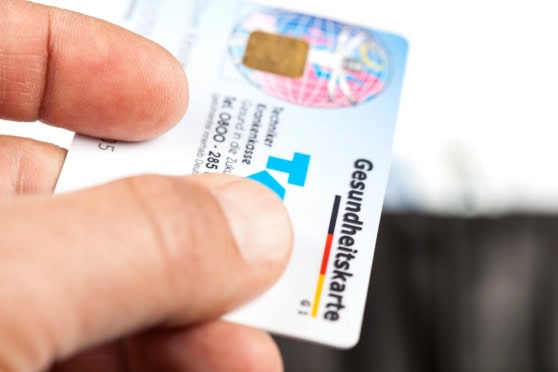
- Proof of health insurance. When applying for a residency permit, this proof generally comes from your German employer, who is responsible for helping you enroll in the public German healthcare system. Alternatively, you can use a European Health Insurance Card or simply carry your own global medical insurance that will cover you between your arrival and when employment begins.
- An employment contract that details salary information and job description.
- Your resume. This demonstrates your qualifications and that you’re a good fit for the job description.
- Proof of qualifications, as appropriate, including university degrees or other certificates.
- Proof of a clean criminal record.
- Receipts that prove you paid the visa fee.
- A personal cover letter explaining the purpose and duration of your stay in Germany.
- A signed declaration of Accuracy of Information.