
The Cost of Living in The Netherlands

The cost of living in the Netherlands is an important factor for anyone considering a move to this European country. With a strong economy, excellent healthcare, and a well-connected public transport system, it offers a high quality of life for those looking to settle in Europe. In addition, nearly 95% of the population speaks English, making it easier for newcomers to adapt.
But how affordable is it to live there? We’ve broken down the costs of housing, groceries, transportation, and other everyday expenses to give you a clear picture of what to expect. All costs are in U.S. dollars (USD), based on May 2026 data from Numbeo.

Moving to the Netherlands? Get Covered
Planning your move to the Netherlands? Compare personalized international health insurance options that match your destination, budget, and coverage needs.
Is the Netherlands Expensive?
If you’re a budget-conscious expat searching for an affordable place to live, the Netherlands may not be at the top of your list. It ranks among the world’s most expensive countries, with the 18th-highest cost of living globally. However, for many foreigners, moving to a country that offers a better quality of life is just as important. If this is the case, then the land of windmills and tulips certainly delivers.

The country consistently ranks in the top 10% of the OECD Better Life Index. The Index rates nations based on their population’s general well-being, work-life balance, life satisfaction, and education. Some expats moving to the Netherlands feel that the higher cost of living is worth the better quality of life. This is especially true given that it ranks 7th in the world in the 2025 World Happiness Report.
A powerful local economy and lively job market help, too. As of 2024, the Netherlands’ $1.214 billion GDP puts it among the world’s top 20 economies. Of course, a thriving economy doesn’t change the fact that it’s the 10th most expensive country in Europe. Then again, prices in the Netherlands can feel like a bargain if you’re coming from Switzerland, Iceland, Norway, or another country with a notoriously high cost of living.
To get a better sense of affordability in the Netherlands, let’s compare it to the United States.
Cost of Living in the Netherlands vs. the U.S.
Sometimes, the only downside of a better quality of life is the higher cost of living that may come with it. As mentioned, the Netherlands ranked 18th globally in Numbeo’s Cost of Living Index (CLI) in May 2026. The CLI explains how the costs of housing, groceries, transportation, and other key expenses vary across countries and cities.
According to the Index, the cost of living (including rent) in the U.S. is 5.3% lower than in the Netherlands. For example, the average rent price for a one-bedroom apartment outside of a Dutch city center is $1,365. This compares to $1,345 in the U.S. Meanwhile, a three-bedroom apartment located in a Dutch city center runs closer to $2,760. In the States, it’s around $2,650.
Outside of the home, prices in the Netherlands are slightly higher than what you’ll find in the U.S., too. This includes the majority of food costs. Dining at a Dutch restaurant is around 13% more expensive than eating at a restaurant in America. However, groceries are around 9% cheaper in the Netherlands.
That said, the local purchasing power in the U.S. is nearly 16% better than in the Netherlands. Therefore, if you’re relocating to the country from the States, you may discover you’re getting a little less bang for your buck at the cash register.
The Most Expensive Cities in the Netherlands
While the following cities are popular with expats, they won’t be the right fit for every budget. However, you can compare each city’s CLI to New York City’s CLI of 100 to understand the relative difference in costs.
Amsterdam
Amsterdam is the capital of the Netherlands and the “Bicycle Capital of the World.” Its cannabis culture, friendliness toward the LGBT community, and red-light district have turned it into an icon of progressive cities.
Digital nomads who work in business, finance, and IT will be pleased by the job opportunities here. Much to the delight of families and retirees, the standard of living is high. You will also discover green spaces around every corner. The only downside of this safe, open-minded city is that its CLI of 81.6 makes it the most expensive city in the Netherlands (and its housing market).
Haarlem
Haarlem is the capital of the country’s North Holland province and has the second-highest cost of living in the Netherlands at 79.3. Yet its charming, village-style city planning and colorful markets, cafes, museums, and green spaces can make the higher prices worth the trouble.
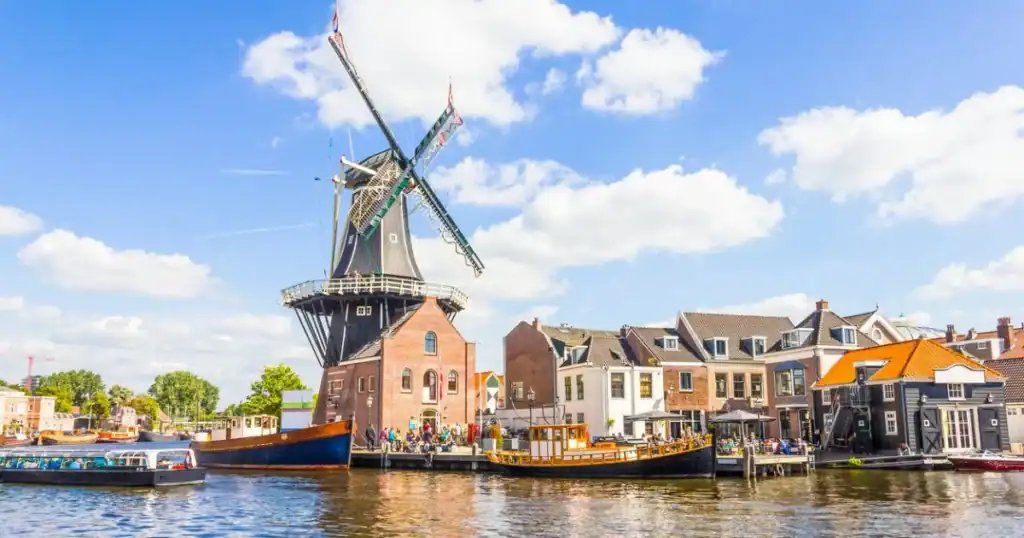
Families love Haarlem because crime and pollution are low. There are also several car-free neighborhoods and town squares, which is great news for those who prefer to travel by bicycle or on foot.
Another benefit of living in the Netherlands’ most expensive city is that you’re less than 40 minutes from Amsterdam. This is thanks to excellent local public transit and highways.
The Hague
A popular cosmopolitan hub where English is a dominant language, The Hague is beloved by professionals and young families alike.
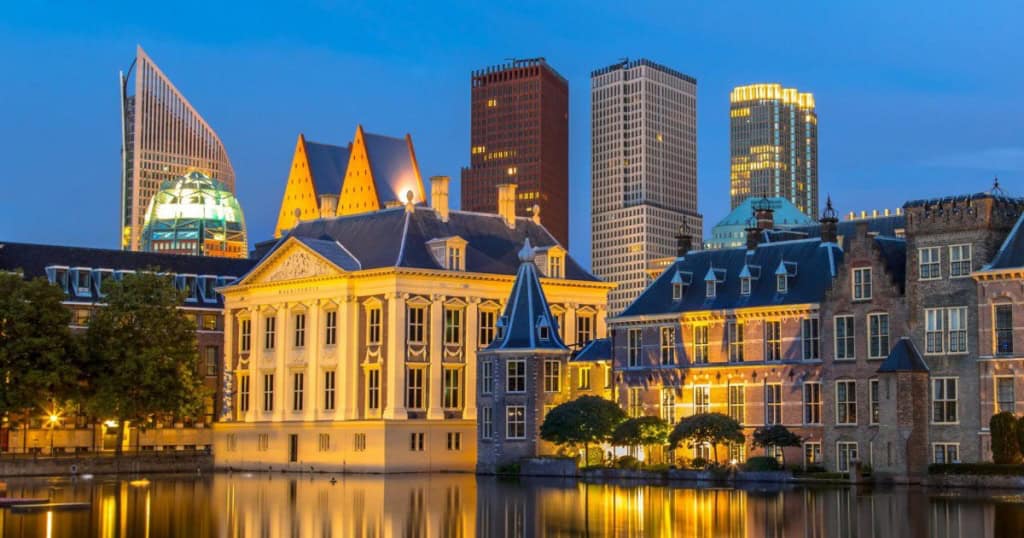
This walkable city has a CLI of 77.0, which has increased considerably in recent years, making it the 3rd-most-expensive city in the Netherlands. Its robust local economy has been attracting multinational corporations and investors for decades.
Green spaces, museums, and fine dining and entertainment options abound. Meanwhile, the city’s upscale neighborhoods provide plenty of housing opportunities. What’s more, you’re only a short drive from the beach and breathtaking scenic attractions.
Utrecht
Maastricht is one of the oldest and most vibrant cities in the Netherlands, famous for its picturesque canals, medieval architecture, and lively student atmosphere.
Located in the heart of the country, it has been an important cultural and commercial center since Roman times. Its compact layout, extensive cycling culture, and thriving arts scene make it both a popular tourist destination and an attractive place to live.
Utrecht has a CLI of 76.9. The upside is that its amenities are just as good as what you’ll find in bigger metro centers. It’s also safe, walkable, and more affordable than Amsterdam and Haarlem.
Find Health Insurance That Fits Your Budget Abroad
Whether you choose a major city or a more rural destination, international health insurance can help protect you from unexpected medical costs while living in the Netherlands.
The Most Affordable Cities in the Netherlands
If the Netherlands’ most expensive cities exceed your budget, there are plenty of low-cost alternatives to choose from. Below are some of the most popular expat destinations in the country.
Eindhoven
Eindhoven’s bustling tech center has transformed the city into the “Silicon Valley of Europe”. As a major Dutch city, it’s not only less expensive (with a CLI of 71.4), but it also has some of the lowest rates of violent crime, hate crime, and property theft in the country.
For those who prefer arts and culture to tech, the trendy Strijp-S neighborhood is the place to be for nightlife, dining, and entertainment. There are fewer green spaces here than in other Dutch cities, but you’ll still find yourself surrounded by nature as soon as you step beyond the city limits.
Rotterdam
Rotterdam is one of the world’s gold standards for fast, excellent public transport, with a CLI of 74.5. Its famous riverwalk and lush green spaces make it a pleasure to explore on foot. If you want to live without a car and feel safe walking around at night, then this is a great option.

Rotterdam is also known for its hip art scene, stellar fine dining, low unemployment rate, and swiftly growing job opportunities. And while the cost of living is higher than what you’ll find in Groningen, it’s still cheaper than The Hague, Amsterdam, or Haarlem.
Groningen
This small and easygoing city in the north of the Netherlands is a favorite among Dutch people. With a CLI of 70.5, Groningen is also ideal for budget-conscious expats seeking a small-town experience in a city center. Convenient bike and pedestrian lanes make it easy to get around wherever you need to go.
Low crime rates and child-friendly parks have also earned the city a reputation as a safe, attractive destination for families. Rainy weather is more common in Groningen than in other Dutch cities in the south. However, the friendly locals and relaxed lifestyle more than make up for it.
The Average Cost of Living in the Netherlands
Once you know what to expect to pay for everyday living expenses, it becomes much easier to budget for day-to-day life. Below, we compare the cost of housing, entertainment, food, transportation, education, and healthcare in the Netherlands’ most expensive city (Amsterdam) versus its least expensive city (Groningen).
Housing Costs in the Netherlands
Housing is almost always the highest expense in a person’s budget. Compared to other EU countries, the Netherlands’ housing market is relatively pricey.
The chart below provides a snapshot of the average monthly expenses in Amsterdam versus Groningen. This includes rent, utilities, and a mobile phone plan.
Expense | Amsterdam | Groningen |
One-Bed Apartment in the City Center | $2,597 | $1,349 |
Three-Bed Apartment in the City Center | $4,015 | $2,006 |
One-Bed Apartment Outside the City Center | $1,973 | $900 |
Three-Bed Apartment Outside the City Center | $3,018 | $1,476 |
Utilities (electric, heat, water) | $300 | $242 |
Internet (unlimited data) | $57 | $57 |
Food and Entertainment Costs in the Netherlands
Whether you prefer to cook at home or dine out, food costs add up. This table shows what you can expect to pay for food and entertainment in Amsterdam and Groningen.
Going Out
Expense | Amsterdam | Groningen |
Lunch for two at an inexpensive restaurant | $24 | $20 |
Three-course dinner for two at a mid-range restaurant | $94 | $100 |
Cost of domestic beer | $7 | $6 |
Cost of two movie theater tickets | $35 | $33 |
Eating In
Expense | Amsterdam | Groningen |
One dozen eggs | $5.55 | $4.85 |
Gallon of milk | $7.20 | $6.00 |
Chicken (1 lb) | $7.40 | $7.00 |
Bottle of wine (mid-range) | $7.05 | $7.35 |
Rice (1 lb) | $1.50 | $1.45 |
Transportation Costs in the Netherlands
Planning on leaving your car behind? Then you’re in luck because the Netherlands is known for its efficient, high-speed public transportation and well-maintained highways. In the Randstad region’s major cities, such as Utrecht and Amsterdam, metro and light rail networks are widespread.
It’s easy to find a last-minute train to nearby countries such as Belgium, Germany, and France, too. In smaller cities, however, you will likely need to rely on buses and sometimes trams to get around.
Here’s what a single person can expect to pay on average for public transportation and vehicle ownership costs in the Netherlands.
Expense | Amsterdam | Groningen |
One-way ticket for public transport | $4.00 | $4.35 |
Monthly pass for public transport | $134 | $70 |
Cost to buy a new Volkswagen Golf or similar | $43,500 | $43,500 |
Cost per gallon of gasoline | $9.60 | $9.60 |
The Cost of Education in the Netherlands
Dutch public primary and secondary schools are government-funded, but parents are expected to contribute a small sum that the school uses to purchase extra supplies.
It is worth noting that the Dutch government does not supplement preschools, full- or part-time kindergartens, private childcare, or international schools in the country.
Below is an overview of the average cost of educating a child in the Netherlands:
- Monthly cost of tuition at a full-time preschool or private kindergarten
- Amsterdam: $2,890
- Groningen: $1,850
- Annual tuition fees for an international primary school
- Amsterdam: $20,875
- Groningen: $8,190

Education Abroad
Healthcare Costs in the Netherlands
Healthcare in the Netherlands is universal, government-managed, and supplemented by private insurers. All residents are legally required to take out a basic health insurance plan with a provider of their choice.
Notably, foreigners entering the country must also apply for basic health insurance within 4 months of arrival, and failure to do so can result in hefty fines. They must also have a residence permit to apply.
All basic health insurance plans are regulated by the Dutch government and must cover standard medical services such as visits to the GP or emergency hospital care. However, many expats choose to take out private health insurance in the Netherlands that offers additional coverage for secondary care not covered by a basic plan, such as dental care, vision care, and hearing aids.
There are several private health plans to choose from, including the following:

Cigna Global Insurance Plan
- Flexible plans tailored to your needs and budget
- 1.5M+ providers in 200+ countries
- 24/7 multilingual customer support
U.S. citizens planning on moving to the Netherlands can also apply for the following plan:

BCBS Global Solutions Worldwide Premier
- Unlimited annual and lifetime coverage
- Pre-existing conditions covered with prior insurance
- For U.S. citizens abroad or foreign nationals in the U.S.
As you might expect, the premium you pay will vary depending on the insurance provider and the level of coverage you choose. Therefore, it’s important to do your research and select the right plan to suit your needs and budget.
Can You Afford to Live in the Netherlands?
Whether you’re new to the expat lifestyle or an experienced international citizen, finding a country and city that suits your budget is key. However, it’s important to ensure your budget includes more than just the cost of living. For instance, you’ll also need to consider the exchange rate (the Netherlands uses the euro), banking services and fees, and income tax liability.
The Netherlands uses its residents’ worldwide income to determine how much they owe in taxes. Personal income tax returns are divided into three tax schedules: employment income, substantial interest income, and savings and investment income. We recommend consulting an international tax accountant for the best advice.
Enjoy Life Abroad With the Right Coverage
From everyday expenses to unexpected medical needs, make sure you’re fully prepared. Explore health insurance options that support your lifestyle abroad.