


Life as a US Expat: Six Things You Need to Know
Key things American expats should know about living abroad, including navigating culture shock, making friends, finding work, and more.

International medical cover for expats and their families.
Medical and trip cancellation coverage for international travel.
Life insurance for globally mobile individuals living or working abroad.
Comprehensive international medical coverage for groups.
Medical, accident, and liability protection for global travel.
Financial protection for employees worldwide.
Most Popular Country Guides
Healthcare, insurance, and living insights to plan life and travel in each destination.
Healthcare, safety, and practical guidance for living abroad.
Tips and guidance for safer, smarter international travel.
Resources for global mobility, HR, and international teams.
Dreaming of moving to America? Find out about visa requirements, job opportunities, living costs, healthcare, education, and more.
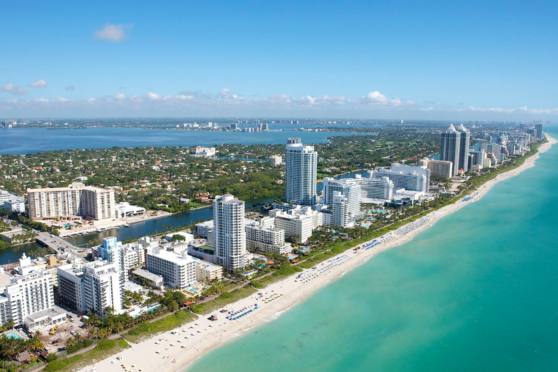
Moving to America is an exciting opportunity, but it can also feel overwhelming. The U.S. offers countless possibilities, but moving there requires careful planning and preparation. From securing the right visa or green card to choosing a city, finding a job, and arranging housing, there’s a lot to consider.
This article will help you understand the key steps and make your move to the U.S. as an expat smoother and more manageable.

From healthcare access to visa requirements, preparation matters. See which international heath insurance plan best fits your move abroad.
There are a variety of different types of U.S. visas, so the one you’ll need will depend on your situation. Some of the most popular employment visas are the H-1B, O-1, and F-1 Student visas.
If you plan to work in America and have a “specialty occupation,” you’ll need to complete an H-1B visa application for skilled workers. Specialty occupations need at least a bachelor’s degree in a specialized field.
You must have the appropriate degree to be considered for any job you apply for. This is one of the requirements you’ll need to meet to be able to apply for the H-1B visa.
The O-1 visa is for individuals with extraordinary talent in the arts, sciences, business, education, or athletics. It also applies to those who have made significant achievements in the television or motion picture industry.
There are different categories of the O-visa, and requirements vary depending on what type of work you do.
Students looking to move to the U.S. will need an F-1 visa. With an F-1 visa, you can pursue a full-time academic career or seek vocational study anywhere in the United States.
In addition to work and student visas, there are also a variety of family-sponsored visas that can help you gain entry into the United States.
Regardless of what type of visa you seek, you will need to meet all the requirements for that particular visa, per your situation.
Once you know which visa is right for you, you’ll need to file the appropriate forms, pay an application fee, and schedule an interview. Different visas have different sets of rules and guidelines that you must follow.
Keep in mind, you’ll also need to file forms for employment authorization. If you’re moving to America for work, your prospective employer should be able to guide you through the process.
You can find a full list of immigrant visas and categories on the U.S. Department of State website.
There are also several steps you can take to become a permanent citizen of the U.S.
The first step in the immigration process is obtaining a Green Card to establish permanent residency. In order to fill out the required forms, you’ll need to first determine your eligibility status.
Most people apply as a foreign relative, a foreign worker, or a refugee seeking asylum. Once you have a Green Card and the U.S. is your permanent residence, you can decide if you’d like to take the next step to naturalization.
Naturalization is the process through which a legal immigrant becomes a U.S. citizen. You’ll need to pass the naturalization test, but there are some things you’ll need to do before you can even take the test.
You have to hold a green card for at least 5 years. In some cases, if you’re married to a U.S. citizen, you can take the test after three years. You must be at least 18 years old and able to read, write, and speak English before your interview and test.
To become a naturalized citizen, the U.S. Government and Homeland Security require you to go through a ten-step process.
You’ll need to determine your eligibility, complete the required forms, have your biometrics taken, and sit for an interview.
The final step in the legal immigration process is to take the oath of allegiance to the United States. If you’re serious about becoming a U.S. Citizen, keep in mind that it can be a lengthy process that takes a lot of preparation.
The cost of living in the U.S. varies a lot from city to city. Expats can expect major cities such as New York, Washington D.C., and San Francisco to cost roughly the same and to be expensive.
Smaller cities and rural areas are much more affordable, but they offer fewer employment opportunities. If you’re planning to move to a major city, here’s what you can expect to spend on the basic necessities.
According to MyNewPlace, the average one-bedroom apartment in New York City is $2,842 per month, and the average two-bedroom apartment is around $3,600 per month.
In San Francisco, the average one-bedroom apartment rents for $3,281, and the average two-bedroom apartment rents for $4,431.
Monthly rent in major metro areas is high compared to other cities around the globe. For the same apartment in London, you would pay $2,178. Living in Sydney, Australia, will cost you less than $2,000 a month.
These prices don’t include utilities, food, or basic living expenses. On average, you can expect to spend another $1,100 per month for that.
Food prices vary as well. Lunch for two people at a mid-range restaurant in New York City or San Francisco will cost you $75. There is something for every budget; you just might not be able to live in certain areas if your budget is smaller.
One thing that people love about living in a major city is the ease with which you can get around. In New York City, a monthly transit pass costs $119 and offers unlimited access to subways and buses.
In San Francisco, the same monthly pass costs $73.50. Compared to other cities, this is quite affordable. A monthly pass in London costs $170.
Where you decide to live will determine your cost of living. Major cities cost the most, but if you consider moving just a few miles outside the center of a city, you’ll pay much less.
Smaller cities are typically more affordable, and you can travel to bigger cities with ease. In most of these cities, you’ll be able to find a one-bedroom apartment well under $2,000 per month.
In Seattle and Philadelphia, you can expect to spend about $60 for a mid-range lunch for two and under $100 for a monthly transit pass.
As with large cities, these cities have excellent transit systems that make it easy to get around.
With the right skills, a strong resume, and the proper work permits, expats will find lots of opportunities in the U.S. job market.
Aside from exploring U.S. companies, many expats look for work with international corporations. You might also want to explore opportunities with an overseas consulate office that represents your native land.
According to LinkedIn, the most popular jobs for college graduates in the U.S. are:
To find the U.S. career that’s right for you, visit Just Landed and Indeed. With millions of jobs at your fingertips, you’re sure to find an opportunity that’s perfect for you.
As an expat, it’s crucial that you get your finances in order before moving. Do your due diligence by talking to your bank about transferring money.
Research what’s involved in changing banks. Always ask if there are banking fees involved or finance charges for U.S. transactions.
The rules and criteria for transferring money or opening a new account will depend on your current financial situation. In addition, make sure you know your expat tax status.
Meet with a financial adviser or planner to learn how to manage your money and how to organize your current investments.
If you plan to open a bank account in America, you’ll need a Social Security number, which will also be necessary for employment.
Depending on where you’re from, you may be able to open an international account in U.S. dollars. Keep in mind that some international banks need you to maintain a minimum balance.
Unlike many countries, the United States does not have a universal national healthcare system. Instead, healthcare is delivered through a mix of private providers and government-funded programs such as Medicare and Medicaid.
Most hospitals in the United States are privately operated, either as nonprofit or for-profit organizations, although public hospitals also play an important role. The country is known for its advanced medical technology, world-class hospitals, and highly trained physicians. Many leading medical specialists and research institutions are based in the United States.
One advantage of the U.S. healthcare system is relatively quick access to specialists and elective procedures compared to many countries with government-run healthcare systems. Patients often have a wide range of providers and treatment options to choose from.
However, these advantages come at a high cost. Healthcare in the United States is among the most expensive in the world, and medical treatment can be extremely costly without insurance coverage.
Most Americans have private health insurance, either through an employer or by purchasing coverage independently. Employers often contribute toward the cost of coverage, while employees are responsible for a portion of premiums and other out-of-pocket expenses.
For expats, international residents, and visitors, international health insurance can help cover medical expenses in the United States and other countries. Regardless of your situation, maintaining adequate health insurance coverage is strongly recommended due to the high cost of healthcare in the U.S.

Navigating a new education system can feel overwhelming, especially when relocating with children. Before moving to the United States, it’s important to understand your schooling options and research the schools available in your destination area.
For many families, public schools are the most practical choice. Public schools are funded primarily through state and local taxes and are generally tuition-free for students living within a school’s district. These schools provide education to all eligible students, including support services for students with disabilities and English language learners.
The quality of public education can vary significantly by location, so many families consider school districts when deciding where to live. Researching school performance, academic programs, and extracurricular opportunities can help you find the best fit for your child.
States that are frequently ranked among the best for public education include:
In addition to traditional public schools, some areas offer magnet schools that focus on specialized subjects such as science, technology, engineering, and mathematics (STEM), the arts, or international studies. Charter schools are another option. These publicly funded schools operate independently and often provide unique educational approaches or specialized curricula.
Private schools are also available throughout the United States. They may offer smaller class sizes, religious instruction, specialized programs, or additional resources. However, private schools charge tuition, which can range from a few thousand dollars to more than $50,000 per year, depending on the school and location.
If you plan to attend a college or university in the United States, you’ll have thousands of institutions to choose from. Admission requirements vary by school but may include academic transcripts, essays, recommendation letters, extracurricular activities, and, in some cases, standardized test scores.
Many American colleges and universities offer dedicated international student services to help students adjust to life in the United States. These resources often include orientation programs, visa assistance, academic advising, language support, and cultural integration programs designed to make the transition as smooth as possible.
As with any international move, thorough research can make your transition to the United States much smoother. Life in America varies significantly from state to state and city to city, so it’s important to understand what daily life will look like in your chosen destination.
While job opportunities may influence where you settle, they shouldn’t be the only factor. The cost of living, housing prices, taxes, transportation options, healthcare access, and school quality can differ dramatically between locations.
If you’re moving with children, take time to research local school districts and educational opportunities. It’s also important to understand how the U.S. healthcare system works and what type of health insurance coverage you’ll need before you arrive.
Before your move, review your financial plans, establish banking arrangements, and consult a financial professional if you have investments, retirement accounts, or tax obligations in multiple countries.
Once you’ve chosen a destination, consider connecting with local expats and international communities. Facebook groups, community organizations, and platforms like MeetUp can help you build a social network, find local resources, and adjust more quickly to your new environment.
Moving to the United States can be an exciting opportunity, but preparation is key. Before you depart, follow our Ultimate Moving Abroad Checklist and make sure you have the appropriate visa, passport, and supporting travel documents in order. Having the right paperwork in place will help ensure a smooth start to your new life in America.
Population
More than 340 million people call the United States home.
Currency
The U.S. Dollar (USD) is used in all 50 states and as a global currency.
Languages
More than 350 languages are spoken across the country, with Spanish being the second most common language after English.
Diversity
The U.S. is one of the world’s most culturally diverse nations, with residents from nearly every country and region.
Expat Hubs
Popular destinations for expats include New York City, Miami, Los Angeles, San Francisco, Houston, and Washington, D.C.
Higher Education
The U.S. is home to thousands of colleges and universities, including many of the world’s top-ranked institutions.
Moving to the United States can open the door to new career opportunities, world-class education, diverse communities, and an exciting lifestyle.
Whether you’re relocating for work, study, retirement, or a fresh start, taking the time to plan ahead will help make your transition more successful.
While adjusting to a new country always comes with challenges, millions of immigrants and expats have successfully built lives in the U.S. With the right preparation and support, you can do the same and make the most of your American adventure.
Healthcare in the U.S. can be expensive, so having the right health insurance in place before you arrive is essential. Compare global plans today and find coverage that fits your needs.