
The American Education System
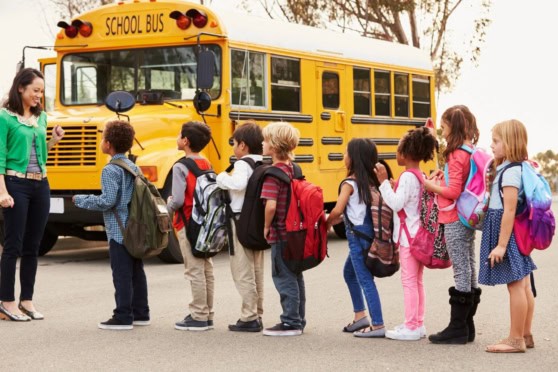
Key Education Options for International Families in the US
Are you an expat, digital nomad, or immigrant planning to move to the United States with your children? If so, understanding schooling options is likely at the top of your list. In the U.S., it is mandatory for school-age children to receive an education, and, naturally, parents want to ensure they choose the right one.
However, navigating schooling options as a foreign family can feel overwhelming, especially when trying to understand how the American education system works and what choices are available. From elementary to middle and high school, there are several pathways for international families to consider.
While the range of options can seem complex at first, having a clear overview will help you make informed decisions and choose the best fit for your child’s needs and your family’s situation.
Find the Best International Medical Insurance
- Compare multiple quotes from top insurers
- Get expert advice at no additional cost
- Find the right plan for your needs and budget
US Education System: Kindergarten to High School
The United States has a K-12 education system that covers thirteen years of schooling. K stands for kindergarten, which typically begins around age 5.
Some districts allow four-year-olds to enroll in kindergarten if they will turn five during that calendar year. For example, if little Maria’s birthday is in November, she could potentially start school in August when she’s still four.
In addition, some parents and guardians who feel their five-year-olds aren’t developmentally ready for kindergarten may choose to enroll them when they are six.
Though some schools may organize their grades differently, elementary school usually runs from kindergarten to fifth grade.
Middle school, sometimes also called junior high school, consists of the sixth, seventh, and eighth grades.
High school in the United States lasts from the ninth grade to the twelfth grade. Keep in mind that the above is a general description, not a hard-and-fast rule.
In public school, the school year must consist of 180 days. Most schools begin the academic calendar in August or early September.
Classes then run to late May or June. However, some schools have switched to a year-round schedule. The school year isn’t any longer for these schools, but instead of a long summer break, they take shorter breaks throughout the year.
What Do Children Study in the US?
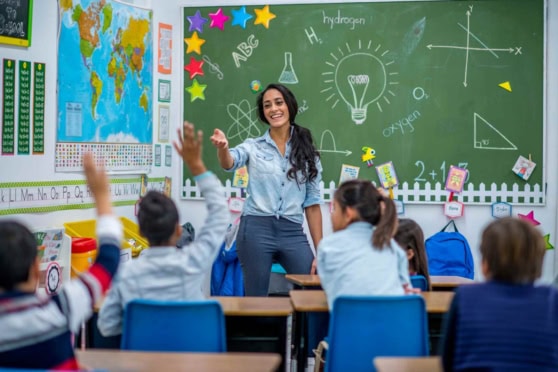
Schools in the United States offer courses in subjects that include English, math, science, social studies, foreign languages, art, music, and physical education.
There is no national education curriculum in the United States. However, many states have adopted the Common Core Standards Initiative, which outlines what K-12 students in public schools should learn.
Grades are on a scale of A to F, with F meaning that a student has failed a class. There are no national exams for students to demonstrate their knowledge in specific subjects.
But some high schools in America offer different Advanced Placement (AP) courses. These classes are the equivalent of first-year university and college coursework. By passing a specific AP exam, a student shows they’ve mastered that subject.
Types of Schools in the United States
The United States has public, charter, and private schools, and permits homeschooling. A school board usually makes decisions about courses and budgets.
For public schools, the town or school district elects school board members. Private schools have their own school boards and rules for selecting members and creating a school curriculum.
Education Abroad
Public Schools
Public schools receive federal, state, and local funding. Therefore, they must follow federal, state, and local laws when accepting students and determining coursework.
Students may have a dress code to follow, but usually won’t have to wear uniforms. Public school students receive textbooks and often supplementary educational materials, such as tablets or computers.
Public schools are required to accept and educate all students, regardless of their country of origin. Students with disabilities are welcome in public schools, and schools must have an educational plan for them.
Students who don’t speak English can attend public schools and take coursework while learning English.
In addition to federal and state money, local governments fund public schools. This means the quality of public schools can vary greatly between communities.
High-income areas generally have well-funded schools that offer many extracurricular activities, AP classes, and school trips.
Schools in less affluent areas may struggle to maintain their buildings. They can have large class sizes, making it hard for teachers to offer students individual attention and guidance.
Public schools that are short on resources may not follow the education plans for students with special needs. Parents and guardians may have to attend meetings to ensure a school sticks to these plans.
Most public school students are required to take regular tests. These tests assess whether school grades meet educational targets, but the exams don’t measure individual student achievement.
Teachers, parents, and students have all expressed frustration with the number of required tests.
Some public schools don’t allow students to enroll until they’ve received the necessary immunizations. These requirements can vary widely from state to state.

Moving Abroad
Are Public Schools Free in the USA for International Students?
How do international students get free education in the U.S.? All students can receive a public school education free of charge from kindergarten through the 12th grade.
Public schools must enroll any student who resides in their district – there are no restrictions on education for foreigners in the U.S., and immigration status does not matter.
The immigration status of a student’s parents or guardians is also not important. The only exception to providing an education free of charge is when students arrive in the U.S. with an F-1 student visa.
International students who come to study in the USA under this visa must pay for their schooling, even in USA high schools that are public.
Private Schools
Private schools are another education option in the United States. These schools charge tuition and create their own curricula.
However, some states have begun regulating private schools to ensure that their students receive an education equivalent to that in public schools.
Private schools usually do not receive public funds. But some states and localities do permit public funds to be used for private school voucher programs.
These programs give parents vouchers equal to the cost of educating their child at a public school. That voucher amount can be applied toward tuition at participating private schools.
The U.S. has both religious and secular private schools. Many religious schools do not require prospective students to be members of the school’s religion, but students may have to participate in observances and classes associated with the affiliated religion. Whether religious or secular, most private schools require students to wear uniforms.
The cost to attend a private school can vary among schools and across the country. Some charge a few thousand dollars a year in tuition, while others charge tens of thousands. Most private schools offer scholarships and financial aid.
Private schools usually have smaller classes than those in public schools. This means teachers can pay more attention to each student. However, even if you can afford it, private schools aren’t always better than public ones.
Private schools may have fewer certification requirements for teachers. Some private schools are smaller and, therefore, offer fewer courses than public schools.
There may not be special classes for academically gifted students. A private school’s curriculum does not have to teach generally accepted historical and scientific facts.
These schools also don’t have to follow federal rules regarding students with disabilities or learning difficulties.
Charter Schools
Charter schools are publicly funded but can opt out of certain regulations that regular public schools must follow. They do not charge tuition. Some require students to wear uniforms.
Charters can set up their own admissions standards and may have a selective admissions process, so you cannot count on being able to enroll a student in a charter school.
Online Schools
There are private online schools as well as online charter schools. Grades K through 12 all have online options. Not all states allow students to attend online schools full-time.

Education Abroad
Homeschooling
In the United States, homeschooling has become a popular educational choice. All states allow students to be taught at home, usually by a parent or guardian.
However, you must follow a state’s homeschooling requirements, which vary by state and locality.
Homeschooling is so popular that there are many teaching programs to choose from, so you don’t have to start lesson planning from zero.
If you choose homeschooling, you may decide to follow a curriculum from your home country. But still consider getting in touch with other homeschoolers in the United States.
Homeschooling means students don’t have as many opportunities to interact with their peers as students who attend school daily.
Some homeschooled children may appreciate the chance to join clubs or sports teams with other kids.
International Schools
A very popular option for immigrants is to send their children to an international school. International schools teach courses that adhere to international standards.
They can be wonderful places to learn for students of all ages. There are international elementary, middle, and high schools.
However, these institutions are almost always private, and attending an international private school can be expensive.

Education Abroad
What Are the 3 Types of International Schools?
Most international schools follow one of three curricula: U.S., English National (British), or International Baccalaureate (IB). However, some international schools may offer more than one curriculum or combine two or more.
The British system is geared toward passing the A-level exams, which assess academic performance. The International Baccalaureate Organization oversees IB programs to ensure they follow global standards.
All of these programs of study are excellent, so you won’t have to decide between them based on academics.
Why Do Kids Go to International Schools?
International schools offer special benefits for international students in the USA. Because they usually follow a specific curriculum, foreign students can easily switch between international schools around the world or to foreign high schools without significant learning gaps.
Public, charter, and private schools in the United States can also be strong academically, but their curricula are likely to differ from those of other countries.
Is It Good to Go to an International School?
If you’re planning to explore other parts of the world with your children, attending an international school can make the move to a new school easier for them.
International schools also allow young people to interact with other international students. It can be hard to adjust to a new and different culture, especially when you’re a kid. Having other friends who are in a similar position can be reassuring.
Can a Foreign Student Get a Scholarship to an International School?
Most international schools are private institutions. They, therefore, charge tuition, which can be very expensive.
However, there are scholarships for elementary, middle, and high school students from abroad. Talk to the international school in your area to ask about scholarships for your child or children.
Are International Schools Better than Normal Schools?
While international schools have some benefits, they are not always better than regular U.S. schools for foreign students.
International students in the U.S. can have wonderful educational experiences at public, private, and charter schools.
The Top International Schools for International Students in the United States
Some of the best international schools are located in or near major U.S. cities. Note that these schools include ones in Washington, DC (the capital of the country, which is on the East Coast) and ones in Washington state (on the West Coast, with schools located around the city of Seattle):
- American Senior High School (Miami-Dade County, Florida)
- Henderson International School in Henderson, Nevada
- British International School of Washington, DC
- The Washington International School in Washington, DC
- French Immersion School of Washington in Bellevue, Washington
- International School in Bellevue, Washington
- British International School of Chicago, Illinois
- Lycée Français de Chicago, Illinois
- Lycée Français de Los Angeles, California
- French American International School in San Francisco, California
- British International School of Boston, Massachusetts
- British International School of New York City, New York
- Lycée Français de New York in New York City, New York
- International School of Denver, Colorado
School Activities
School life in the United States extends beyond the classroom. Most schools offer clubs and activities for a wide range of interests. However, the number of activities at public schools can vary depending on the school’s financial stability.
In U.S. high schools and middle schools, popular sports include basketball, volleyball, and American football. Theater groups stage plays and musicals.
Students demonstrate their musical abilities in band and orchestra. And there can be clubs for things like computers, debate, chess, and films.
Participants in these clubs may be responsible for covering additional expenses, either by paying extra money or via fundraising activities. Some schools can financially support extracurricular activities.
Issues in US Schools
In some places, public school boards may adopt educational requirements that align with specific political or religious views.
Do your research to be sure the school you choose is teaching factual material, especially in science and history.
Elementary, middle, and high schools in the U.S. have all experienced school shootings. Most schools have drills to prepare children for this possibility.
Students may also go through drills tailored to local risks, such as earthquake preparedness drills in California.
Bullying can occur at almost any age, though schools are trying to make it stop. If a bully targets your child, talk to school administrators. They should be able to take steps to help your child.
Find the Best International Medical Insurance
- Compare multiple quotes from top insurers
- Get expert advice at no additional cost
- Find the right plan for your needs and budget