
Moving to Thailand

Key Takeaways
- Choose a visa that matches your plans. Work, study, family, and retirement routes have different conditions, so confirm current requirements before arranging your move.
- Location shapes your lifestyle and budget. Chiang Mai offers mountain surroundings and established expat communities, Hua Hin provides coastal living, and Koh Samui offers an island setting.
- Plan employment and housing carefully. Check work authorization and occupation restrictions, research rental costs, and understand foreign property ownership rules before committing.
- Arrange healthcare and prepare for cultural differences. Review public coverage eligibility and private insurance options, learn basic Thai, and research schooling if moving with children.
An Expat Guide to the Land of Smiles and Cultural Wonders
Thailand is one of the most popular expat destinations in Southeast Asia, and for good reason. Not only does the country have the sixth-best healthcare system in the world, but the cost of living is also much lower than in Europe or North America.
The tropical nation also has a reputation for fast, reliable internet service, which is a huge perk for digital nomads. So if you are considering moving to Thailand, this article outlines everything you need to know. From navigating the Thai immigration process to finding an apartment and a job, we’ve got you covered.

Planning Your Move to Thailand? Start Here
From healthcare access to visa requirements, preparation matters. See which international heath insurance plan best fits your move abroad.
Legal Requirements for Moving to Thailand
Foreigners must meet several legal requirements before they can move to Thailand. Most importantly, they will need to apply for the correct visa and make sure they are enrolled in the public healthcare system or have adequate health insurance.
Thailand Health Insurance Requirements
There are currently no health insurance requirements for entering Thailand. In January 2024, the country lifted its requirement that all foreigners provide proof of coverage upon arrival. Thailand temporarily adopted this rule during the COVID-19 pandemic, but it no longer applies.
Despite this change, expats moving to Thailand will still need to ensure they have adequate health insurance, whether through the country’s Universal Coverage Scheme (UCS) or a private insurer. You can read more about this further down the article.

Requirements for Each Type of Thai Visa
Foreigners who want to live in Thailand must obtain a non-immigrant visa. Most of these visas are initially valid for 90 days. Once you are physically in Thailand on your 90-day visa, you can request an extension of stay.
There are a variety of Thai visas for which you may qualify:
- Work Visa: if you intend to seek employment or conduct business in Thailand
- Family or Marriage Visa: if you have family living in Thailand or you’re married to a Thai national
- Study Visa: if you intend to enroll in school, take short study courses, or do a curricular internship
- Retirement Visa: if you intend to live in Thailand and not work in any capacity
If you want to make a short trip to Thailand before you officially move, you can also apply for a 30-day or 60-day Thai tourist visa.
Note that tourist visas are for visiting Thailand, not living there, so you’ll still need to apply for a work, family, study, or retirement visa if you’re planning a long-term stay.
Becoming a Permanent Resident of Thailand
If you move to Thailand and decide you want to become a permanent resident, you can apply for a permanent residence permit. This allows you to stay in the country permanently without having to extend your visa. Notably, this is also a necessary step if you want to apply for Thai citizenship in the future.
To apply for a permanent residence permit, you must meet one of the following eligibility requirements:
- You’ve had three consecutive one-year visa extensions
- You’ve held a valid Thai work permit for three years, as of the date you’re applying for permanent residency
- You earn a monthly income of at least $900 (if you’re married to a Thai national) or $2,300 (if you’re single)
Becoming a Citizen of Thailand
Thailand offers immigrants a path to citizenship. There are several ways to become a Thai citizen, but naturalization is the most common.
One of the benefits of gaining Thai citizenship is having a Thai passport, which makes it much easier and faster to visit other countries in Southeast Asia.
Becoming a Thai citizen can also give you better access to business and employment opportunities, as well as the ability to buy real estate.
To be eligible to apply for Thai citizenship, you must:
- Have lived in Thailand with permanent resident status for a minimum of five years
- Be able to speak and read the Thai language
- Be actively employed with a valid work permit for at least three consecutive years
- Have a clean criminal record

Is Thailand Safe?
Thailand is statistically among the safest places to live in Southeast Asia, and cities that attract many tourists are especially safe. The country also has strict laws on crime and imposes severe punishments, including the death penalty, on those who break the law.
The 2023 Global Peace Index (GPI) ranks Thailand as the 92nd-safest country, out of 163. The GPI looks at factors such as crime, political stability, and citizens’ happiness to rate how peaceful and safe a country is compared to others. Thailand’s GPI ranking puts it ahead of the United States (#131), Colombia (#140), and Mexico (#136).
According to June 2024 data from Numbeo, Thailand has a Crime Index of 37.77, which is low. Notably, a number below 40 indicates a low crime rate in the country or city. Meanwhile, Thailand’s Safety Index is 62.23. Unlike the Crime Index, a higher Safety Index (above 60) indicates that residents perceive the country or city as very safe.
Many Thai cities are safer and have lower crime rates than the national average. Here’s a snapshot of the Crime and Safety Indexes for three major Thai cities:
- Chiang Mai: 77.89 (Safety Index) and 22.11 (Crime Index)
- Koh Samui: 71.25 (Safety Index) and 28.75 (Crime Index)
- Hua Hin: 64.81 (Safety Index) and 35.19 (Crime Index)
Notably, even the capital city of Bangkok, the country’s largest urban city with a population of more than five million, has a high safety index of 60.24 and a low crime rate of 39.76.
Where to Live in Thailand
Thailand is bursting with vibrant cities and charming seaside villages, making the decision of where to live feel overwhelming.
So to help you out, we’ve reviewed key factors such as living costs, healthcare access, job opportunities, crime rates, walkability, quality of life, and more for three Thai cities that are popular with expats.
Chiang Mai
Often called the “hidden jewel of Southeast Asia”, Chiang Mai is the largest inland city in northern Thailand. More than 40,000 of its 130,000 residents are foreigners.
Everywhere you walk in this easy-to-navigate city, you’ll see majestic mountain vistas, spiritually significant cultural sites, and friendly street food vendors.
Options for shopping, dining, and nightlife are excellent here, too. Chiang Mai’s healthcare facilities have English-speaking staff, and the city is less than a 20-minute ride from the airport.
It’s also a top choice for retirees and digital nomads who want to immerse themselves in Thai culture while enjoying the creature comforts of Western living.
Hua Hin
Hua Hin is a small coastal town located 2.5 hours from Bangkok. Unlike bustling Chiang Mai, which has more than double the population, this relaxing seaside city of 63,000 residents runs at a slower pace.
What used to be a fishing village is now a beloved resort destination with a thriving tourism industry. Hua Hin’s hot, tropical climate is a perfect excuse to enjoy water sports like surfing, boating, and water skiing.
The town’s proximity to Bangkok also ensures fast access to top-tier healthcare facilities and other urban amenities.

Koh Samui
Much of Thailand is rural and undeveloped, but that hasn’t stopped expats from building communities in cozy, remote villages like Koh Samui. In fact, this small island in the Gulf of Thailand is home to 6,000 foreigners.
Between the friendly locals, lively atmosphere, low cost of living, and pristine waterfalls and beaches, Koh Samui can feel like one of Thailand’s best-kept secrets.
It has good infrastructure (including fast, reliable WiFi service) and you can always take a plane, ferry, or private boat to reach the mainland. If you need health care, there are also several high-quality medical facilities on the island.
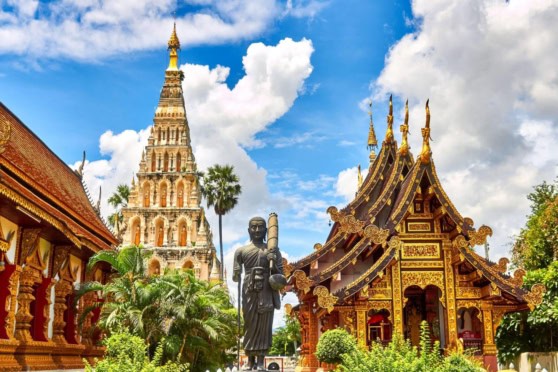
Cost of Living in Thailand
When it comes to expat life, it’s best to choose a country that won’t break your budget. The cost of living in Thailand is relatively low, which is why so many foreigners choose to call it home.
According to June 2024 data from Numbeo, Thailand’s current Cost of Living Index (CLI) is 36.0. To give context, this is almost 65% cheaper than New York City, which is one of the most expensive cities in the world, with a CLI of 100.
To better understand how the cost of living in Thailand stacks up to other countries, here’s a snapshot of the CLI for a few other expat destinations:
- Bahamas: 88.5
- Singapore: 81.9
- USA: 72.9
- Australia: 72.8
- Italy: 58.9
- Costa Rica: 53.6
- Mexico: 43.8
The average monthly cost for one person to live in Thailand, including rent and utilities, is $800 to $1,100. That said, some areas of Thailand are a bit more expensive due to their location. For example, the cost of goods in Koh Samui is slightly higher, as the island is located off the mainland and most supplies are transported there by boat.
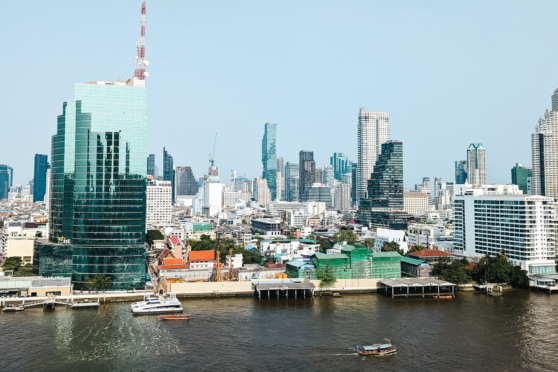
Finding a Place to Live
Although the current law prevents foreigners from owning land in Thailand, you can still buy certain types of properties under certain conditions. For example, foreign-born Thai residents can buy a condo if at least 51% of the other condos in the building are owned by Thai citizens.
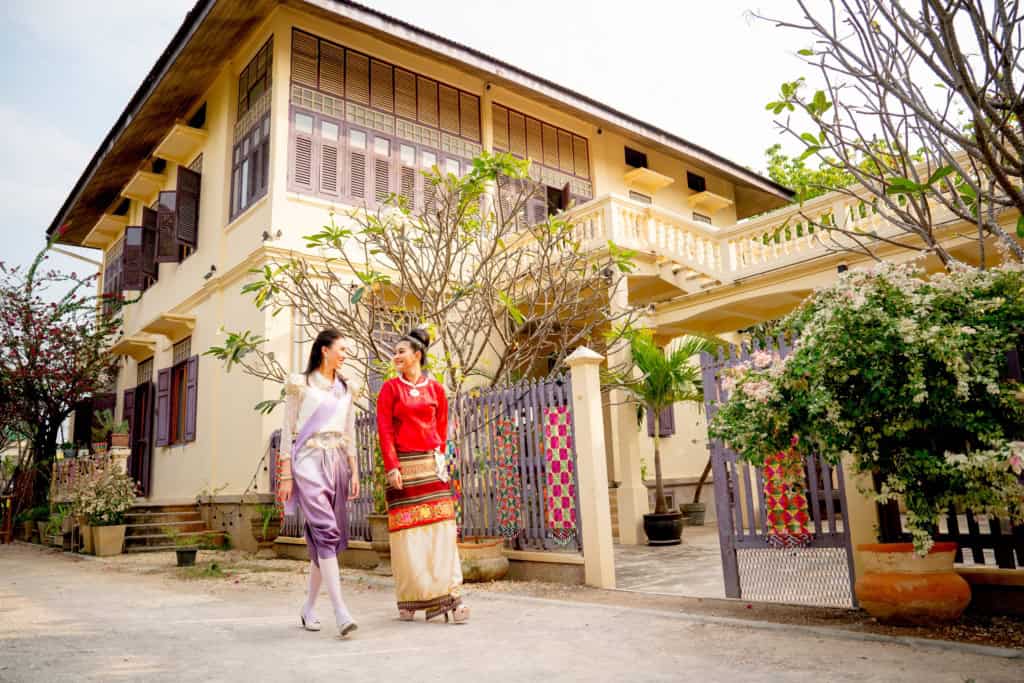
They can also buy up to 49% of a building structure, but cannot purchase or own the land upon which it’s located. There are many online rental sites where you can find Thai real estate for rent. Condos, apartments, and villas are the most popular options.
The average rental cost for a one-bedroom apartment in a city center is $600 per month. However, outside the main areas, it can run as low as $250 per month and rarely exceeds $500. When it’s time to finalize the details of your rental agreement, be prepared to pay your rental deposit in cash.
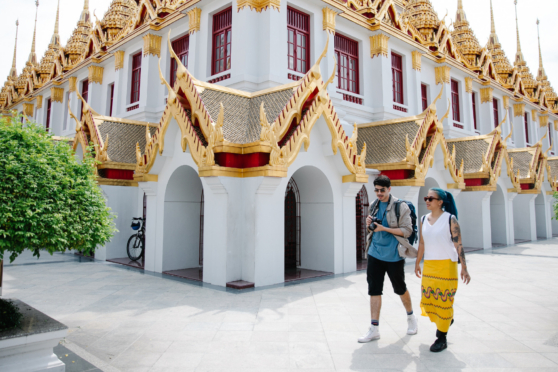
Finding a Job in Thailand
If you intend to work in Thailand, it’s best to find a job before you arrive and have your Thai employer sponsor your visa and work permit. This is also advisable given that finding a job in Thailand can be difficult for expats. One reason is that the country legally prohibits expats from working in certain jobs.
Some of the jobs that immigrants are barred from doing include:
- Accounting
- Architecture
- Civil engineering
- Clerical work
- Construction
- Hairdresser
- Tour guide
To avoid navigating the complex Thai job market, many expats choose to be digital nomads, working remotely for non-Thai companies. If you are considering this move, you might want to read these digital nomad tips.
Banking and Finances
The standard currency in Thailand is the Thai Baht. Foreigners can open a bank account in Thailand but must do so in person.
When opening a bank account, you will need to provide the following:
- Proof of your non-immigrant visa
- Proof of your work permit (if you have a work visa)
- A letter from your school (if you have a study visa)
- Valid passport
Some banks may require proof of Thai residency, such as a copy of your residence permit or a rental agreement.
If you work in Thailand, you’ll pay income taxes on money earned from your Thai employer. However, if you earn income abroad, you will only pay taxes on that income if the payment was remitted to Thailand in the year it was earned.
Education in Thailand
Expat families with school-aged children can choose from more than 150 international schools across 18 cities in Thailand. Most of them are located in and around Bangkok.
Bilingual, private, and public schools are also available, and homeschooling is legal. However, just keep in mind that where you send your child can have a big impact on their education. Schools in urban areas have high, rigorous standards, while those in more rural areas often lack resources.
Adults looking to study in Thailand will find that many colleges and universities teach classes in English. For instance, Mahidol University in Salaya and Chulalongkorn University in Bangkok are two of the best in the country.
Thai Culture and Language
Approximately 88% of Thailand’s population speaks Thai, the national language. Nearly half the country also speaks English, which students learn at local schools.
Communicating in English won’t be a problem in major cities and tourist areas. However, it’s best to know Thai if you plan to visit or live in a rural, less-populated part of the country. If you don’t already speak it, there are many language classes available for adults.
Like any country, Thailand has a unique culture. For example, it is not uncommon for several generations to live together under one roof, which might not be the norm in your home country. Family tradition is important in Thailand, and the elderly are treated with the utmost respect.
Here are some other Thai cultural traditions that are good to be aware of:
- Women are expected to dress modestly, especially when visiting Buddhist temples
- Never touch anyone’s head or pass anything over someone’s head, as the head is considered sacred
Thailand is also known as the “Land of Smiles”. The Thai word “sanuk” means fun, but for the Thai people, it’s not just a word – it’s a way of life. Thai nationals are always looking for fun and joy in everything they do.
Healthcare in Thailand
Thailand has a Universal Coverage Scheme (UCS) that provides mostly free medical treatment to Thai citizens. All Thai workers contribute 5% of their income to cover the cost of medical care nationwide. However, foreigners legally working in Thailand are not covered by the UCS unless they have permanent residency or are employed by a Thai company.
In this case, they will need to take out a private health insurance plan to ensure they have coverage for any routine or unexpected health concerns. Another benefit of buying private health coverage in Thailand is having access to English-speaking doctors and staff, newer medical equipment, and shorter wait times.
There are several plans to choose from, including the following:

Cigna Global Insurance Plan
- Flexible plans tailored to your needs and budget
- 1.5M+ providers in 200+ countries
- 24/7 multilingual customer support
U.S. citizens planning on moving to Thailand can also apply for the following plan:

BCBS Global Solutions Worldwide Premier
- Unlimited annual and lifetime coverage
- Pre-existing conditions covered with prior insurance
- For U.S. citizens abroad or foreign nationals in the U.S.
As you might expect, the premium you pay will vary depending on the insurance provider and the level of coverage you choose. Therefore, it’s important to do your research and select the right plan to suit your needs and budget.
Ready to Call Thailand Home?
With its vibrant culture, warm climate, low crime rate, and affordable cost of living, Thailand is a popular destination for expats. And if you are fortunate enough to call this country home, you have a wealth of stunning natural landscapes and bustling cities to explore on your doorstep.
Start Your Life Abroad With Confidence
Before you relocate, make sure you have the right health coverage in place. Compare top plans and get expert guidance tailored to your move.