
The Cost of Living in Thailand
Key Takeaways
- Thailand generally costs less than the U.S. and Western Europe, but your monthly budget depends on location, housing choices, and lifestyle.
- Housing costs vary widely. Bangkok and popular beach destinations typically cost more, while Chiang Mai and smaller cities offer more affordable options.
- Local food and public transportation help stretch your budget. Imported foods, alcohol, car ownership, and air conditioning can increase everyday expenses.
- Include healthcare coverage in your relocation budget. Check employer-provided benefits, private insurance costs, and any coverage requirements associated with your visa.
Thailand is a popular destination for foreigners, offering breathtaking beaches, incredible cuisine, and a year-round tropical climate. It’s one of the best places to live abroad for expats seeking an immersive cultural experience, and thanks to its affordability, it’s appealing for those looking to stretch their budget.
Indeed, the low cost of living in Thailand is a major draw, allowing for a comfortable lifestyle at a fraction of the cost of North America or Western Europe. While major hubs like Bangkok are pricier than smaller towns, Thailand remains significantly more affordable overall. This article covers everything you need to know about housing, food, leisure, and everyday expenses.
All prices in Thai baht have been converted to U.S. dollars. Unless otherwise specified, the cost-of-living data comes from Numbeo. These numbers were up to date as of May 2026.

Moving to Thailand? Get Covered
Compare personalized international health insurance options that match your destination, budget, and coverage needs.
✔️ Personalized quotes • ✔️ Expert guidance • ✔️ No obligation
Is Thailand Expensive?
In short, no. Compared to the U.S., regular living expenses in Thailand, including rent, are around 52% lower. This can allow you to eat out more often, treat yourself to regular massages, or take frequent weekend trips.
As everywhere, your cost of living depends on where you live and your personal lifestyle. But by any measure, Thailand is not expensive.
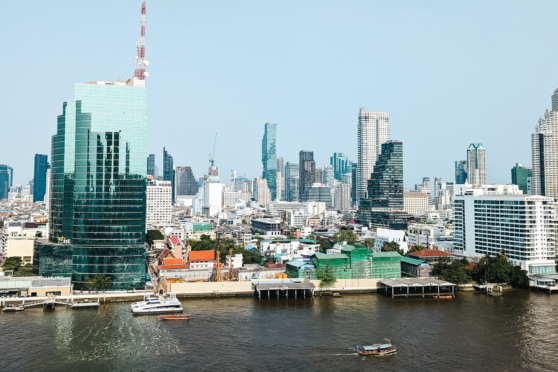
A lot of Thailand’s urban life centers on Bangkok, the capital. About 11.5 million people live in the Bangkok metro area. But though Bangkok is a dynamic megacity, it’s still a lot cheaper than a Western city of its size. If you choose one of the smaller cities, you can expect your cost of living to drop even further.
Living Abroad
The Cost of Living in Thailand Versus the US
Across the board, the cost of living in Thailand is significantly lower than in the United States. This makes it an attractive option for expats, retirees, and digital nomads looking to stretch their budget without sacrificing quality of life.
Everyday expenses such as housing, food, transportation, and entertainment are all considerably more affordable, allowing for a comfortable lifestyle at a fraction of the cost of major U.S. cities. In Bangkok, for example, you would typically need around USD$2,565 per month to maintain the same standard of living that would require roughly USD$4,670 per month in New York City.
This stark difference highlights just how much further your money can go in Thailand, whether you choose the fast-paced capital or one of the country’s more relaxed and affordable regional cities.

The Average Cost of Living in Thailand
To offer more insight, it helps to break down the cost of living in Thailand across its most essential categories.
While overall expenses remain low compared to many Western countries, your monthly budget will largely depend on where you live and the lifestyle you choose. From rent and utilities to groceries, dining out, transportation, and healthcare, each category plays an important role in shaping your total cost of living.
The following sections take a closer look at what everyday life typically costs across different parts of the country.
Housing Costs in Thailand
Thailand’s housing costs are much lower than those of the U.S. or Europe. How much you pay depends on whether you decide to live in a big city or a small town.
Bangkok, the capital, is the most expensive city in the country. Beach and party destinations like Koh Samui and Phuket are more expensive than other mid-size Thai cities, such as the popular yet peaceful Chiang Mai.
Rent for a one-bedroom apartment in the center of a Thai city averages USD$248-$805 per month. In Bangkok, this can set you back USD$464-$929 per month.
In Koh Samui, a popular tourist destination, you can expect to pay USD$402–$2,404 per month. In northern Chiang Mai, housing costs are a lot more affordable. Rent is in the range of USD$372-$743 per month for a one-bedroom apartment.
Price differences follow the same trend across a city for a three-bedroom apartment. On average, you can expect to pay USD$557-$2,737 per month for a three-bedroom apartment in the center of a Thai city.
In Bangkok, the cost of a central three-bedroom apartment can range from USD$1,548 to USD$3,096 per month. An apartment of the same size is in the range of USD$929-$5,634 per month in Koh Samui and USD$557-$1,263 per month in Chiang Mai.
Utilities for a studio apartment will add USD$48-$139 per month, and internet access usually costs USD$12-$28 per month on top.
Keep in mind that Thailand has a tropical climate, so you may need to factor in the cost of air conditioning power into your monthly budget.
Food and Entertainment Costs in Thailand
Overall, food and entertainment costs in Thailand are much lower than in the United States or Europe.
Thailand is a great destination for foodies, especially if you like spicy dishes, curries, and all things coconut milk. The nation is known for its street food stalls, offering fresh, affordable meals, and for its tropical produce such as mango, jackfruit, and rambutan.
Depending on where you live, you can expect to pay about 66% less for dining out. A meal at an inexpensive restaurant costs USD$1.55-$6.19 on average. Date night is also a treat, as a three-course meal for two is about USD$15-$62.
If you prefer cooking at home, groceries are, on average, 41% cheaper there. A dozen eggs cost USD$1.34-USD$2.97, one pound of chicken is USD$0.99-USD$2.94, and one pound of beef is USD$3.10-USD$10.06.
Staple foods such as rice or potatoes cost USD$0.43-$1.33 per pound of rice and USD$0.47-$1.18 per pound of potatoes. Food that is less common in the local diet, such as dairy, may be more expensive. While one pound of local cheese is USD$6.50 in the U.S., in Thailand, you’ll pay USD$8.50.
Wine is also a little more costly in Thailand than in the States; a mid-range bottle is USD$10.84–$24.77. Should you want a beer while you’re out and about, you can expect to pay about USD$1.55-$3.71 for a domestic pint like Chang or Singha. For an authentic Thai alcohol experience, try Mekhong spirit (a spiced, rum-like drink) or SangSom, a spirit popular in party drinks.
Taking in a film is less costly; a single movie ticket in Thailand costs USD$4.64-$9.29. However, fitness clubs in Thailand are close in price to those in the U.S.: a monthly pass runs about USD$24.77-$92.87.
Transportation Costs in Thailand
Transportation costs in Thailand vary from city to city, but they’re overall affordable, especially if you stick to public transit.
Bangkok has an extensive public transport system that includes buses, subways, elevated trains, and boats. A one-way ticket on local transit is USD$0.77-$1.86. A monthly public transit pass costs USD$20.90-$46.44. You can also use taxis, tuk-tuks (a three-wheeler type of taxi), and ride-hailing apps to get around Bangkok and smaller cities. A mile in a taxi in Thailand is USD$1.14-$2.98, about two-thirds what you’d pay in the States.
If you prefer to drive yourself, be prepared for higher prices. A small car like a Volkswagen Golf costs USD$21,671-$49,407 in Thailand, about USD$1,500 less than the same car in the United States. A gallon of gas runs around USD$4.20-$6.56 in Thailand, nearly 50% more than in the States. Besides the expense, you should also be ready for Thailand’s chaotic traffic.
Thais drive on the left, and buses, tuk-tuks, taxis, cars, and motorcycles compete fiercely for space on the road. You’ll also need a local or international driver’s license, as a foreign license is usually not accepted there.
Healthcare Costs in Thailand
Thailand has a public healthcare system and public health insurance. You can qualify for public health insurance in Thailand with a Thai employer. In that case, a certain amount of your paycheck is automatically deducted each month for public health coverage. If you move to Thailand without a local employer, you must buy your own insurance.
Foreigners who move to Thailand under the LTR (long-term resident) program need to prove they have health insurance with coverage of at least USD$50,000 or make a deposit of USD$100,000.

Live Comfortably on Less in Thailand
There’s no question about it – Thailand is more affordable than many other parts of the world. You can create a comfortable lifestyle full of meals out, wellness treatments like massages, and weekend travel with more financial ease. In addition, Southeast Asia has a lot to offer expats: a warm climate, friendly locals, a rich culture, and beautiful beaches.
Thailand can be a great place to build your life abroad, with many great options for international citizens. Whether you’re looking for fast-paced city life, deep historical exploration, small-town charm, or beachfront bliss, the low cost of living in Thailand means the choice is yours.
Enjoy Life Abroad With the Right Coverage
From everyday expenses to unexpected medical needs, make sure you’re fully prepared. Explore health insurance options that support your lifestyle abroad.