
The Cost of Living in Australia

Thousands of people move to Australia each year, drawn by its strong job market, high quality of life, and world-class healthcare system. While immigration continues to support economic growth across the country, the cost of living in Australia has steadily increased over the past few years.
Whether the country is affordable to live in as an expat depends on your lifestyle and needs. To give you an idea of what to expect, this article provides an overview of living costs in 2026, including housing, groceries, transportation, and other everyday expenses.

Get Health Insurance Quotes for Your Move Abroad
Planning your move to Australia? Compare personalized international health insurance options that match your destination, budget, and coverage needs.
✔️ Personalized quotes • ✔️ Expert guidance • ✔️ No obligation
Is Australia Expensive?
Australia ranks 26th among the most expensive countries to live in, particularly for housing, groceries, dining out, and transportation. As an island nation far from major global manufacturing hubs, many goods must be imported, increasing everyday consumer costs.
Common imports include vehicles, electronics, fuel, and pharmaceuticals, all of which are affected by shipping costs, import taxes, and duties. You can read about the cost of importing goods to Australia on the Australian Border Force website.

Despite this, salaries in Australia are generally high, and residents benefit from excellent infrastructure, public services, and a world-class healthcare system. For many expats considering moving to Australia, strong wages and a high overall quality of life offset the higher cost of living.
Throughout this article, we use data from Numbeo’s Cost of Living Index (CLI) to compare living expenses in Australia with those in other countries around the world. The index uses New York City as a baseline score of 100. A score above 100 means a location is more expensive than NYC, while a score below 100 means it is less expensive. All data referenced in this article is current as of May 2026.
The Cost of Living in Australia Versus the USA
As of 2026, Australia’s cost-of-living index is 67.9. This makes it slightly more affordable overall than the United States, which sits at 68.8.
Although both countries rank among the world’s 30 most expensive places to live, expats in Australia may find better value in certain areas of daily life. Housing costs, in particular, tend to be somewhat lower than in the U.S. That said, many everyday expenses, such as groceries, dining, and transportation, are generally higher overall.
The Most Expensive Cities in Australia
Australia has one of the highest costs of living in the world, although affordability can vary significantly between cities.
Below, we look at the three most expensive cities in Australia: Sydney, Canberra, and Adelaide. For context, we use the New York City Cost of Living Index (100) as a benchmark. All data below is current as of May 2026.
Sydney
Sydney is one of the most recognizable cities in the world, famous for its iconic Sydney Opera House and vibrant harbourfront. It is also the most expensive city in Australia. Despite the higher cost of living, many expats are drawn to Sydney for its strong economy, cultural diversity, and high quality of life. The city also enjoys a warm, sunny climate year-round.

Highlights include the Darling Quarter, an inner-city precinct known for its restaurants, nightlife, and family-friendly green spaces. It also features the world-famous Bondi Beach, which is popular for surfing and coastal walks.
Sydney has a Cost of Living Index (CLI) of 79.4, meaning it is over 20% cheaper than New York City based on our benchmark.
Canberra
Canberra, the nation’s capital, has the second-highest cost of living in Australia. The city is defined by wide open spaces, planned urban design, and abundant greenery. Many visitors come to the city to enjoy hot-air balloon rides over Canberra and other attractions. However, it is the low crime rates, minimal pollution, and family-friendly atmosphere that encourage many to stay in the long term.
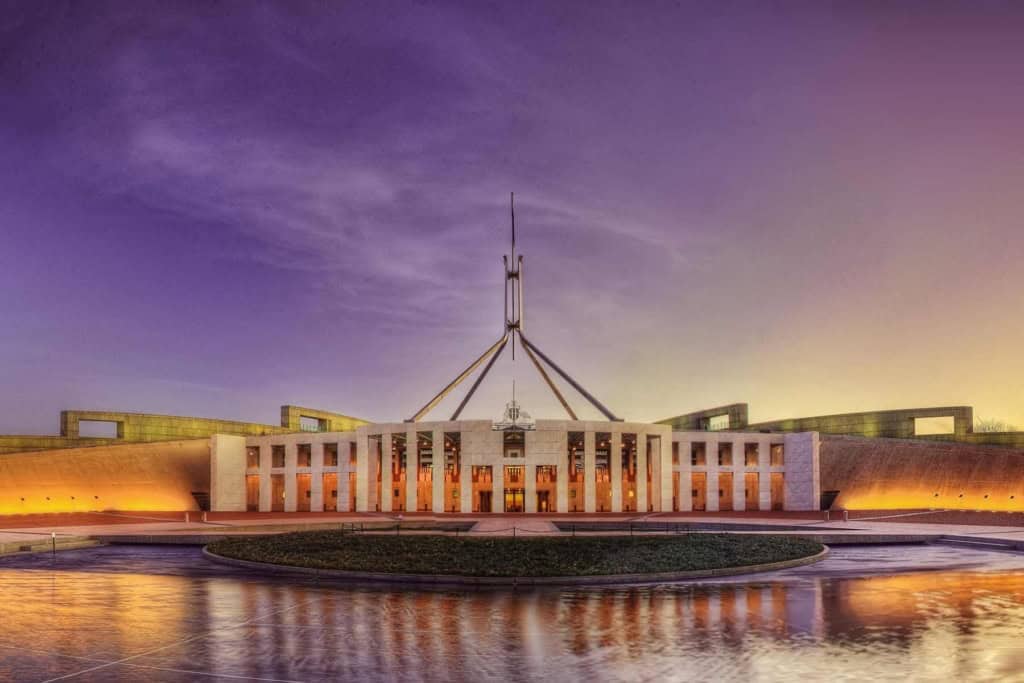
While Canberra is not a beach city, it is located near several lakes and rivers and is only a short drive from the coast. Residents also have easy access to outdoor activities such as fishing, kayaking, camping, and mountain biking.
Canberra has a Cost of Living Index (CLI) of 78.1, slightly lower than Sydney and over 20% cheaper than New York City.
Melbourne
Melbourne, the capital of Victoria, is known for its arts, culture, and world-class dining scene. Once one of the more affordable major cities in Australia, living costs have risen in recent years, though it remains more affordable than Sydney and Canberra. Melbourne’s coffee culture and laneway cafés are world-famous. It also has a strong public transport network, making it both walkable and easy to navigate.
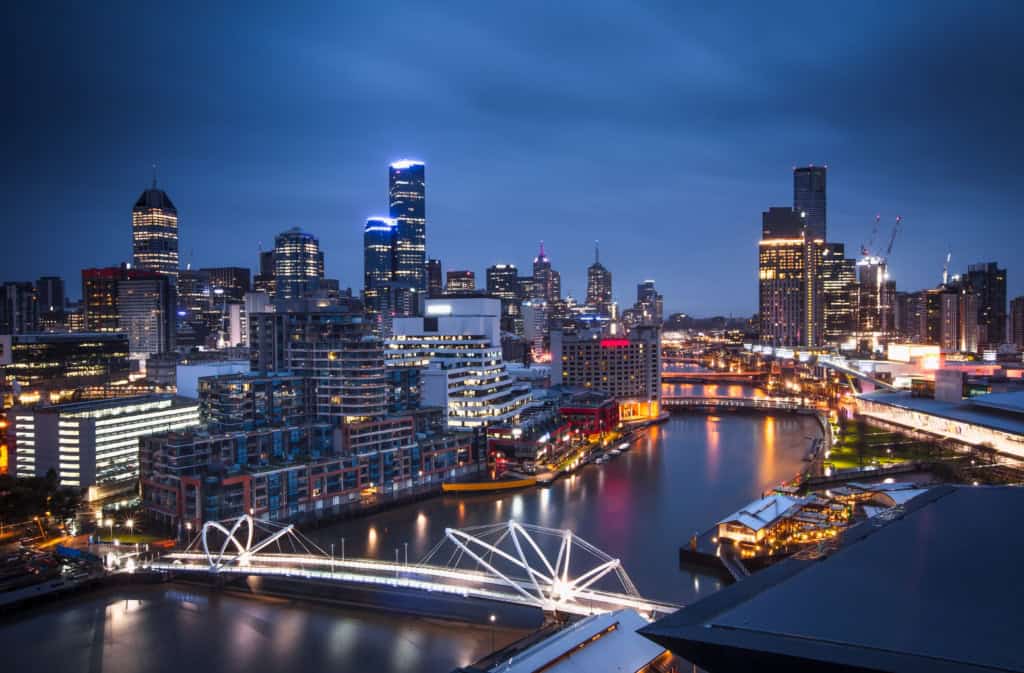
It also offers a wide range of cultural and recreational activities, from art galleries and live music to beach trips at nearby Brighton Beach. Outdoor enthusiasts can also enjoy park-based fitness groups, tree-lined running trails, and green urban spaces throughout the city.
Melbourne has a CLI of 77.5, making it approximately 22.5% cheaper than New York City.
The Most Affordable Cities in Australia
For budget-conscious expats, the most affordable major cities in Australia are Perth, Brisbane, and Adelaide.
Perth
As the capital city of Western Australia, Perth is famous for its white-sand beaches, wineries, and relaxed lifestyle. The city is considered safe, with relatively low crime rates and a friendly, welcoming population. Its warm, sunny climate, strong education options, and high quality of life also make it especially appealing to international students and expats.
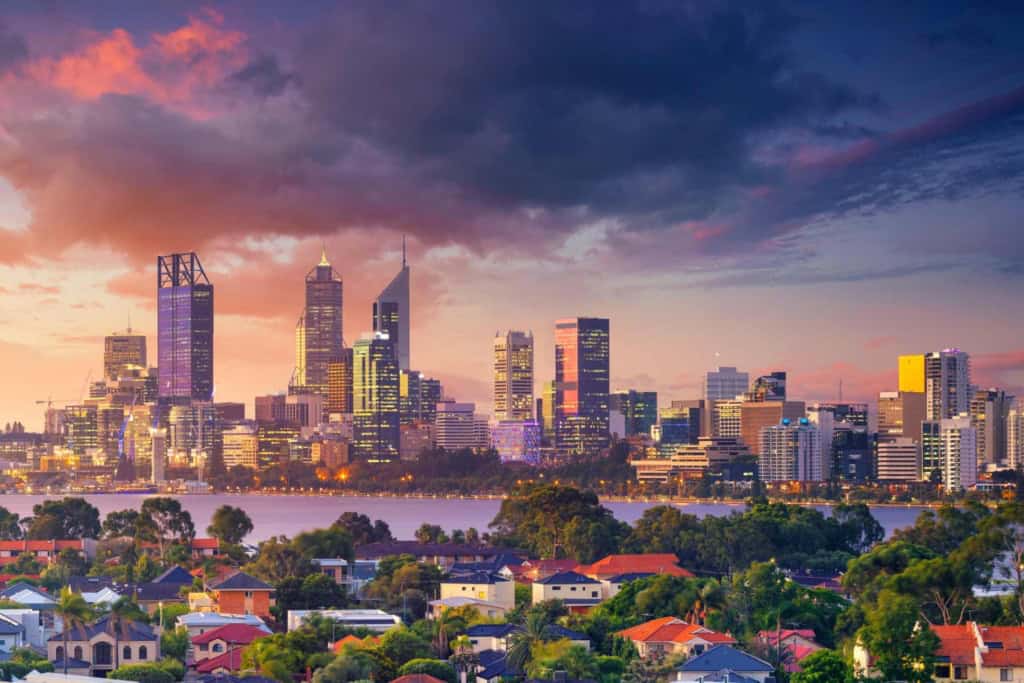
Perth has also seen growth in industries such as technology and resources, making it one of the best countries for digital nomads and professionals.
Perth has a CLI of 72.9, making it 16.1% more affordable than Canberra and 27.1% more affordable than New York City.
Brisbane
Brisbane is the capital of Queensland and the third most populous city in Australia. The population tends to be younger and more energetic, and the weather is beautiful year-round. The city is increasingly popular with international students and young professionals due to its relative affordability, strong education sector, and growing job market.
While it is less walkable than some other major Australian cities, Brisbane offers abundant green spaces, cultural attractions, nightlife, and easy access to outdoor recreation.
Brisbane has a CLI of 70.9, making it nearly 30% more affordable than New York City and significantly cheaper than the top three most expensive cities in Australia.
Adelaide
Adelaide is conveniently located within a 30-minute drive of three South Australian wine regions and countless beaches, which may explain the city’s higher prices. More than 30% of the city is covered in green spaces. In addition to its many parks and trees, Adelaide has a thriving bar and restaurant scene, laid-back locals, and an excellent standard of living.
The city is often described as a “small-town feel with big-city amenities,” thanks to its calm pace and walkability. Once considered one of Australia’s more expensive cities, Adelaide is now among the more affordable major urban centers. It has a CLI of 74.7, placing it below Melbourne but above Brisbane and Perth.
The Average Cost of Living in Australia
The high-quality Australian healthcare system and the country’s growing job market have driven immigration in recent years.
Below is a comparison of average living expenses for housing, food, entertainment, and transportation in Australia’s most expensive city, Sydney, and its least expensive city, Brisbane.
All figures below are in U.S. dollars (USD).
Housing
In general, housing, electricity, and other utilities in Australia are more affordable than in the United States. However, within Australia, costs can vary significantly, with Sydney being notably more expensive than Brisbane for both housing and utilities.
Expense | Sydney | Brisbane |
One-bed apartment in the city center | $2,560 | $1,971 |
Three-bed apartment in the city center | $5,021 | $3,452 |
One-bed apartment outside the city center | $1,736 | $1,437 |
Three-bed apartment outside the city center | $3,004 | $2,414 |
Utilities (electric, hear, water) | $223 | $173 |
Internet (unlimited data) | $56 | $62 |
Food and Entertainment
Below is a breakdown of the cost of dining out, entertainment and recreation, and grocery shopping in Australia’s most and least expensive cities.
Going Out
Expense | Sydney | Brisbane |
Lunch for two at an inexpensive restaurant | $21 | $18 |
Three-course dinner for two at a mid-range restaurant | $88 | $83 |
Domestic beer (0.5-liter bottle) | $7 | $9 |
Pair of cinema tickets | $18 | $16 |
Eating In
Expense | Sydney | Brisbane |
Dozen eggs | $5.84 | $5.10 |
1 gallon of milk | $7.68 | $7.04 |
1 pound of chicken breast | $4.96 | $4.59 |
Bottle of wine (mid-range) | $14.47 | $13.02 |
1 pound of rice | $1.19 | $1.17 |
Transportation
Below is a snapshot of average prices you can expect to pay for public transportation in Australia’s most and least expensive cities, as well as the cost of buying a car and fuel.
Expense | Sydney | Brisbane |
One-way ticket on local transit | $4.05 | $0.36 |
Monthly pass for local transit | $157 | $22 |
New Volkswagen Golf (or similar) | $28,500 | $28,900 |
Liter of gasoline | $1.39 | $1.41 |
Education
Below is an overview of the average cost of private education in Australia, including both preschool and primary school fees, with comparisons for Sydney and Brisbane:
Monthly tuition for full-time preschool or private kindergarten
- Australia: $2,181
- Sydney: $2,315
- Brisbane: $2,267
Annual tuition fees for an international primary school
- Australia: $18,024
- Sydney: $28,668
- Brisbane: $13,052
Healthcare
Australia’s healthcare system is known for its high-quality care and strong patient outcomes, supported by well-trained medical professionals. The public system, known as Medicare, is funded through taxation and provides universal healthcare coverage to citizens and permanent residents of all ages, ensuring access to essential medical services and Australian hospitals nationwide.
However, wait times to see a GP or specialist can sometimes extend to several weeks or even months, particularly in high-demand areas. Moreover, Medicare does not fully cover services such as dental care, vision care, or ambulance transport, resulting in additional out-of-pocket expenses. For this reason, many expats choose private health insurance in Australia to reduce waiting times, access a wider network of providers, and gain more comprehensive coverage.
To help you prepare, below are some of the best international health insurance plans for expats moving to Australia, based on coverage, flexibility, and overall value.
Health Insurance Plans for Australia
Australia offers high-quality healthcare, but costs can add up quickly without the right coverage. While Medicare is available in some cases, many expats rely on private care for faster access and broader treatment options.
These plans are recommended based on:
- Access to private hospitals in Australia
- Coverage for expats who may not qualify for Medicare
- Flexibility to match your cost of living and long-term plans
For All Nationalities Moving to Australia: Cigna Global Insurance Plan
- Flexible coverage that adapts to Australia’s cost of living and your budget
- Access to private healthcare and specialists across Australia
- Optional modules to add outpatient, dental, and wellness benefits
Why It Works for Australia
Cigna Global is a strong fit for expats who want customizable coverage while managing monthly costs. You can start with core inpatient coverage and add benefits as needed, which is ideal in a country where private healthcare can be expensive but predictable.

Cigna Global Insurance Plan
- Flexible plans tailored to your needs and budget
- 1.5M+ providers in 200+ countries
- 24/7 multilingual customer support
For US Citizens Moving to Australia: BCBS Global Solutions Worldwide Premier
- Comprehensive coverage with high annual limits for major medical expenses
- Strong protection for pre-existing conditions (with prior coverage)
- Access to top-tier private hospitals in Australia and worldwide
Why It Works for Australia
This plan is ideal for U.S. citizens who want maximum protection in a high-cost healthcare system. Private hospital stays, specialist visits, and ongoing treatments in Australia can be expensive, and Worldwide Premier helps remove those financial concerns with more complete coverage.

BCBS Global Solutions Worldwide Premier
- Unlimited annual and lifetime coverage
- Pre-existing conditions covered with prior insurance
- For U.S. citizens abroad or foreign nationals in the U.S.
See What Health Insurance Costs for Your Move to Australia
Healthcare costs in Australia vary based on your visa, location, and coverage level. Get personalized quotes to understand your monthly premium and coverage options before you move.
Ready to Move to the Land ‘Down Under’?
Australia offers a high standard of living, strong infrastructure, and excellent public services. That’s why thousands of people immigrate to Australia each year. However, it also comes with a relatively high cost of living compared to many other destinations.
While expenses vary significantly between cities, with places like Sydney on the higher end and Brisbane and Perth offering more affordable alternatives, most expats find that higher salaries and quality of life help offset the costs.
It’s also important to consider Australia’s geographic distance from much of the world. Unlike Europe, where neighboring countries are easily accessible by train or car, international travel from Australia typically requires long-haul flights. Even its closest neighbor, New Zealand, is over 2,000 miles away. Domestic travel within Australia can also take considerable time due to the country’s size.
Ultimately, whether Australia is an affordable place to live depends on your lifestyle, location, and personal priorities. By understanding the key expenses in housing, transport, education, healthcare, and everyday living, you can plan more effectively for a smooth transition and make informed financial decisions before your move.
Seeking professional financial advice for expats can also help you create a realistic budget, manage taxes, and prepare for long-term financial goals abroad.
Get a Health Insurance Quote
Get personalized health insurance recommendations based on your destination, length of stay, and coverage needs.