
Hospitals in Canada

How to Access Healthcare While Visiting or Living in Canada
Canada is renowned for its exceptional healthcare system, which delivers high-quality treatment and care nationwide. While major cities like Toronto, Montreal, and Vancouver are home to some of the best hospitals in Canada, world-class medical facilities can be found in every province and territory.
Whether you’re visiting or living in the “Great White North,” this article will outline how to access hospital care, what to expect during your visit, and the potential costs involved.

Find the Best International Medical Insurance
- Compare multiple quotes from top insurers
- Get expert advice at no additional cost
- Find the right plan for your needs and budget
Does Canada Have Good Hospitals?
Yes, Canada is home to some of the world’s best hospitals. In fact, ten Canadian hospitals were featured in Newsweek’s list of the World’s Best Hospitals for 2024, with Toronto General Hospital ranking among the top three globally.
These rankings are based on evaluations from medical experts, patient surveys, and factors such as hygiene standards, doctor-to-patient ratios, and the use of standardized Patient Reported Outcome Measures (PROMs).
While most of Canada’s hospitals are located near the U.S. border, where most of the population resides, excellent healthcare is available in every province and territory. From Vancouver to St. John’s, visitors and expats can be assured that world-class care is easily accessible.
Types of Hospitals in Canada
As of 2023, Canada had 1,017 hospitals, with the largest concentration (about 300) located in Ontario. Most hospitals in Canada are publicly funded through the country’s Medicare system, which ensures that residents receive essential health services at no cost.
Canadian hospitals are generally non-profit organizations funded by provincial and territorial governments. While the public system covers core services at these facilities, certain additional services, such as private rooms or elective treatments, may not be fully covered.
These extras are typically covered by private insurance or paid out of pocket.
Public vs Private Hospitals in Canada
The distinction between public and private hospitals in Canada is less pronounced than in many other countries, which is primarily due to the structure of the country’s Medicare system.
Because hospitals provide what federal law defines as “necessary care,” the divide between public and private care is narrower than in many other healthcare systems worldwide.
Canada’s Medicare system ensures most healthcare services are publicly funded, with most hospitals being non-profit institutions supported by provincial or territorial governments.
While many doctors operate private practices outside of hospital settings, the services they offer are still predominantly publicly funded – around 98%.

Other medical facilities, such as long-term care, virtual care, and home care, often combine public and private services. In certain provinces, you will find private clinics that specialize in specific services, such as MRIs and imaging.
Fully private hospitals are rare, with one notable exception being Shouldice Hospital in Ontario, which specializes in hernia surgery and attracts medical tourists from around the world.
For more information on public and private healthcare in Canada, check out our article on the Canadian healthcare system.
How to Get Emergency Care in Canada
Like in most countries, emergency care in Canada is available at the emergency room (ER) of your nearest hospital. ERs are designed to treat urgent medical conditions that require immediate attention, such as injuries, severe illnesses, or life-threatening situations.
Who Can Access Emergency Care?
Emergency care is available to everyone in Canada, regardless of residential status. However, if you need more than just stabilization in a life-threatening situation, you may be billed for the care you receive.
While emergency treatment itself is provided regardless of health insurance status, having health coverage can help you avoid costly medical bills. For example, non-residents may pay much more for an ER visit than Canadian residents.
At Queensway Carleton Hospital in Ontario, non-residents are charged $1,158 for an ER visit, while Canadian residents without a health card would pay $386. International students without coverage fall in between, facing a bill of $772.

Don’t Risk It! Having the right coverage is essential to avoid high medical bills. Visitors to Canada should secure travel insurance, which typically covers emergency care and medical expenses. Foreigners planning to stay in Canada for longer than six months should consider more comprehensive health insurance, which includes non-emergency services.
What to Do in an Emergency
In a medical emergency, head straight to the nearest hospital’s emergency room (ER). While walk-in clinics are suitable for urgent care, such as minor injuries or illnesses, the hospital is the place to go for more serious or life-threatening situations.
If you are unable to transport yourself to the hospital, dial 911. The dispatcher will ask you questions to assess the nature of your emergency. If you need an ambulance, inform them, and they will dispatch one to your location.
They may continue asking additional questions to ensure they provide the necessary information to the responding medical team.
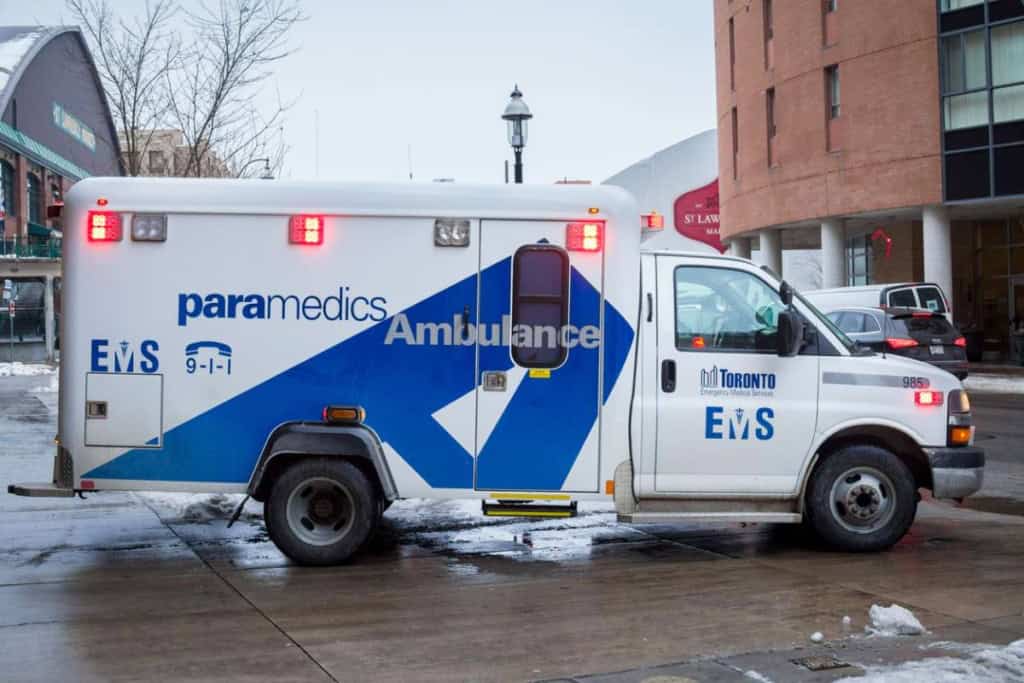
It’s important to note that ambulance response times have been increasing across Canada, with some areas, such as Toronto in 2024, experiencing a concerning rise in ambulance unavailability.
Therefore, if you are living in or traveling to Canada, it’s a good idea to familiarize yourself with the location of the nearest hospital and have a plan in place for how to get there in case of an emergency.
If you plan to visit remote areas, such as hiking in Yukon, mountaineering in British Columbia, or exploring the wilderness of northern Quebec, consider purchasing Medical Evacuation Insurance.
This will ensure that you are transported to the nearest appropriate medical facility or, if necessary, back home for continued care. It also helps avoid high out-of-pocket costs for emergency transport in less accessible locations.

Travel Insurance
Arriving at the Hospital
When you arrive at a hospital in Canada, you will typically need to present the following documentation:
- Your health card (if you’re a Canadian resident)
- Photo identification (such as a passport or driver’s license)
- Proof of insurance if you are a visitor, expat, or international student
After providing the necessary documents, you will undergo a triage process, during which your condition will be assessed based on its urgency. Life-threatening situations will be prioritized, while non-urgent cases, such as a fever or minor injury, may involve a longer wait.
It’s important to note that emergency room waiting times can vary significantly depending on the hospital and the severity of other cases.
How Much Does it Cost to Visit a Canadian Hospital?
Hospital admission is generally free for Canadian residents who are covered under provincial health plans.
However, if you are a non-resident, you will likely be required to pay for treatment upfront unless you have private insurance or other coverage.
Below is a breakdown of what you can expect to pay based on your residency status and the services you require
For Canadian Residents
If you’re a Canadian resident and covered under a provincial health plan, hospital admission is usually free for medically necessary care. This includes:
- Emergency care
- Diagnostics (e.g., lab tests, X-rays, MRIs)
- Surgery
- In-hospital medications
- Pre- and post-operative care
However, additional charges may apply for services such as private rooms, elective procedures, or ambulance transportation. For example, hospitals in Prince Edward Island (PEI) charge a “preferred accommodation” fee of CAD 528 (approximately USD 369) per night for private rooms.

Health Insurance
For Non-Residents
If you’re a non-resident, you will likely need to pay for hospital services out-of-pocket unless you have a private plan or other coverage.
Here are some example costs (in CAD) for hospital services, as outlined on PEI’s provincial health website:
- Emergency Visit: CAD 1,032
- Outpatient Visit: CAD 772
- Lab Test or X-ray: CAD 358
- MRI: CAD 1,602
- Day Surgery: CAD 2,224 – CAD 29,290
- Inpatient Ward Rate (Hospital Stay): CAD 1,396 – CAD 6,964
Again, specific care options, such as private rooms, elective procedures, or ambulance transportation, may incur extra charges. These additional costs can quickly add up, so it’s essential to consider them when planning for potential medical expenses.
Given that medical costs can escalate rapidly in Canada, it’s strongly advised to secure a travel or global health plan before you arrive in the country.
Be sure to thoroughly review your policy to understand what is covered, as well as any exclusions or limitations. For instance, some plans may cover emergency care, while others might have exclusions or limitations. It’s also important to confirm with the hospital that they accept your insurance before receiving care.

Travel Insurance
How Do Hospital Payments Work?
If you are a non-resident in Canada and do not have a health card or private insurance, most hospitals will require upfront payment for the services you receive.
You will typically need to settle your bill before leaving the hospital or sometimes even before receiving treatment.

If you have private insurance, the process may differ. You will likely need to file a claim for reimbursement, as hospitals generally do not bill insurers directly.
Again, having adequate coverage is crucial, as medical bills in Canada can quickly add up, and insurance can help offset those costs.
The Best Hospitals in Canada
According to Newsweek, Canada is home to some of the world’s best hospitals. The top ten hospitals in the country are primarily located in Toronto, Montreal, and Vancouver, and all are ranked among the world’s top 250 hospitals.
Top Hospitals in Toronto
Toronto is home to many of Canada’s best hospitals, offering cutting-edge medical care, specialized services, and a strong focus on research and education.
Toronto General – University Health Network
Ranked #1 in Canada and #3 globally, Toronto General is a top hospital offering world-class care. It is affiliated with the University of Toronto and is renowned for its expertise in cardiac care, organ transplantation, and the treatment of complex patient conditions.
Address: 200 Elizabeth Street, Toronto, ON M5G 2C4 Canada
Phone: +1 416 340 3111 ext. 3155
Sunnybrook Health Sciences Centre
Canada’s second-largest hospital, which ranks 30th worldwide, was established as a hospital for Canadian veterans. Today, it is a teaching hospital affiliated with the University of Toronto. Sunnybrook is also a major research center, with over $100 million in annual research funding, and is home to Canada’s largest trauma center.
Address: 2075 Bayview Avenue, Toronto, ON M4N 3M5 Canada
Phone: +1 416-480-6100
Mount Sinai Hospital is part of Sinai Health, which focuses on integrative health care across several centers in Toronto. The hospital itself delivers high-quality acute care in partnership with clinics and home care.
Address: 600 University Avenue, Toronto, Ontario M5G 1X5 Canada
Phone: +1 416-596-4200
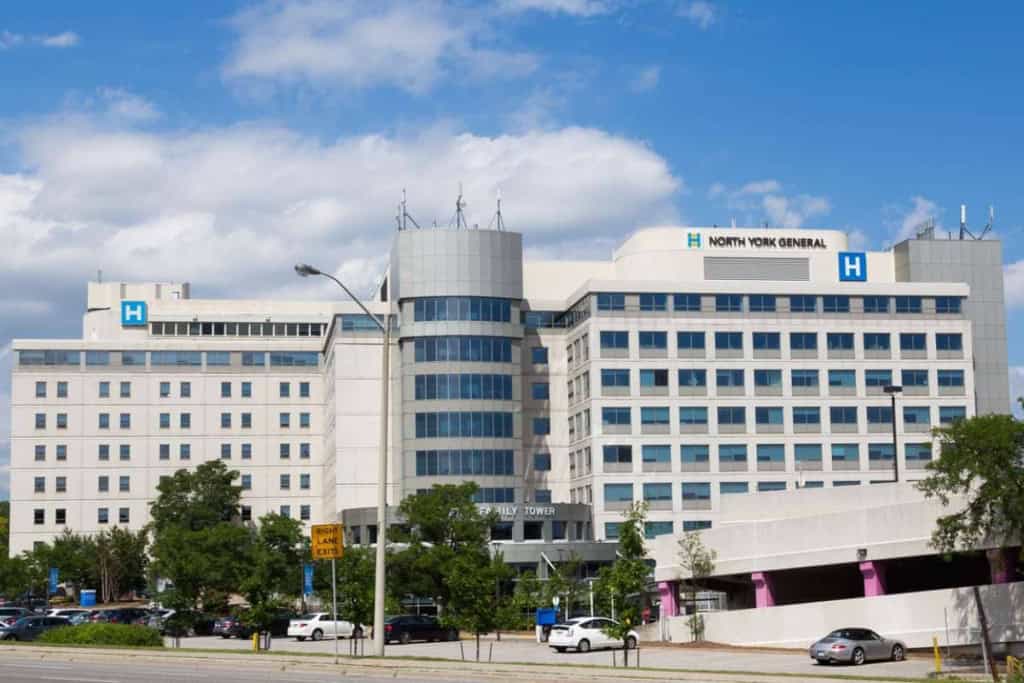
North York General Hospital is Canada’s #4-ranked hospital and is affiliated with the University of Toronto. It specializes in family care, obstetrics, breast and prostate health, and acute care. The hospital is also renowned for having one of the most visited emergency rooms in Canada, serving a diverse and vibrant community.
Address: 4001 Leslie St., Toronto, ON M2K 1E1 Canada
Phone: +1 416-756-6000
Unity Health Toronto – St. Michael’s Hospital
St. Michael’s Hospital is renowned for its expertise in trauma care, particularly neurosurgery and cardiac care. It is also home to one of North America’s largest clinics specializing in the treatment of multiple sclerosis (MS).
Address: 30 Bond St., Toronto, ON M5B 1W8 Canada
Phone: +1 416-360-4000
Toronto Western – University Health Network
Ranked #10 in Canada, Toronto Western Hospital (TWH) is a leader in neuroscience, musculoskeletal health, and the treatment of arthritis. The hospital serves a diverse population and places a strong emphasis on community care.
Address: 399 Bathurst Street, Toronto, ON M5T 2S8 Canada
Phone: +1 416 603 2581
Top Hospitals in Montreal
Montreal is home to some of Canada’s most prestigious hospitals, offering bilingual care and a strong tradition of medical education and research.
Centre hospitalier de l’Université de Montréal (CHUM)
Affiliated with the University of Montreal, CHUM is a leading hospital that serves its patients primarily in French. While services are available in English and other languages upon request, the hospital’s main language of communication is French. CHUM is a state-of-the-art facility that offers high-tech care in several specializations.
Address: 1051 Rue Sanguinet, Montréal, QC H2X 3E4 Canada
Phone: +1 514 890 8000
Montreal General Hospital – McGill University Health Centre (MUHC)
Founded in 1821, Montreal General Hospital (MGH) played a key role in establishing Canada’s first medical school at McGill University. Today, it remains one of McGill’s main teaching hospitals, located at the base of Mount Royal, near the park, offering a picturesque setting for both patients and staff.
Address: 1650 Cedar Avenue, Montreal, Quebec H3G 1A4 Canada
Phone: +1 514 934-1934
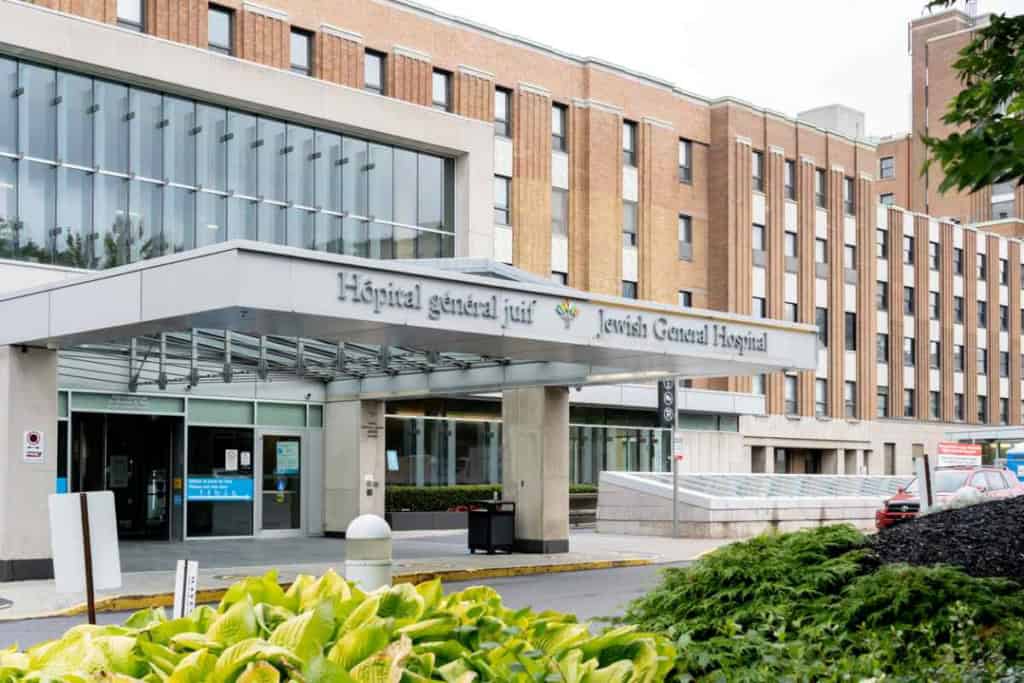
A teaching hospital affiliated with McGill University, the Jewish General Hospital (JGH) was founded in 1934 to serve Montreal’s Jewish immigrant community. Today, it continues to provide care to a diverse range of immigrant communities.
Address: 3755 Côte-Ste-Catherine Road, Montreal, Quebec H3T 1E2 Canada
Phone: +1 514-340-8222
Seek English Services. Montreal is a bilingual city, but by law, services must be offered in French first. However, in neighborhoods with a higher concentration of English speakers, accessing healthcare and services in English is relatively easy, and many hospitals can also offer care in English. These areas typically have English street signs and neighborhood names.
Top Hospitals in Vancouver
Vancouver offers high-quality healthcare, with Vancouver General Hospital (VCH) leading the way in specialized trauma, neurological, and stroke care.
Vancouver General Hospital (VCH)
Ranked #9 in Canada, Vancouver General Hospital is the only Canadian hospital in Newsweek’s top 250 that is not located in Toronto or Montreal. VGH offers a range of services, including emergency care, kidney dialysis, cardiac care, and mental health support. Its acute care center specializes in trauma, neurological conditions, stroke, and burn treatment.
Address: 899 West 12th Avenue Vancouver, BC V5Z 1M9 Canada
Phone: +1 (604) 875-4300
Recommended Hospitals in Other Canadian Cities
While the top ten hospitals mentioned above are located in Canada’s three largest cities, there are many other high-quality hospitals across the country.
The hospitals listed below are among the top 75 in Canada and are spread across various cities, from west to east.
Western Canada
Kelowna General Hospital – British Columbia
Kelowna General Hospital offers a wide range of emergency and specialty services, located in the heart of Eastern BC’s picturesque parkland and wine region.
Address: 2268 Pandosy Street, Kelowna, BC V1Y 1T2 Canada
Phone: +1 250-862-4000
Rockyview General Hospital – Calgary, Alberta
Located in Calgary, Alberta’s cultural hub, Rockyview General Hospital provides comprehensive care with specialties in emergency medicine, critical care, urology, and ophthalmology.
Address: 7007 14 St SW, Calgary, Alberta, T2V 1P9 Canada
Phone: +1 403-943-3000
Royal Alexandra Hospital – Edmonton, Alberta
‘Western Canada’s largest and busiest hospital’ is located in Edmonton, Alberta’s second-largest city. It is a regional leader in women’s health, cardiac care, mental health, and eye health.
Address: 10240 Kingsway, Edmonton, AB T5H 3V9 Canada
Phone: +1 780.735.4723
Central Canada
Saskatoon City Hospital – Saskatchewan
Located in Saskatoon, the largest city in the Canadian prairies, this full-service facility was the first municipal hospital in Western Canada.
Address: 701 Queen Street, Saskatoon, SK, S7K 0M7 Canada
Phone: +1-306-655-8000
Grace Hospital – Winnipeg, Manitoba
Grace Hospital is one of Winnipeg’s premier hospitals, offering a full-service emergency department and comprehensive acute care services.
Address: 300 Booth Drive, Winnipeg, MB R3J 3M7 Canada
Phone: +1 204-837-0111
Queensway Carleton Hospital – Ottawa, Ontario
Located in Canada’s federal capital, Queensway Carleton is a large, multi-accredited hospital that serves the Ottawa-Gatineau Capital Region.
Address: 3045 Baseline Road, Ottawa, ON K2H 8P4 Canada
Phone: +1 (613) 721-2000
Eastern Canada
CHUL – CHU de Québec – Université Laval – Québec City, Québec
The Centre Hospitalier de Québec, affiliated with Université Laval, is a leading hospital in Quebec City. However, its website is only available in French. While English-speaking services are likely available, it may be difficult to communicate effectively in an emergency situation.
Address: 2705 Bd Laurier, Québec, QC G1V 4G2 Canada
Phone: +1 418 525 4444
Hôpital Jeffery Hale – Quebec City, Quebec
Located in Quebec City, this public hospital is the only one offering all of its services in English. It’s a good option if you need medical help and don’t speak French. Although it’s not listed in Newsweek’s rankings, it remains a reliable choice for English-speaking patients.
Address:1250 Chemin Sainte-Foy, Quebec City (Quebec) G1S 2M6 Canada
Phone: +1 418-684-JEFF (5333)
Horizon Health Network – Saint John Regional Hospital – New Brunswick
Saint John Regional Hospital is the region’s primary health center for trauma and cardiac care. It also offers stem cell therapy and is affiliated with Dalhousie University’s medical school program.
Address: 400 University Ave., Saint John, New Brunswick E2L 4L2 Canada
Phone: +1 506-648-6000
Queen Elizabeth II Health Sciences Centre – Halifax, Nova Scotia
The QEII is the leading hospital in Halifax, the capital of Nova Scotia. Its 10 buildings span two campuses, which are part of the teaching and research division of Dalhousie University’s medical school.
Address: 1796 Summer St, Halifax, NS B3H 3A7 Canada
Phone: +1 902 473 2700
Eastern Health – Health Sciences Centre – St. John’s, Newfoundland
Located in St. John’s, the capital of Newfoundland and Labrador, the Health Sciences Centre serves the entire province. It is also a teaching hospital affiliated with Memorial University’s Schools of Medicine, Pharmacy, and Nursing.
Address: 300 Prince Philip Drive, St. John’s, Newfoundland and Labrador A1B 3V6 Canada
Phone: +1 709-777-6300
Get the Right Health Coverage Before You Head to Canada
Canada’s publicly funded healthcare system ensures that both residents and non-residents have access to quality care at hospitals across the country.
Accessing care, especially in emergencies, follows a similar process to that in the U.S. and other English-speaking countries.
Many hospitals in Canada’s largest cities are recognized as some of the best in the world. However, as a foreigner, you will need to pay high out-of-pocket costs for any care you receive unless you secure the right health coverage before arriving in the country.
In the event of an emergency, treatment can be costly, and without insurance, you could be faced with unexpected bills.
Additionally, some provinces have waiting periods before new residents can access provincial healthcare, so securing the right coverage is essential, especially if you plan to stay for an extended period.
The type of plan you choose should align with your individual needs. Before deciding on a plan, consider factors such as the duration of your stay and the type of coverage you may need.
Find the Best International Medical Insurance
- Compare multiple quotes from top insurers
- Get expert advice at no additional cost
- Find the right plan for your needs and budget