
Health Insurance for Foreigners in Germany
Foreigners living in Germany generally need health insurance. Depending on your employment, income, residence status, and other circumstances, you may qualify for statutory health insurance (GKV), private health insurance (PKV), or an international health plan. Here's how the options compare, what they cost, and how to choose and arrange coverage.
How Does Health Insurance Work in Germany?
Health insurance in Germany is divided into two main systems: statutory health insurance (Gesetzliche Krankenversicherung, or GKV) and private health insurance (Private Krankenversicherung, or PKV). Coverage is generally mandatory for residents, while some foreigners may use international health insurance depending on their circumstances and needs.
Your options depend on factors such as your visa or residence status, employment, income, length of stay, and family situation. You may also need proof of valid coverage when applying for a residence permit, starting employment, or studying.
GKV is the standard route for many employees and other eligible residents. Some people can choose private coverage instead, while an international plan may suit expats and globally mobile individuals who need healthcare in Germany and other countries.
For a deeper look at doctors, hospitals, emergency services, and accessing medical treatment, read our guide to the German Healthcare System.

Find the Best International Medical Insurance
- Compare multiple quotes from top insurers
- Get expert advice at no additional cost
- Find the right plan for your needs and budget
What Coverage Do You Need?
The coverage you need depends on your eligibility for the statutory or private German systems and whether you need protection outside the country.
Foreigners moving to Germany usually choose between three main options: statutory health insurance (GKV), private health insurance (PKV), and international health insurance.
Here’s a simple way to compare the main options:
Your Situation | Coverage Option | Key Feature |
Eligible for Germany’s statutory system | GKV | Contributions are generally linked to income |
Eligible for private German coverage | PKV | Premiums and benefits depend on individual factors |
Need coverage in Germany and other countries | International health insurance | Provides medical coverage across multiple countries |
Coverage for Short Stays in Germany
Short-term visitors to Germany have different coverage needs than people who live or work in the country.
If you are eligible for a European Health Insurance Card (EHIC), you can use it to access medically necessary state healthcare during a temporary stay in Germany. Eligible UK visitors may be able to use a Global Health Insurance Card (GHIC) or a valid UK-issued EHIC.
However, these cards are not a substitute for travel insurance for Germany and do not cover expenses such as private healthcare or medical repatriation.
If you need a Schengen visa for a stay of up to 90 days, you must have at least €30,000 in travel medical coverage. Your policy must be valid throughout the Schengen area for your entire stay and cover urgent medical treatment, emergency hospital treatment, and medical repatriation.
Be sure to check the requirements that apply to your visa and circumstances before you travel.
Best Health Insurance for Expats in Germany
For expats seeking global medical coverage in Germany, we recommend the following plans based on their coverage, flexibility, and international benefits.
The Best Health Plan for All Nationalities
Cigna Global is a leading global insurer with excellent service and benefits. Its modular design lets you choose a plan level and add optional benefits based on your medical needs and budget.

Cigna Global Insurance Plan
- Flexible plans tailored to your needs and budget
- 1.5M+ providers in 200+ countries
- 24/7 multilingual customer support
The Best Health Plan for U.S. Citizens
BCBS Global Solutions Worldwide Premier is designed for U.S. citizens living abroad and is a strong option for Americans living in Germany.
It provides international medical coverage with access to the Blue Cross Blue Shield network in the United States and healthcare providers worldwide. This makes it particularly useful for Americans who may return to the U.S. for care.

BCBS Global Solutions Worldwide Premier
- Unlimited annual and lifetime coverage
- Pre-existing conditions covered with prior insurance
- For U.S. citizens abroad or foreign nationals in the U.S.
What Do Global Plans Cover?
Global health plans cover private medical care in Germany and other countries, depending on the geographic area you select.
Benefits can include inpatient and outpatient treatment, doctor and specialist visits, diagnostic tests, prescriptions, and mental health services. Some plans also offer optional benefits such as dental, vision, and maternity coverage.
Exactly what is covered will depend on your policy, including its benefit limits, deductible, and exclusions.
Using Private Hospitals and Healthcare in Germany
With a global health plan, how you access and pay for private medical care in Germany may differ from the GKV system. You can seek treatment at hospitals, clinics, and specialists where care is covered by your policy. However, you should check your insurer’s provider network and any pre-authorization requirements before non-emergency treatment.

Payment arrangements vary by insurer and medical facility. Your insurer may settle eligible bills directly with the provider, or you may need to pay upfront and submit a claim for reimbursement.
If you have a preferred facility, check that it accepts your plan before arranging treatment. You can also explore our guide to hospitals in Germany for more information about medical facilities in the country.
How Much Does Health Insurance Cost in Germany?
Health insurance costs in Germany depend on whether you have GKV, PKV, or a global medical plan.
For 2026, the general GKV contribution rate is 14.6% of eligible income, plus an additional contribution that varies by Krankenkasse. Contributions apply to income up to €5,812.50 per month (€69,750 per year), according to the German Federal Ministry of Health.
PKV premiums are generally based on factors such as your age when you enroll, health risk, and the level of benefits you choose, rather than your income. Insurers may assess your health when you apply, and pre-existing conditions can affect the premium or policy terms.
With global medical plans, costs vary based on your age, plan, coverage level, deductible, and geographic area. Adding outpatient care, dental, vision, or maternity benefits can also increase the premium.
Plans that include medical treatment in the United States may cost more than policies that exclude U.S. coverage. Choosing a higher deductible can generally lower your premium, although you will pay more toward eligible treatment yourself.
When comparing global health plans, it’s important to consider the coverage and benefits you receive rather than price alone. For an accurate cost, request a personalized quote based on your circumstances.
How to Get Health Insurance in Germany
The process for getting health insurance in Germany depends on whether you choose GKV, PKV, or a global medical plan.
1. Check Which System You Can Join
If you are moving to Germany for work or study, first check whether GKV applies to your situation. If you qualify for statutory coverage, you can choose a Krankenkasse.
Some people, including certain higher-income employees, self-employed professionals, and civil servants, may be eligible for PKV instead. Because switching from PKV back to GKV can be difficult, consider your long-term plans and family situation before choosing a private plan.
If you are retiring in Germany or moving without employment, check whether you qualify for GKV or PKV. Eligibility may depend on your circumstances and previous plan.
If you need coverage in Germany and other countries, a global medical plan may be appropriate for your circumstances.
2. Compare Your Coverage Options
Once you know which options are available to you, consider their benefits, costs, exclusions, and provider access.
For a global medical plan, look at deductibles, provider networks, and geographic coverage. Consider where you expect to receive medical care as well. Someone living primarily in Germany may have different needs from an expat who travels frequently, works across borders, or expects to relocate again.
3. Enroll or Apply for Coverage
The enrollment or application process depends on the option you choose.
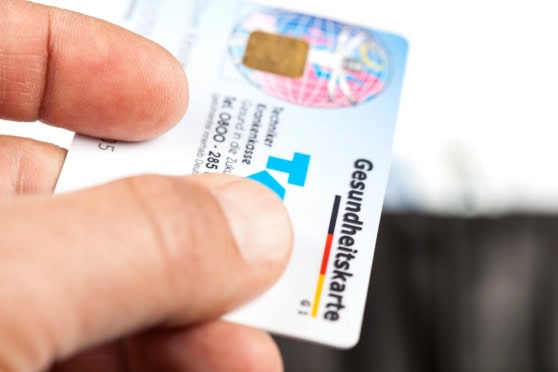
- GKV: If you qualify, choose a Krankenkasse and complete the enrollment process. Once enrolled, you will receive an electronic health card (elektronische Gesundheitskarte or eGK). This serves as proof of coverage when accessing GKV healthcare services.
- PKV: If you choose a private German plan, apply with a private insurer. The application and requirements depend on the insurer and policy.
- An international plan: Apply with your chosen insurer and provide the required information.
Common documents may include:
- Passport or ID
- Visa or residence permit details
- Proof of address in Germany
- Employment or income information
- Previous coverage details
Once enrolled, obtain any proof of coverage you need for your visa, residence, or employment.
Why Use an International Insurance Broker?
If you are considering international coverage, a broker can help you compare plans from different insurers instead of researching each provider separately.
International Citizens Insurance’s licensed advisors can compare plans based on your needs, geographic area, and budget, and help you through the application process at no extra cost. Learn more about working with a broker.
Find the Best International Medical Insurance
- Compare multiple quotes from top insurers
- Get expert advice at no additional cost
- Find the right plan for your needs and budget
Health Insurance in Germany FAQs
-
You may need proof of valid health coverage before or during your move to Germany. The requirements depend on your visa or residence status and reason for moving. Check the Make it in Germany, the German Federal Government’s official portal for skilled workers from abroad, for the requirements that apply to you.
-
Yes, but your options depend on the type of insurance. If you qualify for GKV, pre-existing conditions do not affect your eligibility or contributions. With PKV, insurers may consider your medical history and may charge a higher premium, exclude certain conditions, or decline your application. International health plans have their own rules for pre-existing conditions.
-
Family coverage depends on the type of insurance you have. With GKV, eligible spouses, registered partners, and children may qualify for coverage through an enrolled family member without paying a separate contribution. With PKV, family members generally need their own policies and premiums.
-
Yes, you may be able to switch from PKV to GKV, but only if you meet the eligibility requirements for statutory coverage. Returning to GKV can be difficult in some circumstances, so consider your long-term employment, income, and family situation before choosing private coverage.