International Health Insurance
Gain valuable insights and practical tips for navigating international health insurance while living abroad. From coverage details to expert advice, this comprehensive guide helps travelers…

International medical cover for expats and their families.
Medical and trip cancellation coverage for international travel.
Life insurance for globally mobile individuals living or working abroad.
Comprehensive international medical coverage for groups.
Medical, accident, and liability protection for global travel.
Financial protection for employees worldwide.
Most Popular Country Guides
Healthcare, insurance, and living insights to plan life and travel in each destination.
Healthcare, safety, and practical guidance for living abroad.
Tips and guidance for safer, smarter international travel.
Resources for global mobility, HR, and international teams.
Find the best travel insurance for Switzerland for medical emergencies, trip cancellations, and more, plus top safety tips for your trip.
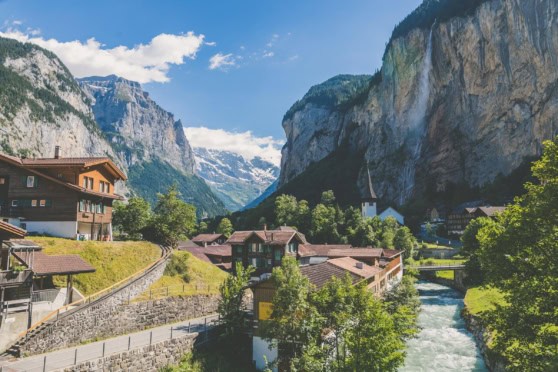
Switzerland has a well-earned reputation as one of the world’s safest and most beautiful destinations. Approximately 12 million visitors arrive each year, enjoying a diverse range of activities, including mountain climbing, wine tastings, and jazz festivals. Switzerland is part of the Schengen area, so most travelers can visit visa-free.
They can stay for up to 90 days in any 180 days, allowing for travel to Switzerland at a leisurely pace. And despite Switzerland’s reputation as being an expensive destination, there are still bargains to be found. Parks, attractions, festivals, and museums are often free or offer value pricing.


As with all destinations, travelers planning to visit Switzerland should ensure they are up to date on their routine immunizations.
These include the measles-mumps-rubella (MMR) vaccine, the diphtheria-tetanus-pertussis vaccine, the varicella (chickenpox) vaccine, the polio vaccine, and a yearly flu shot.
Rabies is present in bats in Switzerland. However, it is not a significant risk to most travelers. Those involved in outdoor and other activities in remote areas that put them at risk for bat bites (such as adventure travel and caving) should speak with their travel doctor about receiving the rabies vaccine.
Pharmacies in Switzerland are plentiful. You’ll find them in even the smallest communities. For most locals, the pharmacy is their first port of call if they’re feeling unwell.
This practice is so common that most pharmacists actually keep patient files, much like a medical clinic would. If you’re spending time in Switzerland, it’s beneficial to visit the same pharmacy so the staff can get to know you.
Popular over-the-counter medications are widely available in Switzerland. However, visitors will find them much more expensive than they’re used to in their home countries.
If you’re only planning on spending a short amount of time in Switzerland, bring along a small first aid kit stocked with some all-purpose painkillers, cold medication, and indigestion tablets.
As most pharmacies in Switzerland will not fill prescriptions from foreign doctors, prepare to travel with an ample supply of what you need from home.
Otherwise, plan to see a clinic mid-trip to get the local prescriptions you need.
Public transportation in Switzerland is clean, easy to use, and affordable. A bus ride costs as little as one Swiss Franc in most municipalities.
Furthermore, visitors in cities like Bern receive free transportation passes with hotel reservations. Swiss taxis are among the most expensive in the world – a distinction that is particularly notable in Zurich, where the cost is $5.19 per kilometer. It does pay to stick with buses and trolleys.
Long-term visitors will also appreciate the savings of a Swiss Travel Pass. This pass offers unlimited travel through the Swiss Travel System’s rail, bus, and boat network. It also provides a 50% discount on most mountain railways and cable cars, as well as free admission to over 500 museums.
Health care in Switzerland is excellent. Visitors can expect outstanding standards of care throughout the country.
However, medical and hospitalization costs are considerably more expensive in Switzerland than elsewhere. Immediate cash payment is required unless special arrangements have been coordinated with your travel insurance provider.
Some special considerations in Switzerland for foreign visitors interested in exploring independently by car aren’t found elsewhere.
For instance, highway travel requires drivers to purchase a sticker, known as a “vignette,” which must be affixed to the windshield.
Without the vignette, your vehicle is subject to huge fines. These stickers are available for purchase at tourist offices, gas stations, and most car rental agencies.
All vehicles must also be equipped with a safety kit, including a yellow vest and a warning triangle, in case of a breakdown. In winter, snow tires are required for all vehicles.
In a world filled with subpar public toilets, those in Switzerland are spotless.
Visitors can expect to find public restrooms at parks, bus and railway stations, as well as in usual locations such as cafes, shops, and attractions.
Alas, while they are sparkling clean and widely available, Switzerland’s public toilets aren’t always free. Most cost between 1 and 2 Swiss Francs. Visitors in need of accessible washrooms can consult the WC Guide for handy information.
Switzerland is a world leader in recycling, and you can expect to find recycling bins alongside public garbage cans.
On hikes and travels through rural areas, visitors are expected to carry all trash and recycling with them until they reach the appropriate disposal facilities.
Food and water standards in Switzerland are comparable to those in the United States, Canada, and the United Kingdom. Most travelers do not need to take exceptional food or water precautions beyond what they usually do at home.
In particular, tap water in Switzerland is safe to drink. You will find numerous public water fountains, often very decorative in nature, plus taps along mountain trails for refilling your water bottle. Unless you are told that the water is not potable, you can assume it is safe to drink.
The water in Switzerland is so clean that it’s even possible to drink lake water in many places. However, unless you are accompanied by a knowledgeable guide who can point you to safe water sources, it’s best to exercise caution when drinking water from lakes, rivers, and creeks.
Switzerland has four distinct seasons, but it’s most famous for winter. Driving conditions may be hazardous during winter.
In particular, many roads, especially those in rural areas, are mountainous and winding. Unless you have extensive experience driving in such regions under such conditions, it’s best to take the train. In Switzerland, dial 140 for emergency roadside assistance.
Of course, avalanches are a constant concern in the mountains. If you are planning an Alpine adventure, consult the Avalanche Bulletin for the most up-to-date information.
As with any heavily touristed destination, petty crimes like pickpocketing are present. In Switzerland’s major cities, reports of these crimes are on the rise, particularly at tourist attractions, airports, railway stations, and on public transportation.
Minimize the number of valuables you travel with. When you’re in crowded areas, carry your bag against your chest to keep it secure. And make your wallet as inaccessible as possible. Back pockets and open tote bags are a pickpocket’s dream!
If you lose your passport while traveling in Switzerland, visit the nearest police station to file a police report. Following this, please get in touch with your embassy for emergency assistance.
The general emergency number for any situation in Switzerland and across Europe is 112.
To reach the police directly in Switzerland, dial 117. For non-emergency situations, call the Swiss Federal Police at 058 463 1123. For the fire department, dial 118. For ambulance and emergency services, dial 144.
U.S. Embassy
Jubilaeumstrasse 93, Bern
Tel: [41] (31) 357-7011 or [31] 357-7218
Canadian Embassy
Kirchenfeldstrasse 88, Bern
Tel: [41] (31) 357-3200
E-mail: bern@dfait-maeci.gc.ca
British Embassy
Thunstrasse 50, Bern
Tel: [41] (31) 359 7700
E-mail: info@britishembassy.ch
