
International Health Insurance
Gain valuable insights and practical tips for navigating international health insurance while living abroad. From coverage details to expert advice, this comprehensive guide helps travelers…

International medical cover for expats and their families.
Medical and trip cancellation coverage for international travel.
Life insurance for globally mobile individuals living or working abroad.
Comprehensive international medical coverage for groups.
Medical, accident, and liability protection for global travel.
Financial protection for employees worldwide.
Most Popular Country Guides
Healthcare, insurance, and living insights to plan life and travel in each destination.
Healthcare, safety, and practical guidance for living abroad.
Tips and guidance for safer, smarter international travel.
Resources for global mobility, HR, and international teams.
Learn about the Russian healthcare system, including who is eligible for coverage under the OMI system, and how to access care as an expat.
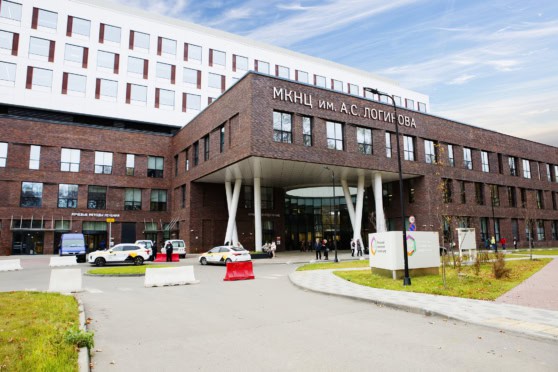
Healthcare in Russia is a struggle. For a country that was once lauded as having one of the world’s finest healthcare systems, it can best be described as offering a fair standard of care today. The 2025 Health Care Index ranks Russia’s system as the 57th best out of 89 countries, with a notably low score for the quality of its infrastructure.
A Bloomberg report ranks Russia’s healthcare system last out of 55 developed countries, based on the efficiency of its state healthcare systems. This represents a significant decline in standing for a country that was once regarded as one of the most innovative and scientifically advanced in the world. While there are some bright spots of progress, Russia’s healthcare system faces significant challenges.

Since 1996, Russia’s constitution has provided citizens and residents with the right to free healthcare. The state offers this through the Federal Compulsory Medical Insurance Fund (also called the OMI or Obligatory Medical Insurance).
It is funded through payroll and employer contributions. The Russian Ministry of Health (министерство здравоохранения) oversees the system and its two million employees. Federal regions, such as Moscow, also have their own health departments that oversee local administration.
Overall, OMI-based care is comprehensive. It covers the cost of inpatient care, all procedures that require an overnight stay at the hospital, chronic conditions, maternal and newborn care, vaccinations, and more.
Like many countries, public hospitals in Russia struggle with long wait times and overcrowding. Unlike others, this phenomenon sometimes reaches extremes and has a significant impact on the quality of care patients receive.
Compounding the problem is the fact that public hospitals are scarce outside of large cities. Patients sometimes feel they’re stuck between being in a very crowded hospital or having no hospital at all.
The bottom line is that Russians aren’t happy. According to a 2016 survey by the Moscow-based polling agency Levada Center, only 2% of Russians reported being proud of their healthcare system.
Some of the most alarming complaints include filthy hospitals, crumbling buildings, and even doctors and paramedics working while intoxicated.
Every Russian citizen and working resident receives free public health insurance through Russia’s Obligatory Medical Insurance (OMI). Of course, free isn’t really free.
Employers pay about 2% to 3% of salaries into a social tax, part of which is used to fund the healthcare system.
In general, healthcare in Russia is underfunded. The country spends between 5% and 6% of its annual GDP on healthcare. This is well below the global average, which stands at approximately 10%, and places Russia near the bottom among European countries.
There’s another financial aspect of Russia’s healthcare system that’s rarely discussed. Bribes and tips aren’t unheard of and are sometimes even expected as patients jostle for care amidst limited resources.
For expats, gaining access to Russia’s healthcare system is relatively straightforward. If you’re working in traditional employment, your employer will take care of you.
They will ensure that you are correctly registered for public healthcare. They will pay 2% to 3% of your salary into a social taxation fund.
A percentage of this tax is then paid into the national healthcare fund. Once your employer makes their initial contribution, you’re considered to be enrolled.
You can also register for Russian healthcare directly. You need to visit your local health center or doctor’s office. Unless your command of Russian is excellent, consider bringing a local friend to translate for you.
You will need to provide your passport, your Russian residency permit, and proof of address to complete the application.


As the largest country in the world, Russia also has some of the most significant healthcare gaps in the world. Public hospitals in major cities, such as Moscow and Saint Petersburg, offer high-quality healthcare.
However, on the opposite end of the spectrum, an estimated 17,500 towns and villages in Russia have no medical infrastructure at all.
These difficult circumstances lead desperate patients to turn to alternative practitioners, including occult and faith healers, who now outnumber doctors.
Despite these gaps in care, it’s not common for Russians to have private insurance (or “voluntary” insurance as it’s often known).
Only an estimated 5% of Russians hold private supplemental insurance, although the number is higher in cities like Moscow, where it is closer to 20%. Many Russians earn too little to afford supplemental insurance.
However, the worlds of private and public healthcare are starting to gradually mix. In Moscow, a chain of medical clinics called Doktor Ryadom (“Doctor Next Door”) is rapidly growing. Half of the patients are treated under the public healthcare system, and the other half are treated under a privatized model.
If you’re moving to rural Russia, a private health insurance policy that includes generous provisions for emergency medical evacuations is crucial. If there are no comprehensive medical facilities nearby, an airlift could be the only way for you to reach help.
Private hospitals and clinics offer more modern facilities that are comfortable and private. You’re more likely to see a doctor who speaks English. As well, wait times are shorter, and you will have access to more specialists.
Russia’s public healthcare system is struggling to keep pace with an aging population, aging infrastructure, and challenging political history.
At the end of the Soviet Era, Russian healthcare was a mix of state and private systems, with nearly four times the number of doctors and hospital beds per capita.
A period of funding cuts severely impacted the public system, allowing the private sector to expand. Gradually, things turned the other way, and by 2013, public healthcare allotments per person increased tenfold.
Sadly, this period of growth was short-lived, and Russia’s financial crisis of 2014 brought drastic cuts once again.
As such, there hasn’t been a sustained period of growth and investment that has allowed the public healthcare system to thrive.
Public health insurance is available to Russian citizens, individuals from countries with which Russia has a reciprocal healthcare agreement, and non-citizens who are legally residing and working in Russia.
Those who are unable to contribute to the public healthcare system, including retirees and those who are unemployed, are covered under a special program.
However, there’s a crucial catch to keep in mind. To obtain a Russian work visa, foreigners must have private medical insurance before their arrival.
In short, the government wants proof that you can take care of your own health without costing them anything before you’re part of the public healthcare system. Therefore, you should never be without coverage from the moment you move.