
The Best Places to Live in France

Explore the Top Expat Destinations in France
Thinking about moving to France? From world-famous cities to charming regional hubs and stunning coastal towns, France offers an incredible variety of places to live for expats. Whether you’re drawn to career opportunities, rich culture, world-class cuisine, or a relaxed lifestyle, there is a French city that can suit almost every need.
If you’re considering relocating, this article outlines the best places to live in France to help you find the right fit for your lifestyle and goals.

Get Covered Before You Move Abroad
Get matched with international health insurance plans based on your move to France, with personalized coverage options for your long-term needs abroad.
✔ Personalized quotes • ✔ Expert guidance • ✔ No obligation
What Makes France a Great Place to Live?
Living in France is certainly an exciting opportunity for expats. When you think of France, you probably imagine the France of your dreams.
Those dreams may be of a country rich in culture and history, great food and wine, beautiful mountains and beaches, vibrant multicultural cities, or small, quaint towns and villages. Of course, you are right about it all. France has all of that and much more.
There are many things to consider before moving to France. Use this list to help narrow down the list of the best cities in France.
How We Determined the Best French Cities
In order to determine which city in France would be the best fit for you, you have to know what you’re looking for.
To rank our best cities in France, we did some research for you. We found the places that are most frequently called the best places to live in France.
From there, we identified which cities in France were especially good places for expats. There were many, but the same places kept appearing, with occasional exceptions.
We cross-referenced this against the latest report from the “Villes et Villages association,” which publishes a ranking of all of the municipalities in metropolitan France.
This year, they analyzed 34,827 municipalities using 187 criteria, divided into nine categories:
- Quality of life
- Safety
- Health
- Shops and services
- Transportation services
- Education
- Sports and leisure
- Solidarity
- Real estate attractiveness
We finally narrowed it down to five cities, each representing a facet of French life.
From the big city to France’s wine capital and food mecca, our list of the best cities in France for expats came out as follows:
- Paris,
- Lyon
- Bordeaux
- Toulouse
- Nice
Keep reading for our guide to the five cities that are the best places to live in France for expatriates.
Plan Your Coverage with Confidence
Get personalized insurance recommendations based on your move to France and compare plans designed for long-term coverage abroad.
The Best Places to Live in France
From vibrant metropolitan hubs to charming historic towns and scenic coastal escapes, France is home to a wide variety of places to live, each offering its own unique advantages for expats.
Here are some of the most popular cities for expats.
Paris
Let’s start with the capital of France itself, Paris, the biggest city in France, and home to 2,161 million inhabitants.
Paris is known as the City of Light and is a global center of fashion, business, culture, and the arts. It is also a very romantic city and a popular destination for couples of all ages.
Certainly, if you love large metropolitan areas, Paris is the place to be in France. It’s full of the excitement of world-class cities like London or Madrid, but with a special charm that only France can offer.
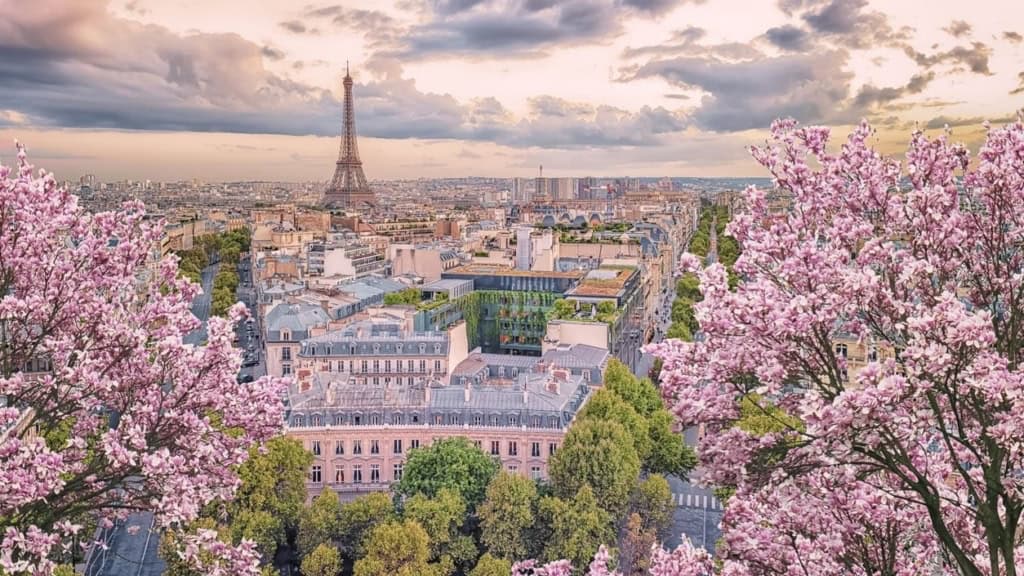
There’s no need to drive in the City of Lights. And to be honest, you might not want to, as the city’s rush-hour traffic is a well-known source of frustration.
Paris is easy to walk around, especially in the city center. But it also has an excellent public transport system.
This includes an underground rail system (le Métro), a suburban express railway (the RER), a regional train network (Transilien), four tramway lines, and an extensive bus network.
If you want to leave Paris, the city has two international airports and six train stations offering transportation to anywhere in Europe and beyond.
Paris is not as tropical as cities on the Mediterranean coast, so you can experience the full four seasons. You can shop for fashion in the great shops that cluster around the heart of Paris, the Arc de Triomphe.
Alternatively, you could pick out something in one of the many markets or little boutiques that fill Paris’s quainter areas (quartiers).
If you are moving to France for work, there is a strong likelihood you will find yourself based in Paris. Although the world knows Paris for its arts and culture, don’t forget that it’s also a major European business hub.
The Cost of Living in Paris
There’s only one real downside to living in the capital: the cost of living in Paris is the highest in the country.
As a broad guide, you could expect to pay the largest percentage of your income on rent and food, at roughly 44% and 26% respectively, followed by transport costs and utilities.
Of course, this also depends on your own lifestyle and how you like to live.
Lyon
Lyon is the third-largest city in France, but still feels like a small town while retaining all the advantages of a big city.
It lies right in the very middle of France, in the heart of the Rhone valley. Lyon is home to 522,969 inhabitants, spread over a city area of 47.87 km2 (18.48 sq mi).
It is also relatively close to the French Alps and only four hours’ drive from the Mediterranean coast.
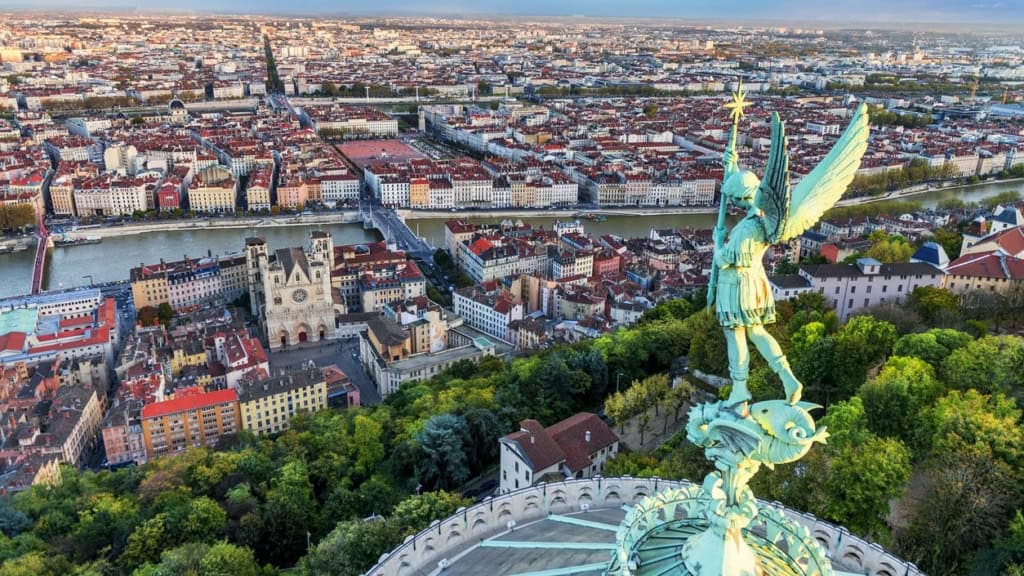
Ask any French person, and they will tell you that Lyon is the food capital of France, and some say the world. The city boasts a staggering 2,000+ Michelin-starred restaurants.
Foodies can wander the picturesque area where the Saône and Rhône rivers converge, which features an excellent shopping center, a rock-climbing center, and stylish rooftop bars.
Lyon’s rich history dates back to 43 BC, and it is a UNESCO World Heritage Site. It became famous for its silk industry in the 1400s, and specialty silk weavers can still be found here today.
Cinema was invented in Lyon. It’s also known for live theater and its many puppet theaters. Its museums are full of exciting exhibits, and the city walls are full of internationally renowned street art.
For sports fans, Lyon’s most well-known professional team is Olympique Lyonnais, a football club, and the city also has nationally known basketball and rugby teams.
Today, the vitality and variety of Lyon’s ecosystem put the city at the forefront of numerous fields, including industry, health, environmental technologies, and digital technologies.
Many people still overlook this city in favor of big-sister Paris. Lyon has been ranked #1 in France for work-life balance. Lyon is also known for being a business-friendly city.
The Cost of Living in Lyon
Lyon is a popular French city for expats and locals alike because it’s about 20% cheaper than Paris.
Although Lyon has a lower cost of living than Paris, it is still the second-most-expensive city in France. But if you’re seeking a French city similar to Paris but without the hefty price tag, Lyon is a wonderful option.
Toulouse
With a population of 1.4 million in the greater metropolitan area, Toulouse is the fourth-largest city in France. The city covers an area of 118.3 square kilometers (45.7 square miles).
It’s a great place for young active families, which is one of the many reasons it’s on our list of the five best places to live in France.
Toulouse is a cultural melting pot, home to many expats and international students. The French love Toulouse and have frequently voted it the most attractive place to live in France.
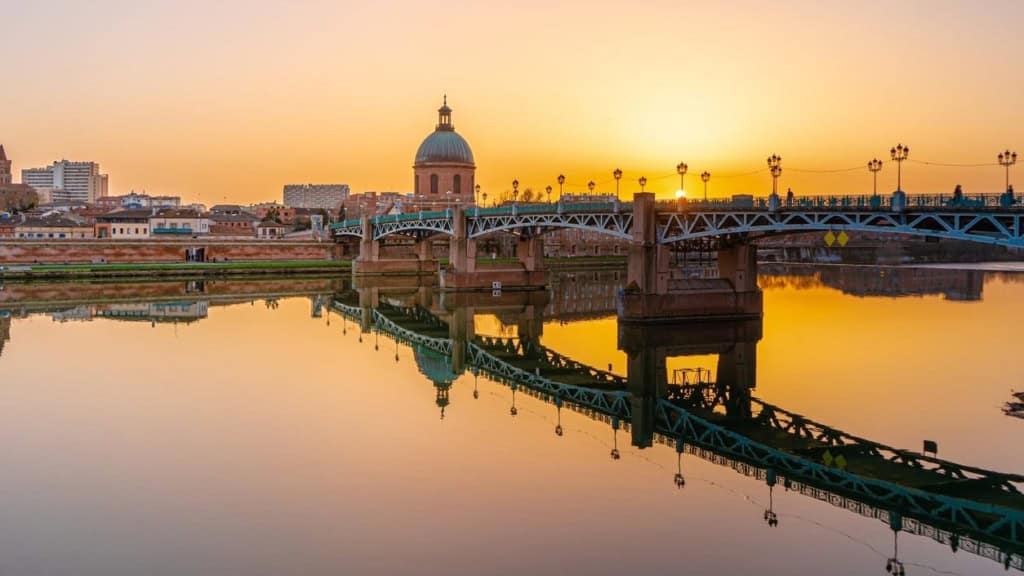
It’s nicknamed the Pink City (La Ville Rose) because of the pinkish-red bricks used to build its buildings, which glow a beautiful rosy pink each evening as the sun sets.
Toulouse has a Mediterranean climate, making it easy to enjoy the outdoors year-round. The city is full of beautiful waterways, including the Canal du Midi, a favorite for cruises.
Toulouse also has plenty of stunning walks and fabulous scenery. The city is also close to the Pyrenees, a world-class hiking and skiing destination.
This beautiful locale also hosts thriving industries that attract engineers from around the world. Toulouse is Europe’s leading space center, home to the Center National D’études Spatiales and the Cité de l’Espace.
The city is also known as the “Capital of Aeronautics” and is home to Airbus headquarters. Toulouse is France’s answer to Silicon Valley, and it is considered a hub for tech startups.
Tied back into its outer-space focus, it even has the first startup incubator dedicated solely to the moon. The city sponsors an annual “Start-up Weekend” to encourage collaboration among entrepreneurs.
Toulouse is a city of education, research, students, and scientists. It has four universities, including the second-oldest university in France, and has been rated as students’ favorite place to attend university in a national survey.
Toulouse also has some of the best primary and secondary schools in France. Its state schools are exceptional, and many long-term expats opt to send their children to local schools.
It is also home to the International School of Toulouse. This was established primarily for the children of Airbus expat professionals, and Airbus includes school tuition fees in some employees’ benefits packages.
The Cost of Living in Toulouse
Toulouse is considered a great option for students and expats looking for culture and affordability. Housing and transportation costs are relatively affordable in this French Mediterranean city.
Young people can find Toulouse particularly affordable because the city offers reduced-price transportation and other services for students and people under 26.
See Plans That Match Your Destination
Compare personalized insurance options designed for your move to France, with access to care and long-term protection abroad.
Bordeaux
Bordeaux is the wine capital of France, but there is much more to it than complex reds and crisp whites. It offers a high quality of life, comfortable weather, and a lower cost of living than in major cities such as Paris or Lyon.
Situated in the Nouvelle-Aquitaine region, Bordeaux is home to 980,000 inhabitants and covers an area of 49.36 square kilometers (19.06 square miles).
The high-speed rail system puts it only 2 hours from Paris, but you don’t have to leave Bordeaux to have a big-city experience.
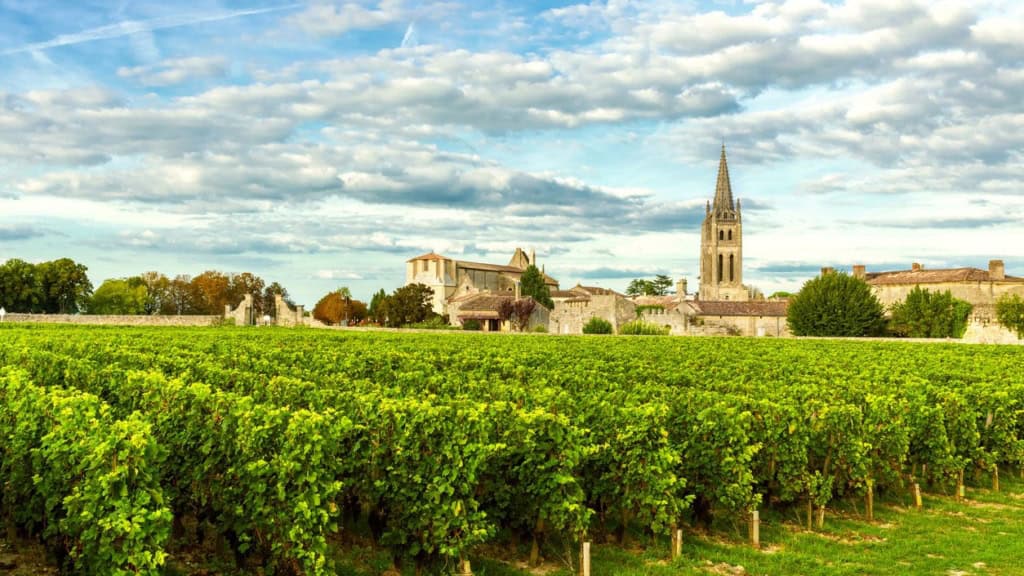
Wine is a top industry in the city and a top indulgence. In the Bordeaux region, 10,000 estates produce wine across 287,000 acres of vineyards. 56% of the estates are family-owned businesses.
All of this adds up to a staggering 960 million bottles of wine every year. Two-thirds of the wine is sold by the 300 wine merchants (negociants) on the Place de Bordeaux, who sell to over 170 countries.
Not surprisingly, the wine industry is the region’s top employer, providing over 55,000 direct and indirect jobs. So, if you are a wine fan, you might consider setting up your expat home in Bordeaux.
But Bordeaux has other industries besides wine. It’s a hub for lasers and optics, home to one of the world’s two megajoule lasers.
It’s also a hub of the aviation industry. The culture, lifestyle, and newfound business friendliness of Bordeaux have also created a startup scene, with several notable video game studios and the French e-commerce website Cdiscount.
Bordeaux is home to the national opera house and ballet, and it also offers incredible designer shopping.
The city’s ambiance is friendly and lively, with a strong undertone of elegance. It offers many museums, cultural events, and plenty of other activities.
The city is ancient – the first settlement was by the Celts in the 3rd century BC. But it’s known for the grand boulevards and 17th- and 18th-century buildings that inspired Haussmann’s redesign of Paris in the 1800s.
For the past two decades, Bordeaux has undergone extensive revitalization. Pedestrianized streets and improved transit make it easy to enjoy the city car-free.
The banks of the Garonne, once a no-go zone, now host joggers, parents with strollers, performances, and markets.
It’s no surprise that Bordeaux was named Europe’s best destination in 2015, Lonely Planet’s Top City to Visit in 2017, and is now the most desirable place to live in France.
The Cost of Living in Bordeaux
Bordeaux not only touts some of the best wine in the country, but it’s also considered one of the cheapest French cities and one of the most affordable Western European cities.
The city is often compared to Paris because of its architecture, gastronomy, and cultural charm. But Bordeaux’s cost of living is much more affordable than that of Paris.
The city is suited for bike commuters and provides low-cost public transport as well. Bordeaux has a well-maintained public transport system, including trams and buses, to connect its commuters.
Nice
Many expats consider the best place to live in France to be on the beautiful Mediterranean Sea.
If you dream of the French Mediterranean and the luxury of the Côte d’Azur, then Nice may well be your favorite of the five biggest French cities.
Just a few miles from the Italian border, Nice is a beautiful mix of both French and Italian culture.
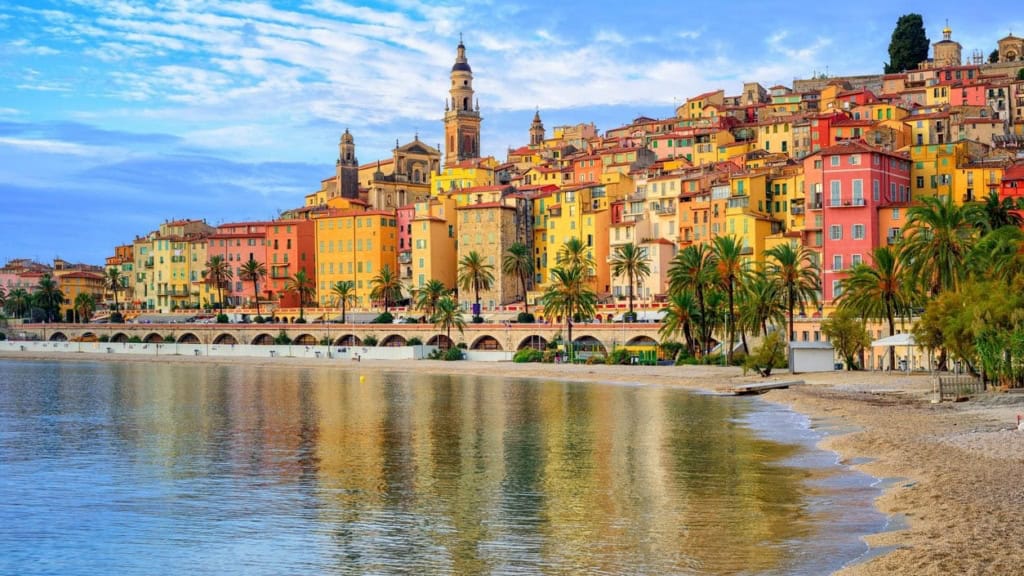
This wonderful city is the capital of the stunning French Riviera. Its colorful buildings and upscale beachy ambiance will make you feel as relaxed as if you were on a long holiday.
Nice’s location is also unbeatable. The city is set along a ribbon of golden coastline, between traditional fishing villages and stunning resorts, earning it a place on our list of the best places in France.
This seaside city attracts not only retired expats looking to soak up the sun but also younger internationals who want to work against a backdrop of sparkling sea and azure skies.
In fact, Nice hides a bit of a business and employment secret. Just 26 kilometers from Nice lies the 2,300-hectare technology park of Sophia Antipolis.
Today, this tech hub, overlooking the Mediterranean, employs over 30,000 people and is home to 1,414 companies. 40% of those companies are involved in R&D, mostly in information technology.
But technology isn’t the only industry in Nice. It’s a top vacation destination, and expats can also find jobs in the tourist industry.
If you like arts and culture, the city hosts museums of every stripe. The Paleontological Museum houses exhibits up to 400,000 years old, while the Musée Marc Chagall houses the world’s largest public collection of the artist’s works.
Take a walk along the famous Promenade des Anglais, a flat, pleasant, paved walkway beside the beach – it’s great for both sea-gazing and people-watching.
Just remember that if you want to swim, come prepared, with swimming shoes and something soft to sit on, because the beaches of Nice are covered with pebbles, not sand.
The months between June and October are particularly suitable for swimming, with consistently warm water temperatures.
However, we are sure that the beach will be the only rocky welcome you get in Nice. This cosmopolitan and welcoming city has welcomed visitors and expats alike for many years.
The Cost of Living in Nice
The cost of living in Nice is typically more affordable than in Paris, but it can vary widely because of its proximity to the sea. A beachfront property will come at a higher cost than something further away from the coastline.
Nice is a resort city, so there are many more expensive “tourist” shops around. But for expats living in Nice, there are local grocery stores and affordable alternatives to tourist-focused options.
Like other French cities, Nice has a well-connected public transport system, making travel between coastal cities in France easy.
Which City in France is Best For You?
Opinions will differ on which is the best place to live in France. Think about what is most important to you before taking the leap.
The important thing to remember is that France has something to offer everyone. Do your research before you move, and ask yourself, “What sort of life do I want to live while I am in France?”
If you have the time, visit the places in France that catch your eye and spend a few weeks there before making any permanent moving arrangements.
If money is a concern, you can also look at the cost of living in other cities in France.
Health Insurance for Expats in France
It’s an exciting time. France is full of culture, amazing gastronomy, and new adventures.
Make sure that you’re ready for anything by selecting an international health insurance plan before you start your new adventure.
Expat insurance covers any unexpected medical needs while living abroad. Use our handy comparison tool to compare global medical plans.
Ready to Take the Next Step?
Get Covered for Your Move Abroad
Get personalized quotes and compare international health insurance plans tailored to your move to France.