
International Health Insurance
Gain valuable insights and practical tips for navigating international health insurance while living abroad. From coverage details to expert advice, this comprehensive guide helps travelers…

International medical cover for expats and their families.
Medical and trip cancellation coverage for international travel.
Life insurance for globally mobile individuals living or working abroad.
Comprehensive international medical coverage for groups.
Medical, accident, and liability protection for global travel.
Financial protection for employees worldwide.
Most Popular Country Guides
Healthcare, insurance, and living insights to plan life and travel in each destination.
Healthcare, safety, and practical guidance for living abroad.
Tips and guidance for safer, smarter international travel.
Resources for global mobility, HR, and international teams.
Find travel insurance for Colombia to protect against medical emergencies, trip cancellations, and more, and travel safely with our top tips.

Colombia’s popularity with international tourists surged after the 2016 Peace Accord ended fifty years of conflict. Although the country is safer than it was before, health and safety concerns persist for tourists in Colombia.
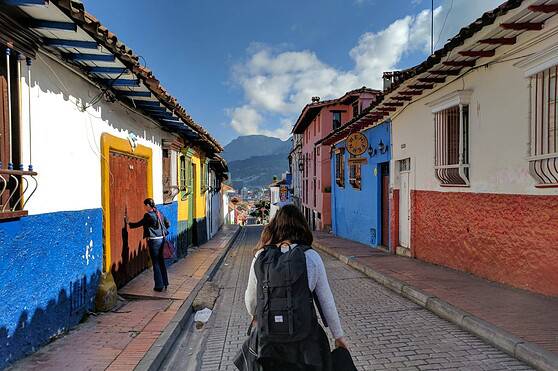
Visitors should prepare thoroughly and take extra precautions to safely enjoy the natural beauty and vibrant culture of the gateway to South America. From snow-capped coastal mountain ranges to colorful corners of Medellín, Colombia, it is worth the preparation.
This article provides essential information on protecting your safety and purchasing travel insurance for Colombia.

Yes. Although it is not required, visitors are strongly encouraged to buy a comprehensive travel medical insurance plan that is active throughout their trip to Colombia.
You may need medical care in Colombia for various reasons you’re not accustomed to considering. Different types of accidents, food-borne illnesses, mosquito-borne diseases, a scratch or bite from a rabid dog, or injury from an armed robbery or assault can leave you in need of a doctor.
Colombia also experiences frequent earthquakes and a rainy season, which is accompanied by flooding and landslides. The region is also home to numerous active volcanoes. The Chiles volcano in Cumbal erupted as recently as 2014. In certain areas, unrest and terrorist attacks are common. These may cause injury or broader travel disruptions.
Travel health insurance for Colombia can provide peace of mind, as it typically covers emergency medical care at private hospitals, emergency evacuation from the country, medical evacuation transportation to access better care, and repatriation (returning you or your remains to your home country).
A trip cancellation plan, meanwhile, will set your mind at ease by covering trip cancellations or interruptions, as well as many of the health care issues mentioned.
Colombia has some of the best private hospitals in Latin America, but at a cost. While inexpensive compared to the United States, Colombian healthcare is not free for visitors, and charges can add up quickly.
Taking the proper precautions and reading travel advisories in advance of your trip can help reduce the likelihood of an incident or injury.
Even so, some risks in Colombia are entirely out of your control. Having travel insurance could be the difference between a great travel story and an expensive travel disaster.
Below you’ll find recommended options for travel health insurance for Colombia. Your risks and experience may vary depending on the locations you plan to visit and your activities.
If you will be adventuring in the Andes Mountains and the rainforests, you may need different coverage than someone planning to sit on the beach.
Share your plans with an insurer when you contact them so they can help guide you to the right plan.




Compare top-rated travel insurance plans for your upcoming trip abroad.

Don’t Just Go With the First Quote! Coverage can vary widely between plans, especially for emergency medical care, evacuation, and lost or delayed baggage. Reviewing the details ensures you choose the proper protection for your trip.
Whether you have existing medical needs or want to lower your risk of a new illness, here is how you can prepare for a trip to Colombia.
As of April 5, 2023 (Resolution 555 of 2023), no COVID-19 vaccination certificate or negative test result will be required for international travelers entering Colombia.
According to the U.S. Centers for Disease Control (CDC), travelers one year of age and older arriving from Angola, Brazil, the Democratic Republic of the Congo, or Uganda, as well as travelers who have spent more than 12 hours in any airport located in these countries, are required to show proof of vaccination for yellow fever.
Currently, no additional vaccinations are required for adults to enter Colombia. For children, ensure their vaccinations are up to date. Colombian law requires childhood vaccinations for “all national and foreign children” six and under.
The CDC has a list of recommended vaccines, including routine vaccines (influenza, chickenpox, MMR (measles, mumps, and rubella), DPT (diphtheria-pertussis-tetanus), etc.), malaria, rabies, and more.
Due to its devastating history of drug-related conflicts, Colombia’s drug laws are strict. If you are bringing prescription medication with you to Colombia, simple preparation and documentation will help you avoid any issues.
Keep prescription medications in their original packaging and pack them in your carry-on bag, along with the prescriptions from your doctor. It is also wise to include the generic names of your medications for easier identification by authorities if you are questioned.
While you should make sure you have enough medication for your trip, don’t bring too much more than you need. Having too much could draw suspicion of drug trafficking, a serious crime in Colombia.
Some medications that are routine for you may be prohibited in other countries. Before your trip, contact the Colombian embassy in your country to determine if your medication is permitted in Colombia.
Cannabis (marijuana) has been decriminalized in small quantities but is still illegal in Colombia. This means you should not bring recreational or medical cannabis or THC products into the country — even if you have a prescription.
Because traveling in Colombia carries the risk of gastrointestinal bacteria and other ailments, you’ll also want to bring over-the-counter medications. These might include anti-diarrhea medications, altitude sickness pills, anti-inflammatories, antacids, and more.
For a comprehensive list of suggestions, refer to the CDC’s “Healthy Travel Packing List” for Colombia. You can get many drugs — including certain antibiotics — at pharmacies (farmacias) in Colombia without a prescription. However, finding what you need in a foreign pharmacy could be a challenge, and some medications may not be available.
The Colombian healthcare system includes a government-subsidized program and private institutions. Medical care in Colombia is well-rated. The cities offer better care and easy access to some of the best private hospitals in Latin America.
To prepare for your visit, read our article on the best hospitals in Colombia for expats and the U.S. State Department’s list of hospitals and clinics. Make note of the medical institutions closest to the areas you will be visiting and have their names and addresses on hand.
Your travel insurer will also have recommendations and an approved list of facilities where your care will be covered. Depending on your plan, you may also get access to a telehealth visit or a live translation service via phone to help you communicate with medical professionals in Colombia.
In an emergency, call 123 to reach emergency services. Tell the agent you are a tourist, and they will direct you to the “Tourist Police” (reached directly at (1) 337-4413), where the agents will speak English. You must provide the agent with your exact address.
After calling, an ambulance will arrive, but it may take some time. Some expatriates have reported waiting up to 45 minutes. If possible, ask the ambulance to take you to a private hospital; this will significantly improve your experience. For more information, read our article on the Colombian healthcare system.
In an urgent care situation, you can arrive at the emergency room of your choice at the hospital of your choice. Wait times at private hospitals are generally shorter than those at public hospitals, and patients tend to receive more privacy. If time allows, notify your insurance company in advance and request preauthorization.
In a country with as many safety variables as Colombia, it’s important to stay on top of the latest travel advisories and alerts.
The U.S. Smart Traveler Enrollment Program (STEP) is an easy way for U.S. travelers to get alerts on a specific country. They can also register their trip with the nearest U.S. embassy.
Other websites that offer up-to-date alerts on Colombia include:
The following is a guide to the emergency numbers you should know in Colombia.
Colombia does not use 911. Instead, call 123 to be directed to any of the specific emergency service departments. The following numbers are all part of the country’s national emergency system:
Additionally, Colombia offers a “Purple Line” for women every day between 8 a.m. and 8 p.m. at 01-8000-112-137. This resource aims to prevent violence against women and support their emotional and mental health.
The following is a list of contact information for certain embassies in Colombia:
Incidents of tourists being drugged and then robbed are on the rise in Colombia. Criminals are using a range of drugs, including one known as “Devil’s Breath” (scopolamine), to render unsuspecting travelers unconscious. Stay alert and, if possible, with your travel companions.
Be extremely cautious if offered food, drinks, drugs, or cigarettes by strangers that you meet — especially at bars and nightclubs.
Drugs, including cocaine and marijuana, are illegal except in small quantities. Never carry any packages for anyone else. Colombian drug laws are strict, and being a tourist does not exempt one from prosecution.
Following local laws also reduces your chance of encountering local law enforcement or those impersonating police, which could escalate or lead to theft or extortion.
Tourists have been assaulted in cities like Medellín and sometimes killed. Travelers should avoid relatively empty parts of any city — especially at night. Leave your expensive jewelry, flashy clothes, and high-heeled shoes at home to reduce your visibility as a target. It also helps to have a trusted companion with you while exploring
Although rare, it is possible to be bitten or scratched by a stray dog in Colombia, which puts you at risk of contracting rabies. There is a very short window of time to treat rabies.
If you wait too long or can’t get treatment in time, rabies can result in death. Even if the animal appears healthy, seek medical care immediately if you are bitten or scratched.
The CDC recommends receiving the rabies vaccine before visiting Colombia, especially if you plan to visit rural areas.
Malaria is prevalent in Colombia. The best way to avoid infection is by preventing mosquito bites. Use an effective insect repellent each day and a mosquito net while sleeping. When in the rainforest or mountains, wear long-sleeved shirts and pants, along with high socks, and apply repellent.
The CDC recommends getting the malaria vaccine before visiting certain areas of Colombia.
When hiking in the lush rainforest and jaw-dropping Andes Mountain range, consider hiring a professional guide. The terrain is prone to landslides and earthquakes, and road closures can make navigating difficult.
If you don’t speak Spanish, you will want someone with you who can communicate in an emergency and will avoid accidental trespassing.
Parts of Colombia are hot and humid, so wear sunscreen and carry more water than you think you’ll need. Other areas, such as the Andes foothills, can get very cold at night. Cities like Bogota are also at high elevations, where the nights can be chilly.
High altitudes also require adjustment, as altitude sickness is severe and can kill you if you don’t treat it.
Most travel advisories for Colombia highlight specific cities and regions, mostly border areas, as unsafe. Avoiding those areas will significantly reduce your risk of encountering violence. Colombia’s major cities do have high crime rates, and some petty crime has escalated, resulting in death.
Wherever you go, always be aware of your surroundings and avoid wearing valuables. Only use ATMs that are inside businesses, and only bring the cash that you need when exploring the city.
In the case of a robbery, do not resist. Hand over all valuables to avoid escalating the situation since the robber will likely be armed.
Complex metering systems and price gouging, as well as thefts and short-term abductions, have been reported after tourists hailed taxis on the streets of Colombia.
If you can’t use efficient intercity public transportation, consider using pre-booked taxis through apps like Easy Taxi, Tappsi, or Uber.
Although ride-hailing apps are technically illegal in Colombia, the popular ride-share company Uber operates in partnership with a taxi company called TaxExpress.
Local taxis utilize the Uber platform, allowing riders to use the app’s features to share their location, vehicle information, and driver’s name.
For airport transportation, consider hiring an airport transportation service in advance to avoid potential issues with taxis and ride-share apps.
Thousands of well-prepared travelers visit Colombia every year and do not encounter any significant issues. Stay vigilant and take specific precautions to ensure your health and safety during shifts in the political landscape — and the ancient fault lines.
By following the guidance, any seasoned traveler can enjoy everything this biodiverse jewel of South America has to offer.
Let us help you find the right travel health insurance plan for Colombia. With insurance, you can explore and tuck into endless arepas while feeling ready for whatever might come your way.
And if you do have a medical need, you can feel confident knowing your insurance gives you access to excellent care at some of the best private hospitals in Latin America.
From museums to mountain views, beaches to bustling Bogotá, Colombia will reawaken your senses. Some thoughtful planning and preparation will go a long way toward making your experience one to write home about for all the right reasons.