



Health Insurance in Turkey for Foreigners
Thinking of an extended stay in Turkey? Learn about your options for health insurance in Turkey to ensure you’re covered.

International medical cover for expats and their families.
Medical and trip cancellation coverage for international travel.
Life insurance for globally mobile individuals living or working abroad.
Comprehensive benefits for international teams.
Insights on international relocation and global mobility.
Download our brochures or follow us on socials.
Most Popular Country Guides
Healthcare, insurance, and living insights to plan life and travel in each destination.
Healthcare, safety, and practical guidance for living abroad.
Tips and guidance for safer, smarter international travel.
Resources for global mobility, HR, and international teams.
Popular and recently published guides from our team.
Learn the advantages and disadvantages of Turkey's healthcare system and how to get treatment as a foreigner.
Straddling Europe and Asia and known for its hospitality, Turkey is a popular destination for expats. In addition to the must-see attractions, the country also offers excellent healthcare to all residents. In 2018, The Lancet ranked Turkey’s healthcare system 60th out of 195 countries.
The public scheme offers comprehensive coverage and is available to all citizens or people who have resided in the country for at least one year.
Keep in mind, though, that medical insurance is a requirement for anyone under 65 applying for a visa, and foreigners must wait one year to enroll in the public system. Furthermore, European Health Insurance Cards are not valid in Turkey.
To ensure extensive coverage during this waiting period, most expats rely on international health insurance plans. This guarantees coverage both within and outside Turkey, providing access to high-quality private hospitals with shorter waiting times.
Another benefit of private hospitals is that there’s a better chance that your healthcare providers will speak English.
Turkey started to improve its healthcare system at the turn of the century. Before this, the healthcare system in Turkey had high levels of patient dissatisfaction. Less than two-thirds of the population had health insurance, and the system for receiving care was inefficient.
To combat this, the government launched the Health Transformation Program (HTP) with the support of the World Bank in 2003. The goal was to overhaul the system and provide universal healthcare, ensuring all citizens would have equal access to quality care.
In 2010, the Ministry of Health developed the public-private partnership program (PPP) to expand its resources. With the backing of the World Bank, more private firms began to enter the health insurance market in Turkey.
The result of this was increased financial support for public hospitals, a rise in private hospitals, and a greater focus on specialized services.
Healthcare in Turkey is now often cited as a success story. The HTP managed to achieve all health-related Millennium Development Goals ahead of the 2015 deadline.
There are now hospitals and clinics offering high-quality care available throughout the country, although disparities in services and amenities persist in more rural areas.
Turkey has offered universal healthcare through its Social Security Institution (SGK) since 2003. The system provides comprehensive and equitable access to care for all citizens, regardless of their income level. Patients can schedule appointments online through the Ministry of Health’s website or mobile app.
While the majority of emergency and primary care services are fully covered, some are only subsidized. Luckily, out-of-pocket fees for services tend to be minimal.
Due to the relatively affordable costs of healthcare in Turkey, medical tourism is experiencing significant growth in the country. Cosmetic surgery, fertility treatments, and laser refractive surgery are some of the most common therapies visitors seek.
The rise in medical tourism has infused more money into the country’s healthcare system and further helped to improve its medical services.
Turkey is also working to integrate alternative care treatments with modern practices. In 2014, the Ministry of Health created the Complementary and Alternative Medicine Practices Department.
Acupuncture, homeopathy, and cupping therapy are among the treatments being studied and offered at select medical centers. However, these alternative treatments are not covered by insurance.
Although healthcare in Turkey has made great strides in the past decades, care can still be limited in rural areas. You may find poorly maintained or out-of-date equipment in rural hospitals, especially public ones.
While doctors are well-trained throughout the country, fewer medical workers are willing to work in rural areas, so you’ll find that doctor-to-patient ratios are far lower outside of urban areas.
This means that overcrowding is a consistent issue in rural areas, and long wait times for specialized services are a common occurrence. Foreigners living in rural areas may be hard-pressed to find an English-speaking doctor.
There are significant limitations to mental health treatment in Turkey. The country’s Mental Health Law has been pending in legislation since 2019. Funding is lacking, and there are not enough trained mental health professionals to meet the nation’s needs.
Due to the limited workforce, the vast majority of mental health services are primarily available in the cities of Istanbul, Ankara, and İzmir. Some regions have no mental health specialists on staff.
Yes, Turkey has provided universal healthcare through the SGK for the past decade. The state, employers, and workers fund the system. For all economically active people, the contribution rate is 12.5% of earnings. This is split between the employees, who pay 5%, and employers, who pay the remaining 7.5%.
For unemployed people, the contribution rates vary. Pensioners have a default right to universal healthcare after one year of residency, with their fees covered by either the SGK or the State, depending on whether they contributed to the healthcare scheme prior to their residency.
While people pay different contribution rates, everyone receives equal coverage, regardless of their income level.
While the healthcare system in Turkey has made significant improvements and offers comprehensive coverage for residents, most people still opt to purchase supplemental health insurance plans. These plans can be bought from licensed brokers, banks, or directly from insurance companies.
Holding additional private insurance allows patients to access the private hospital system. Private hospitals often have shorter waiting times, state-of-the-art medical equipment, and better amenities. For those who do not speak Turkish, it’s much easier to find English-speaking doctors within the private system.
While the SGK often enters into contracts with private hospitals to receive discounted care for residents, patients will still be expected to pay some out-of-pocket expenses. Complementary insurance plans are used to cover these bills and minimize unexpected expenses.
Turkey’s universal healthcare system is a compulsory system that covers nearly all citizens of the country. The Ministry of Health provides public services. Every town in Turkey has a healthcare clinic, and pharmacies are found on almost every street.
To receive care, you can go to your local center and wait in line or call the Central Physician Appointment System (MHRs) at 182 to schedule an appointment. MHRS also offers an app in Turkish, which you can use to schedule appointments.
Additionally, some hospitals and clinics allow patients to make appointments on their websites. Due to the difference in amenities between rural and urban centers, it’s a good idea to seek treatment in larger cities.
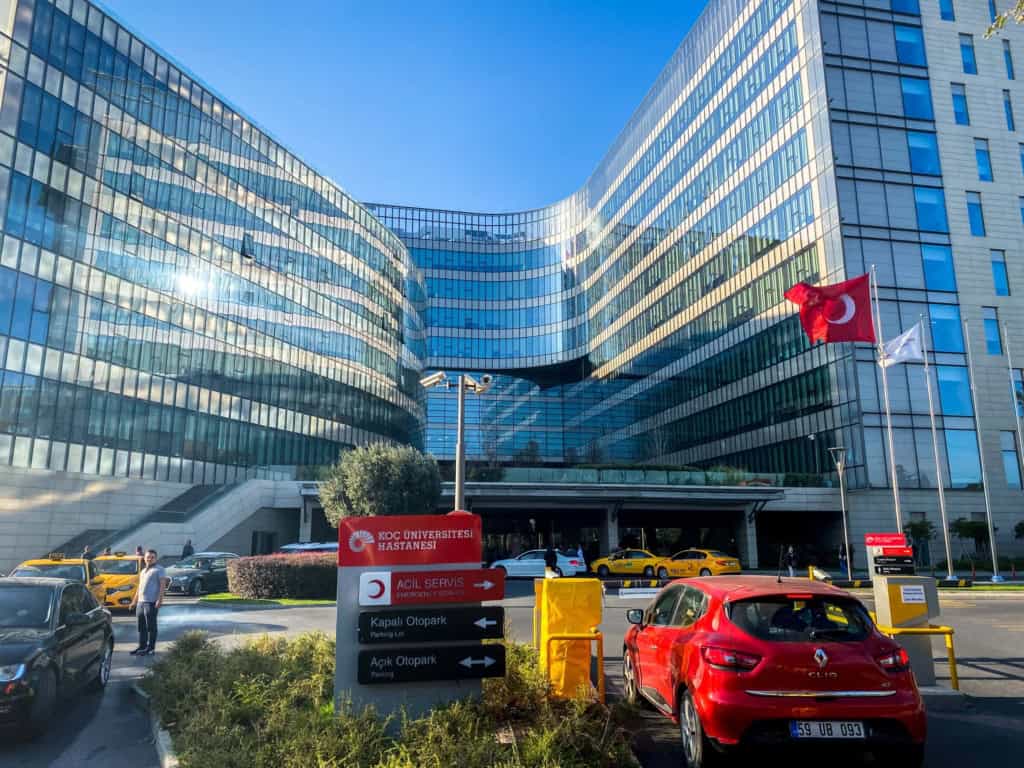
The healthcare system in Turkey has three different types of hospitals: government-funded hospitals, university hospitals, and private hospitals. Generally, state hospitals suffer from overcrowding and limited funding.
University hospitals offer the highest standard of care with more highly specialized personnel. Private hospitals provide high-quality care and treatment, and they also have the added benefit of more English-speaking doctors.
If you are traveling to Turkey, you may also want to consider purchasing travel insurance. This will provide you with additional options and access to private hospitals.
Emergency care is free at all state hospitals, regardless of whether the individual is insured or not. Dial 112 to reach emergency health services. Both public and private hospitals have emergency departments that are open 24 hours a day, although private hospitals may charge a fee for treatment.
After one year of residency, foreigners are eligible to apply for public healthcare. First, you must register with the Turkish Healthcare System at your local SGK office.
To do this, you will need copies of your passport, your residency application form, proof of your address from the Goc Idaresi, and a health assessment from a doctor approved by the relevant authorities. You should ask your SGK office for a list of their approved doctors in advance.
You will also need to show proof that you aren’t already insured or entitled to benefits from your home country.
Once you are registered in the public system, you must select your primary care physician. You must contribute to the SGK for at least 30 days before requesting care. After that, you can use Turkey’s healthcare system just like any other citizen.
However, when it comes time to renew your residency permit, you will again need to visit your nearest SGK office to update your coverage period.
Due to the long waiting period and visa requirements, many expats opt to purchase international health insurance plans. These plans can be used in private hospitals worldwide, providing better access to English-speaking doctors.
Most people in Turkey tend to carry private insurance even if they are enrolled in the public system. This guarantees shorter wait times, better hospital amenities, and English-speaking doctors.
To learn about the best health insurance plans in Turkey for both short and long-term visits, check out our Insurance in Turkey for Foreigners page.

BCBS Global Solutions Worldwide Premier

IMG Global Prima Medical Insurance

Cigna Global Insurance Plan