
Retiring in the UK

Key Takeaways
- The UK has no dedicated retirement visa. Foreign retirees must qualify through another immigration route, such as an eligible family visa.
- Location strongly influences retirement costs. London is particularly expensive, while other cities and smaller towns can offer more affordable housing and everyday expenses.
- Plan your healthcare before relocating. NHS eligibility depends on your residency and immigration circumstances; private insurance can provide faster access to some treatments and specialists.
- Review your finances before moving. Pension taxation, tax residency, and inheritance rules can affect your retirement budget, making professional advice valuable for cross-border planning.
How to Spend Your Golden Years in the United Kingdom
Retiring in the UK is popular among many foreigners due to its high-quality public services (including free healthcare through the NHS), cultural diversity, and breathtaking countryside. Here’s everything you need to know if you’re looking to spend your latter years in the UK, including visa requirements, living costs, and the best places to call home.

Plan Your Healthcare Before You Retire Abroad
Get personalized international health insurance quotes that help you compare coverage for routine care, specialists, prescriptions, and private hospitals abroad.
The Pros and Cons of Retiring in the UK
From the remote lochs of Scotland to the thriving global cities such as London and Manchester, the UK offers something for everyone.
It’s no surprise that it attracts a high number of people from abroad. Around 16% of the overall population is foreign-born, while 10.5% of over-65s are born overseas.
The Pros of Retiring in the UK
There are several reasons why the UK is an attractive destination for retirees. Here are some of the main reasons why expats choose to retire there.
Free Healthcare for Permanent Residents
The UK has an excellent healthcare system, which stands out for its comprehensive and accessible care.
At the heart of this system is the National Health Service (NHS), a public health system that provides free medical services to UK citizens and legal residents.

Funded by taxes, the NHS ensures that residents can access the services they need without worrying about costs. It covers everything from routine check-ups and emergency care to preventative services and specialized treatments.
For retirees, this can mean far lower medical expenses compared to countries without universal healthcare. Quality is also good, with the UK ranking 27th globally on the 2025 CEOWORLD Healthcare Index.
Retiring in the UK? Plan Your Healthcare Early
Even with access to the NHS, many retirees choose international health insurance for faster appointments, private hospitals, and more comprehensive coverage while living abroad.
Safe and Stable Environment
Naturally, safety is a top priority when choosing where to live. According to the 2025 Global Peace Index (GPI), the United Kingdom ranks 30th among the world’s safest countries.
Additionally, it is surrounded by several other countries with high safety ratings. For instance, Ireland is 2nd, Denmark is 8th, the Netherlands is 14th, and Germany is 20th.
The UK also has a very stable legal and financial infrastructure. Financial services, including pensions and investments, are tightly regulated. This provides reassurance for those managing savings when retiring to the UK.
Excellent Transport Links
The UK has excellent public transport in major cities and towns. There is an extensive rail network across the country, and bigger cities have their own infrastructure, such as the London Underground.
There are good bus services in most places, and a vast network of roads, including the nationwide motorway system, linking all parts of the country for drivers. Retirees in the UK can also access a free bus pass as well as rail discounts via the Senior Railcard.
Globetrotting retirees will also appreciate how easy it is to travel from the UK to other European countries. For example, a high-speed train can whisk you to cities such as Paris, Brussels, or Amsterdam in a matter of hours. You can also fly to many major European cities in just a couple of hours.
For those planning a trip to the United States, flights from London to New York City, Boston, and Philadelphia are about eight hours. And if Dubai is on your travel list, it’s even quicker, with a flight time of only seven hours.
Rich History and Culture
The history of the UK is incredibly rich, spanning thousands of years from the Roman Empire to the Swinging Sixties that produced the Beatles and the Rolling Stones.
You can find this historic heritage in world-class museums like the British Museum and the National Museum of Scotland, as well as in the vibrant theater scene of London’s West End and Shakespeare’s Globe Theatre.
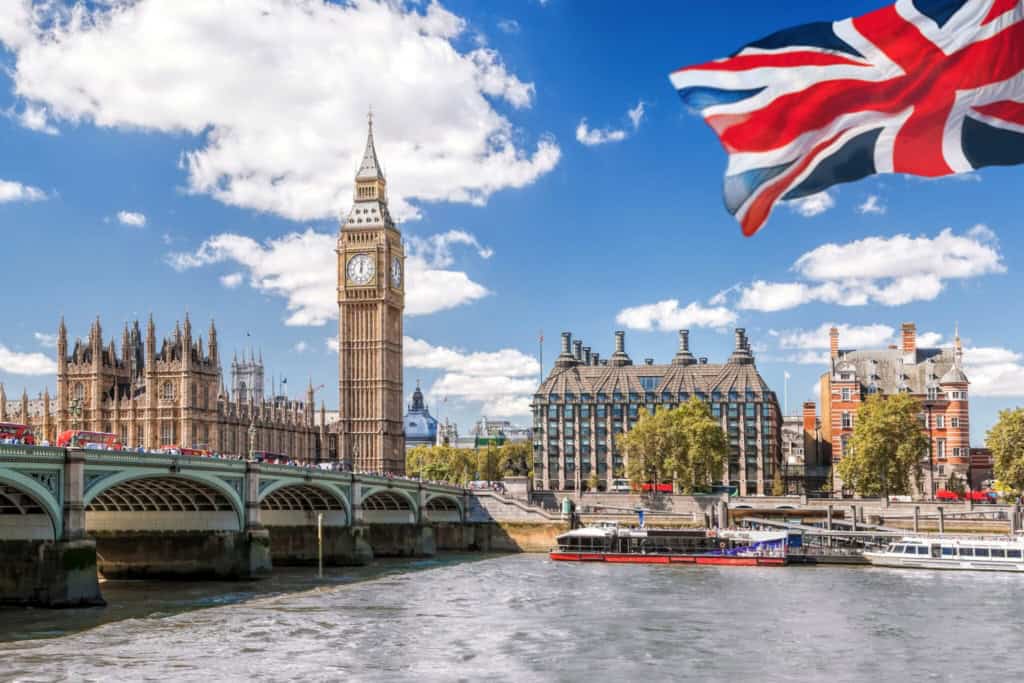
If you’re a nature lover, the Lake District National Park is a must-visit destination, offering breathtaking scenery and serene landscapes. Stonehenge, meanwhile, has enchanted visitors the world over since the early days of tourism.
For those who appreciate fine spirits, the UK is home to renowned whiskey and Scotch distilleries, particularly in Scotland. Whether you’re interested in history, culture, or natural beauty, the UK offers a wealth of experiences.
English is the Predominant Language
Unlike in some countries, you won’t need to learn a new language to retire in the UK, as English is the dominant language. This is one of the main benefits for those who want to retire in the UK, especially those moving from the USA.
While you may hear Welsh in Wales and Gaelic in Scotland, you’ll be surrounded by English-speaking Brits. As an American living in the UK, you’ll just need to learn the subtle differences between British and American English. For example, you’ll use “pavement” instead of “sidewalk”.
Diverse Lifestyle Opportunities
The UK offers a vast array of living environments to suit retirees, whatever their lifestyle preferences.
Whether it’s enjoying the vibrant streets of London or Edinburgh, one of the many beautiful and peaceful market towns, or the coastal spots in places such as Devon and Cornwall.
There are plenty of retirement communities across the UK to cater to retired expats looking to stay more socially active, and many places offer a range of sports, arts, cultural, and social activities geared towards those of retirement age.
The Cons of Retiring in the UK
Despite the many advantages of living in the UK, it’s also important to bear in mind some of its less positive aspects.
High Cost of Living
The cost of living in the UK can be high, especially in major cities like London. The UK ranks the 28th most expensive worldwide on the 2026 Numbeo Cost of Living Index, while London (15) and Oxford (50) rank among the 50 most expensive global cities.
Housing costs in particular can be higher than in many other countries, so you’ll need to do plenty of research on what budget you may need before deciding on where to resettle.
Unpredictable Weather
The UK is located in the North Atlantic, typically experiencing long, cold winters and plenty of grey, rainy weather even during the warmer months.
Weather and temperatures can be unpredictable, and daylight hours in winter are short (usually around 8–9 hours).

Summers are generally mild rather than hot, with average temperatures often ranging between 60–75°F (15–24°C), depending on the region.
The climate can vary noticeably across the UK. Southern England is usually warmer and drier, while northern regions such as Scotland tend to be cooler and wetter. Coastal areas can also experience strong winds and rapidly changing weather conditions year-round.
Limited Services and Transport in Rural Areas
While infrastructure is strong in the UK’s cities and larger towns, some services can be somewhat lacking in rural areas.
Public transportation can be limited, with buses running infrequently and finishing early, and large expat communities are much rarer in villages and small towns.
Access to healthcare, shopping centers, and other amenities may also require longer travel times in more remote areas.
Additionally, internet and mobile coverage can occasionally be less reliable in certain rural regions, which may be inconvenient for remote workers or retirees who rely heavily on digital services.
Taxes on Pensions and Retirement Income
If you plan on retiring in the UK and becoming a tax resident, you will usually pay income tax on your pension income.
The UK has international tax treaties with many countries to help prevent double taxation, but its income tax system is progressive, meaning higher pension incomes may be taxed at higher rates.
HM Revenue and Customs (HMRC) rules can be complex, so it’s advisable to seek professional pension or tax advice before relocating.
Long NHS Waiting Lists
Although the NHS offers free medical care, there can be long waits for certain treatments and specialist appointments due to high demand and limited resources.
Because of this, many retirees choose to take out private health insurance in the UK to gain quicker access to a wider range of treatments.
This is particularly important for retirees with ongoing health conditions or those who require more regular specialist care.
Avoid Long Waits for Care in the UK
Many retirees choose international health insurance to access private hospitals, faster specialist appointments, and more comprehensive treatment options while living in the UK.
Visa Options for Retiring in the UK
If you plan to move to the UK to retire, the first step is to get a visa. Unfortunately, there is currently no UK retirement visa, and it is no longer possible for those on a retirement visa to extend their stay beyond five years.

However, there are a few long-stay visa options available, including:
- Family visa: If you are married or a long-term partner of a UK citizen or permanent resident. You’ll need good English language ability and a minimum combined annual income (around $38,250 in 2026). Cost around $2,550 (or $1,740 if applying in the UK).
- UK ancestry visa: If you are a Commonwealth citizen and can prove that a grandparent was born in the UK. You’ll also need to prove that you intend to work in the UK, even if you plan to retire soon. Cost around $900.
- Work/business visas: There are visas you can apply for late in your career, such as the Skilled Worker visa or the Innovator Founder visa (to start and run a business). Both offer the opportunity to apply for permanent residence after several years.
Since Brexit, EU citizens have to go through the same visa application process as non-EU citizens. However, if you have family in the UK from the EU, Switzerland, Norway, Iceland, or Liechtenstein, you may be able to apply for a Settlement Scheme family permit to join them.
For most long-term UK visas, you need to pay the healthcare surcharge (around $1,350 per year) as part of your application.
This applies even if you take out private health insurance in the UK. Other common requirements for UK visas include proof of financial self-sufficiency and suitable accommodation.
Permanent Residency and Citizenship Pathways
Although there is no retirement visa for the UK, the visas mentioned above allow you to apply for permanent residence after a set period.
This is usually five years, after which the visa holder becomes eligible for indefinite leave to remain (ILR). Other eligibility requirements may vary depending on the visa you hold.
EU nationals (and those from Switzerland, Norway, Iceland, or Liechtenstein) who have applied to the EU Settlement Scheme can apply for settled status rather than ILR after living in the UK for five continuous years.
You can usually apply for full British citizenship after 12 months of having ILR or settled status.
Read more information on visas and immigration on the UK government website.
How to Retire in the UK
Here’s the general process for how to retire in the UK as a foreigner. Timelines may vary, but you can expect to follow these steps:
- Step 1: Choose the appropriate visa. As there is no dedicated UK retirement visa, you will need to check that you are eligible to apply for one of the currently available UK visas.
- Step 2: Sort out your finances. Most UK visa applications require evidence of sufficient finances. You may need to provide bank statements or other financial records to show you can support yourself.
- Step 3: Secure long-term accommodation. For most long-stay UK visas, you need to show proof of somewhere to live. This could be property ownership, a long-term lease, or proof of living with relatives or friends.
- Step 4: Apply for residency. For new applications, this is usually your eVisa, which you receive upon completing your visa application. eVisas have replaced the old Biometric Residence Permits (BRPs). They are digital records of your immigration status, such as your visa type and the length of your stay in the UK.
- Step 5: Register with your local authority. If you own or rent your home, you should register with your local authority for Council Tax purposes.
- Step 6: Register for healthcare. Once you have moved to the UK, you can register with a local GP surgery to receive NHS care.
- Step 7: Make the necessary tax and social security arrangements. You will usually need to alert HM Revenue & Customs as well as apply for an NI number if you retire in the UK and receive UK-source income, for example, a pension.
- Step 8: Renew residency and plan long-term status. You can renew your eVisa if it expires, or apply for permanent residency after a certain period (typically five years).
Planning to Retire in the UK?
Compare international health insurance plans designed for retirees living abroad, with access to private healthcare, shorter wait times, and comprehensive medical coverage in the UK.
Housing in the UK
There are no restrictions on non-residents buying property or getting a mortgage in the UK. However, there may be more stringent mortgage requirements; for example, a bigger deposit may be needed.
House prices in the UK have been increasing in recent years. As of December 2025, the average house price in the UK is £270,259 (just over $350,000).

Prices vary across the UK. You can use the UK House Price Index to find average prices for different property types in different cities.
Here are the overall average property prices in some of the main UK cities, converted into USD (December 2025):
- London: $726,800
- Manchester: $313,000
- Edinburgh: $386,500
- Cardiff: $357,600
- Belfast: $235,285
In addition to the purchase cost, you’ll also need to pay Stamp Duty, plus utility bills and Council Tax, and Capital Gains Tax (CGT) if you sell the property for a profit.
Alternatively, you can choose to rent a property. Many expats do this when they first move to the UK. You’ll typically need to pay monthly rent along with bills (utilities and Council Tax).
When you move in, you’ll usually need to pay a security deposit (capped at five weeks’ rent) along with your first rent payment.
According to Numbeo, the current average rental price in the UK is $1,353 for a one-bedroom apartment in the city center. Averages for major cities include:
- London: $3,035
- Manchester: $1,661
- Edinburgh: $1,602
- Cardiff: $1,312
- Belfast: $1,182
The Cost of Retiring in the UK
Beyond housing and utilities costs, you’ll have to budget for a range of living expenses in the UK. Some of these may depend on the lifestyle you choose. Common costs include groceries, clothing, transportation, telecommunications, and leisure costs.
According to the latest government data, the average household spent £623 ($823) per week in 2023/24. This equates to roughly £2,710 ($3,579) a month.
2026 Numbeo data shows that estimated monthly living costs (excluding rent) are $1,087 for a single person and $3,766 for a family of four.
Costs (excluding rent) for major cities include:
- London: $1,464 (single); $5,159 (family)
- Manchester: $1,094 (single); $3,873 (family)
- Edinburgh: $1,173 (single); $4,090 (family)
- Cardiff: $1,071 (single); $3,712 (family)
- Belfast: $1,088 (single); $3,884 (family)
Day-to-Day Living Costs
Here is a breakdown of the overall average cost of living in the UK:
- Housing: $790–5,000 (monthly rent)
- Utilities: $197–560 a month
- Internet and mobile phone: $45–105 a month
- Monthly public travel pass: $65–265
- Basket of groceries (milk, bread, eggs, bananas, potatoes): $6.00–17.00
- Monthly gym membership: $26–80
- Meal for two at a mid-range restaurant: $65–132
Healthcare for Retirees
The UK has a free public healthcare system called the National Health Service (NHS). This is a universal tax-funded service available to all UK citizens and permanent residents.
Temporary residents with valid UK visas are also eligible for services by paying the annual healthcare surcharge.

You can access healthcare services when you retire to the UK by registering with a GP. This will give you access to primary healthcare and specialist care.
Some healthcare is not available on the NHS or is only available in limited circumstances, including:
- Dental care (most checkups and treatments require payment)
- Optical care (the NHS usually doesn’t cover the cost of eyeglasses or contact lenses)
- Prescriptions (these require a charge of around £10 in England unless you qualify for an exemption, e.g., if you’re on benefits)
- Alternative medicine (limited under the NHS)
- Cosmetic treatment
- Some specialist care
Private health insurance in the UK is available for those not eligible for NHS services or those who want to use private medical services. Around 14% of the UK adult population has private medical coverage.
Many expat retirees choose private coverage to avoid excessive waiting times, which can be a problem for non-urgent procedures, especially in some areas.
Private coverage also grants access to a wider range of healthcare, including top-tier private services and hospitals in the UK not fully available on the NHS.
Our guide to health insurance for retirees abroad explains how to compare plans and choose suitable coverage for retirement overseas.
Tax and Inheritance Laws
The UK has a progressive income tax system, with higher tax rates applying as your income increases. Tax residents pay income tax on worldwide income, while non-residents pay tax only on UK-source income.
If you relocate to the UK for retirement, you will probably qualify as a tax resident. This applies if you meet the UK residency test.
You are usually considered a UK tax resident if you spend at least 183 days in the UK during the tax year. However, there are other factors taken into account when determining your tax residence status, including your:
- Primary home
- Employment
- Family ties
The UK has tax treaties with over 130 countries to prevent double taxation. This means you won’t pay tax twice on the same income if your home country is covered by a treaty, regardless of your tax residence status.
You will have to pay tax on your pension or other retirement income in the UK if your total income for the tax year exceeds the basic personal allowance (£12,570, which equates to around $16,600, in 2026).
England, Wales, and Northern Ireland have three income tax bands (20%, 40%, and 45%). Scotland has six bands (ranging from 19% to 48%).
UK Inheritance Laws
UK inheritance laws apply to all tax residents on their worldwide assets. This means UK inheritance tax applies.
There is no forced heirship, so you can distribute your assets as you wish in a will. If there is no will, intestacy rules apply. Laws are slightly different in Scotland.
The standard UK inheritance tax rate is 40% on assets above £325,000 ($429,275). Spouses/civil partners are exempt, and direct descendants (e.g., children, grandchildren) have higher tax-free thresholds on most estates.
Because tax can be a complex issue, especially in cross-border cases, it’s a good idea to consult a tax or financial professional to discuss your situation if you are unsure about anything.
You can also use the HMRC income tax calculator and inheritance tax calculator.

The Best Places to Retire in the UK
The UK offers a variety of regions and cities appealing to retirees. Here are some of the best places to retire.
Aberdeen, Scotland
Aberdeen is a charming coastal city in northeast Scotland known for its granite architecture, nearby beaches, and picturesque scenery.
The city offers long summer days – nearly 18 hours of daylight in June – and access to beautiful coastal and countryside walking routes. On clear nights, you can sometimes view the breathtaking Northern Lights.
While life can feel quieter than in the UK’s largest cities, Aberdeen is still a busy regional center. Living costs are reasonable, with housing costs in particular becoming more moderate in recent years.
Winters can be cold, windy, and dark, and the city’s northern location means it is farther from the UK’s largest urban centers than cities like Edinburgh or Glasgow.
Aberdeen has good healthcare facilities, a generally low crime rate, and a strong food scene, particularly for seafood.
Belfast, Northern Ireland
Belfast is becoming increasingly popular as a retirement destination thanks to its affordability, friendly atmosphere, and access to both city amenities and beautiful countryside.
It’s a more affordable capital city than London or Edinburgh, and it ranks 80th globally on the 2026 Numbeo Quality of Life City Index.
The city is compact and easy to navigate, and there are two nearby airports providing convenient connections to the UK and Europe.
Retirees can benefit from good healthcare facilities, modern shopping centers, and a growing restaurant and arts scene.
Newcomers can expect welcoming communities and active social hubs, and can also enjoy day trips along the scenic Antrim Coast. However, the weather can be cool and rainy.
Birmingham, England
Birmingham is an excellent alternative to London if you love city life but need a lower cost of living than the capital city affords.
It’s a beautiful, walkable place with lovely canals and many Michelin-starred restaurants. Factors such as these have helped the city rank 145th in the 2026 Numbeo Quality of Life City Index.
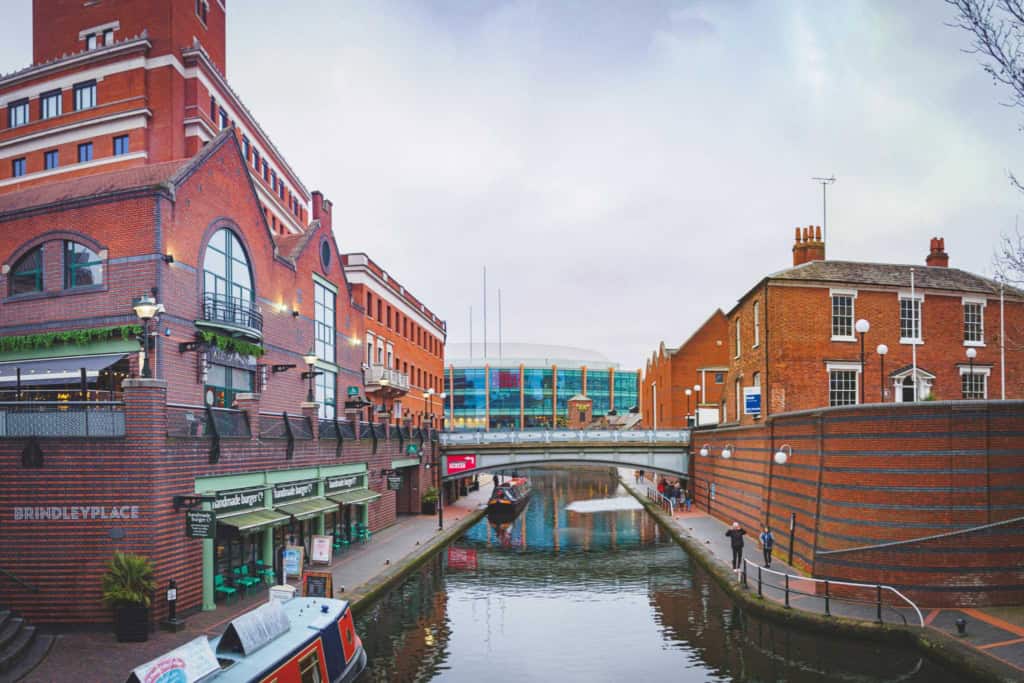
Birmingham is also celebrated for its local craft beer and street food scenes. Its healthcare system is highly rated, and the city features more green spaces, including many large parks, than any other European city of similar size.
Its central location also makes it easy to access other UK cities, making it ideal for weekend trips to various destinations across the country.
Bristol, England
Set in southwest England along the River Avon, Bristol is a vibrant yet manageable city that appeals to retirees looking for culture, diversity, and easy access to the countryside.
It offers a lively arts scene, historic Harbourside, and plenty of cafes, theaters, and independent shops.
Bristol ranks 129th on the 2026 Numbeo Quality of Life City Index, making it one of the best places for retiring in England.
While living costs are higher than in many UK cities, they remain lower than in London, and the city provides excellent healthcare facilities and modern amenities. Active retirees enjoy riverside walks, nearby beaches, and day trips to the Cotswolds or Bath.
There are also many social clubs and community groups that help newcomers settle in. Downsides include relatively high housing prices and some traffic congestion, particularly during peak hours.
Dorset, England
Dorset is a county on England’s south coast, popular with retirees looking for a quieter pace of life with a milder climate.
It’s home to many charming towns and villages, including popular holiday destinations such as Poole and Lyme Regis.
There are opportunities for outdoor activities such as sailing, birdwatching, and walks along the Jurassic Coast, a UNESCO World Heritage Site.
Dorset has one of the largest UK retirement communities, so there is no shortage of activities and groups for newcomers to get involved with.
Downsides include higher living costs and property prices, limited public transport in rural areas, and large crowds in the most popular tourist spots in the summer months.
Edinburgh, Scotland
Despite having a population of over half a million, Scotland’s capital retains a charming small-town feel. Locals rave about how friendly, green, and walkable the city is (if you don’t mind hills and cobbles, that is!).
There’s plenty of history to enjoy, with the fabulous Edinburgh Castle right in the city center, and there are several UNESCO World Heritage sites.

Edinburgh is steeped in local culture. The Royal Mile is peppered with bagpipers, street performers, and whisky shops, so you’ll feel like you’re on vacation all year round.
Public transport is excellent, including buses, trains, and trams, and there are good links to the rest of Scotland and to major English cities.
With low crime rates, high-quality public services, and affordable living costs, it’s no surprise that Edinburgh is 50th on the Mercer Quality of Living City Ranking 2024 (behind only London in the UK).
However, as with other Scottish cities, the weather can be challenging. Expect cold winters and four seasons in one day during the summer.
Glasgow, Scotland
If you desire city amenities amid natural beauty, Glasgow might be the perfect choice. Located close to Scotland’s west coast, the friendly and vibrant city offers a wealth of culture, entertainment, and natural beauty.
Whether you love theater, ballet, symphonies, opera, architecture, history, or sports, you’ll always find something interesting to do here.
If you have a bit more time on your hands, scenic areas such as Loch Lomond and the Scottish Highlands are within easy reach for day trips.
Glasgow ranks 43rd on the 2026 Numbeo Quality of Life City Index. Low pollution means good air quality, and the overall crime rate is also relatively low, though some neighborhoods are best avoided.
For retirees concerned about healthcare, the city’s medical infrastructure ranks among the best in the UK.
Liverpool, England
If you’re looking to retire in England and are into music or sports, then Liverpool could be the place for you.
This proud city is home to the Beatles and two of Europe’s top football clubs, Liverpool FC and Everton. It is also a recent European Capital of Culture.
Located in northwest England along the Mersey River, Liverpool has undergone much redevelopment in recent decades.
It’s an attractive city for retirees for several reasons, including affordable house prices, vibrant culture, friendly locals, and excellent transport links. It’s one of the highest-ranking UK cities in the 2026 Numbeo Quality of Life City Index, ranking 31st.
As well as the cosmopolitan center, there are also many attractive suburbs within easy reach of the busy city.
London, England
London really does have it all! This diverse, multicultural city is a hotspot for immigrants and offers retirees a wealth of experiences.
You can spend your retirement exploring its riverside parks, luxury boutiques, chic cafes, lively pubs, five-star restaurants, and historic sites and museums.

The city is also home to some of the best doctors and medical facilities in the country, including Guy’s Hospital and St Thomas’ Hospital.
Despite its reputation as a built-up city, more than 20% of London is public green space. There are some great parks and nature reserves, and the city’s outer areas are surrounded by beautiful countryside.
The biggest disadvantage is the high cost of living in London, as it is the most expensive city in the UK. Crime is also higher than average.
However, there are many very safe neighborhoods, and if you have the budget, the capital offers more amenities and attractions than almost anywhere else in the country. This makes it a top destination for expats looking to retire in the UK.
Tenby, Wales
Tenby is a picturesque seaside town in southwest Wales that has long been popular with retirees seeking a slower pace of life.
Known for its colorful harbor, medieval town walls, and beautiful sandy beaches, it offers a charming coastal setting with plenty of character.
Living costs are generally moderate compared with those in many southern English seaside towns, though property prices can rise during the busy holiday season.
Retirees enjoy coastal walks in nearby Pembrokeshire Coast National Park, boat trips to Caldey Island, and relaxed afternoons in cafes overlooking the harbor.
However, a spike in tourism during the summer months can lead to larger crowds.
Ready to Start Your New Chapter in the UK?
The UK stands out as an excellent retirement destination due to its safety, affordability, and appealing lifestyle. Its high-quality healthcare system is also a major draw for those looking to spend their golden years in the country.
Aside from these factors, the UK’s rich cultural heritage, diverse cities, and picturesque countryside offer retirees a variety of leisure opportunities.
Whether you want to explore historic landmarks, enjoy modern city life, or relax in nature, there is plenty to keep you entertained.
Of course, retiring overseas requires plenty of careful planning, from choosing the right visa and understanding tax obligations to arranging adequate healthcare coverage.
But with suitable preparation and expert guidance, retiring in the UK can be a stress-free and rewarding endeavor.
Start Your Retirement Abroad With Confidence
Your dream retirement overseas deserves a healthcare plan that fits your lifestyle, destination, and long-term needs. Compare personalized international health insurance quotes before you make the move.
Frequently Asked Questions
-
The UK is generally considered a good retirement destination for global expats. It has a strong and secure economy, good public healthcare, a diverse and vibrant culture and history, and plenty of picturesque locations. However, major cities such as London are expensive, and the weather can be erratic.
-
The UK is a relatively safe developed country. Its towns and cities are generally safe for everyday life, and the political environment is stable. Many major cities have neighborhoods with higher crime rates, but violent crime is relatively low, especially crimes involving retirement-age residents.
-
The amount of money you need for retirement in the UK depends largely on factors such as your lifestyle and where you live. If you retire in the UK as a spouse/partner on a family visa, you will need a minimum combined income of $38,300 per year.
According to Retirement Living Standards, a single person needs around £17,700 per year (excluding housing costs) for a basic lifestyle, £41,900 per year to live moderately, and £58,000 per year to live comfortably.
-
People in the UK can draw the state pension at the age of 66, increasing to 67 by 2028. It is possible to take money from private or workplace pensions from the age of 55, although this is increasing to 57 in 2028.
-
UK citizens and permanent residents access free healthcare through the NHS. Temporary residents with valid visas can usually access NHS services if they pay the annual healthcare surcharge of around $1,350. However, services such as dental care and optical care are not free on the NHS. Many expats purchase private health insurance in the UK to fully cover their medical needs.
-
As with money needed for retirement, living costs in the UK depend on factors such as lifestyle and location. Living in London or Brighton is much more expensive than living in Newcastle or Glasgow. According to Numbeo, estimated average monthly costs for the UK (excluding rent/mortgage) are $1,087 for a single person and $3,766 for a family of four.
Although the NHS offers free medical care, there can be long waits for certain treatments and specialist appointments due to high demand and limited resources. Because of this, many retirees choose to take out private health insurance in the UK to gain quicker access to a wider range of treatments. This is particularly important for retirees with ongoing health conditions or those who require more regular specialist care.
-
Yes, Americans can retire in the UK. However, there is no UK retirement visa, so U.S. citizens will have to qualify through one of the other visa pathways – family, skilled worker, business innovator, or ancestry.
-
Yes, the UK has a Social Security (totalization) agreement with the U.S. that allows most U.S. citizens to receive retirement benefits indefinitely while living in the UK. Payments can be deposited to a U.S. or UK bank account.
-
Yes, you will be liable for UK tax on your U.S. retirement benefit if you are a UK tax resident. However, you will usually be eligible for the annual personal allowance (currently around $16,600) and will only pay income tax at the usual progressive rates on earnings above that. The UK has a tax treaty with the U.S. to prevent double taxation, although as a U.S. citizen you will still need to file an annual tax return with the IRS.
-
No, the UK does not accept Medicare, as public healthcare is provided by the NHS. However, many Americans living abroad keep Medicare Part A as it’s free and provides coverage if they return to the US. It’s also possible to maintain Medicare Part B as a US expat abroad, which can be useful if you make frequent trips back home, although the monthly premium rates apply.