International Health Insurance
Gain valuable insights and practical tips for navigating international health insurance while living abroad. From coverage details to expert advice, this comprehensive guide helps travelers…

International medical cover for expats and their families.
Medical and trip cancellation coverage for international travel.
Life insurance for globally mobile individuals living or working abroad.
Comprehensive international medical coverage for groups.
Medical, accident, and liability protection for global travel.
Financial protection for employees worldwide.
Most Popular Country Guides
Healthcare, insurance, and living insights to plan life and travel in each destination.
Healthcare, safety, and practical guidance for living abroad.
Tips and guidance for safer, smarter international travel.
Resources for global mobility, HR, and international teams.
Learn about health insurance in Italy for foreigners and expats and discover the best global plans for medical care, emergencies, and more.
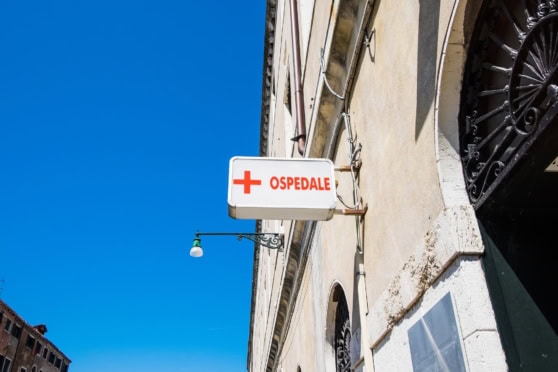
Italy’s public health insurance system is the Servizio Sanitario Nazionale or “SSN”. Italy spends over 9% of its GDP on healthcare, well above the average for other developed countries. And it sees the results. That spending is credited with giving Italy one of the highest healthcare standards in the world. In fact, the World Health Organization ranks Italy second overall in healthcare (the French system is number one).
Italians rank 11th in life expectancy and have very low infant mortality rates. However, foreigners living in Italy will need to have their affairs in order before tackling the bureaucracy, specifically the Servizio Sanitario Nazionale. Below, we will discuss the Italian Health Insurance and compare it to buying an international health insurance plan.

Since 1978, healthcare in Italy has been provided through a mixed public-private structure. On the public side, the SSN (Servizio Sanitario Nazionale) provides free or very low-cost healthcare to all Italian citizens and non-citizens with residency status.
SSN covers the cost of hospitalization and treatment, visits to family doctors and specialists, discounted medication, laboratory services, and ambulance services. However, most Italian citizens and residents alike also have supplementary private health insurance.
The SSN is funded through a combination of income tax and government funding. Employees contribute approximately 10% of their income to the SSN for the first €20,600 of their annual income.
Earnings exceeding €20,600 are taxed at a rate of 4.6% of the income. This applies to everyone working in Italy. Even if you choose to use private health insurance exclusively in Italy, you will still contribute to the public system.
In general, Italy’s health insurance program operates at a high standard and provides good value. Hospitals and clinics are clean, safe, and well-staffed. From medications to doctor’s visits to diagnostic testing – the SSN provides it all.
On the downside, the system is plagued by long waiting times for non-urgent specialist appointments. There is a significant disparity in standards between Italy’s north and south.
Many facilities lack privacy and additional comfort. Some expats are thrilled with their healthcare experience in Italy, while others have some reservations, and some find the system endlessly aggravating.
Much of their success or frustration seems to stem from language barriers and navigating bureaucracy. Having a local friend to support you is key until you get the hang of things.
Expats from EU member countries can instantly access SSN services by using a European Health Insurance Card (EHIC). There is no cost to the EHIC program.
It allows cardholders to have the same treatment as Italian citizens. After three months, EU citizens must register with their local health authority, the Azienda Sanità Locale or “ASL”, and be assigned to a general practitioner.
Expats from non-EU countries can also access the SSN system provided that they are legal residents of Italy. However, those who have not finalized their residency status must carry a private health insurance policy during the waiting period.
This isn’t just a strong recommendation. Non-EU expats must present proof of insurance when applying for their “permesso di soggiorno”, permission to stay.
For non-EU expats, the process is a bit more complicated than it is for EU residents. Expats must have both their residency status finalized and an Italian identity card to apply for an Italian insurance card, also known as a “tessera sanitaria”.
To receive the card, an expat must visit their nearest health authority office and apply for the card with all supporting documentation. This includes their residency permit, tax number, identification card, and proof of employment.
Those who wish to include their families in their coverage must also bring a family status certificate, also known as a “certificato di stato di famiglia”.
Applicants must also select a family doctor from the list provided by the ASL. Then they are finally issued their card. To maintain the theme of paperwork, the card must be renewed annually.
Many expats describe the process as arduous, especially when it comes to proving residency. Some even report that, in small towns, it’s necessary for a police officer to visit you at home to confirm that you live there.
For expats considering the numerous steps involved in applying for insurance in Italy, it pays to conduct thorough research early on. Speak with other expats about their experience. Ask them for tips on what to do when doing it for the first time.
While it’s not always possible to predict the timing of your SSN enrollment, try to apply at the beginning of the year.
This is because, regardless of when you apply, you must pay for a full year’s worth of coverage. The cost is not prorated and does not carry over to the next year. Alas, monthly payments are not possible. First-time applicants need to pay for a year’s worth of SSN premiums at once.
In all regions, health care in public hospitals means waiting. Sometimes, those waiting times can be very long. When you’re finally admitted, privacy is limited, and staff might not speak English.
For these reasons, most expats opt for private health insurance. Italy’s private hospitals are among the finest in the world.
They feature “state-of-the-art” technology, multilingual staff, and comfortable, private hospitals and facilities.
Foreigners living in Italy may want to consider an international insurance plan for several reasons.
A private global medical plan will provide you with access to health care in any country in the world, including back in your home country if desired.
You will also have access to a wider network of private hospitals with reduced waiting times for services. Below are suggestions for some of the world’s best international companies.


US citizens living in Italy have an additional medical insurance option. BCBS Global Solutions Worldwide Premier offers US expats in Italy a high-quality plan with a top-tier international network of doctors and access to Blue Cross/ Blue Shield’s network in the USA.

Almost all Italian general practitioners work on a first-come, first-served basis without appointments. This means that patients need to be patient! You could easily wait an hour or more to be seen.
Some physicians work together in a group practice called a polyclinic. These are becoming increasingly popular because physicians can share the costs of their office space, and patients can see general practitioners and specialists in the same convenient location.
At a poliambulatorio, there may be a receptionist and the option to book appointments, but this is not always the case.
Speaking of specialists, your medico di base or family doctor is your first stop for specialist consultations. You need to touch base to obtain a specialist referral, also known as an impegnativa.
This is why it’s essential to establish a relationship with a local health provider or doctor before you actually need one. When you need a specialist appointment, you’ll want to move quickly.
In Italy, you are required to register with a general practitioner, also known as a medico di base. Your local ASL will have a list of primary care physicians who are accepting new patients.
Keep in mind that most doctors limit the number of patients they can take on, and some may have a waiting list. The choice of who to sign up with is ultimately yours.
You can decide based on their location, or perhaps a personal recommendation from another expat. If you feel like the relationship isn’t working out, you can change to a new general practitioner. However, you will need to return to the ASL office to formalize the request.
The ASL’s list doesn’t distinguish between doctors who speak English and those who do not. However, your local embassy may have a list of English-speaking physicians to help you narrow down your choices.