
Citizenship by Investment Programs: How They Work and Where to Apply

How to Buy a Passport in a New Country
Have you ever wondered what it would be like to be a citizen of a different country? You could have a second passport at your disposal, one with more freedom and flexibility than your first. You could come and go as you please. Conducting international business would be easy, and you would even have a backup plan in case of conflict back home.
It sounds like every globe-trotter’s dream, but Citizenship by Investment Programs (CIPs) are real. If you have money – a lot of it – buying a passport and gaining citizenship is possible. Approximately 5,000 people a year acquire citizenship abroad through CIPs. Here is what you need to know.

Moving Abroad? Get Covered
Find the best international medical insurance plan for your move abroad.
- Compare multiple quotes from top insurers
- Get expert advice at no additional cost
- Find the right plan for your needs and budget
How Citizenship by Investment Programs Work
Citizenship investment programs are often portrayed as a quick and easy business transaction. In theory, applicants just hand over a sack of money. In return, they get a passport.
This could not be further from the truth. CIPs can take months, if not years, to process. Applicants must undergo fiscal and legal evaluations. And, in many cases, there are lengthy residency requirements.
For instance, the American CIP requires five years of residency before applying for citizenship. And an application is no guarantee of results.
Who Applies for Citizenship by Investment Programs?
Who exactly buys a second passport? CIPs attract people from countries with very limited travel options, especially those without visas. People from China, Russia, and several Middle Eastern countries are frequent CIP investors.
Business is their primary motivation. A business traveler who frequently requires international visas often wastes weeks, even months, waiting for them to be approved.
In some cases, the process might require them to turn in their passport to an embassy for consideration. During this period, they are unable to travel at all. And there is no guarantee the visa application will be approved.
However, if they are successful in obtaining a CIP, they can travel and apply for another passport. Consider how much access an Irish or Portuguese passport offers compared to one from Russia, Iran, or Nigeria.
CIPs facilitate smooth travel and business arrangements for businesspeople who frequently travel to neighboring countries. For instance, the American CIP is popular among Canadians who want to have equal access and convenience in both countries.
Aside from business considerations, there are secondary benefits. Some CIP applicants consider it a form of insurance. A second passport provides financial, social, and political diversification in the case of economic sanctions, war, or natural disasters.
Finally, like any other expensive product, there are inevitably some people who covet pricey passports, just as they do any other status symbol. But they are in the minority of applicants.
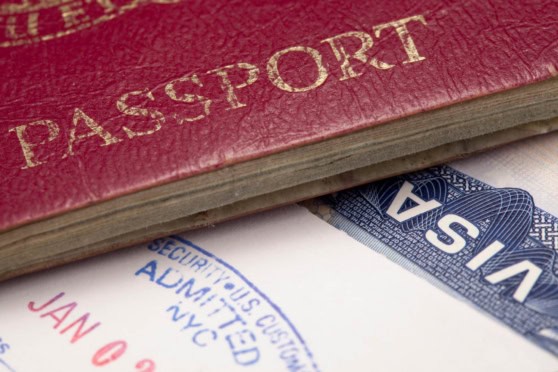
How Did Buying Passports Start
The concept of Citizenship by Investment programs began in 1984 when St. Kitts and Nevis introduced the first CIP.
However, CIPs came to broad public attention around 1999, when John Paul Getty III and other prominent members of the Getty family acquired Irish citizenship through an early form of that country’s CIP.
Where Are CIPs Offered?
CIPs are offered by several Caribbean countries, including Antigua and Barbuda, Dominica, Grenada, and St. Kitts and Nevis.
Several countries are often discussed alongside CIPs because they offer residency-by-investment programs, also known as golden visas.
These may provide a path to citizenship after several years, but they do not grant citizenship directly. Examples include Portugal and the United States.

How Much Does It Cost to Buy a Passport?
The least expensive CIPs start at about $100,000, but the final bill is not so straightforward. The application alone can cost anywhere from a few thousand to $100,000.
In some cases, the programs require a lower level of investment, provided applicants purchase real estate in need of development. This, of course, comes with hefty renovation costs.
Furthermore, there are also legal fees, travel costs, and other administrative charges. Many countries with CIPs require minimum residency terms, so applicants must be prepared to relocate – possibly with little immediate job prospects.
As well, some countries require applicants to have a minimum personal net worth. In addition to paying for the CIP costs, you must ensure your net worth does not decline and that you maintain fiscal liquidity throughout the process.
Travel Insurance
Countries That Offer Dual Citizenship
Several Caribbean countries, including Antigua and Barbuda and Dominica, offer inexpensive options to obtain a passport and gain dual citizenship.
They start at $100,000 and thus are popular options. But countries at the other end of the price spectrum are also very popular.
That is because the best passports, in terms of mobility and flexibility, are the most expensive. For instance, the Cyprus CIP has a minimum investment of $2,150,000.

Part of its steep price tag is due to its membership in the European Union. Additionally, part of the investment in Cyprus is in real estate, and investors believe it could yield strong returns in the future.
Another popular destination is Portugal. Their CIP, known as the Golden Visa Program, provides a two-year residency permit and a fast-track to citizenship for the applicant and their immediate family members.
The cost is only $550,000, and there is even a lower-cost option at $384,000 that includes investing in designated real estate that requires renovation.
Here are some of the easiest countries to obtain a second passport.
- Ireland
- Italy
- Israel
- Paraguay
- Guatemala
- Dominica

Citizenship
Citizenship by Investment Programs and Controversy
Not surprisingly, CIPs are controversial. In an era of heightened global security, selling citizenship for cash does not go over well.
Many people question how effectively applicants are screened and where their money comes from. There is no clear way to determine whether CIPs are paid for with illegally obtained funds or purchased for money laundering.
For instance, Malta’s CIP was met with resistance from other EU countries. They only backed down when Malta agreed to add extra conditions to its CIP program, including a residency requirement.
In some countries, these programs are already coming under fire. In Canada, the federal government canceled the program in 2014, leaving some 65,000 applicants in limbo.
The case is still up in the air, and the unprocessed applicants are now taking legal action against the Canadian federal government.
With global security a top priority, it remains to be seen whether other countries will follow Canada’s lead and suspend their programs.
Other critics point to how the program can exacerbate problems of global inequity. While there are exceptions to every rule, in general, countries that offer CIPs are relatively wealthy.
Those purchasing citizenship are generally from relatively poor countries. Anti-poverty activists do not like the notion of rich people in a poor country investing their millions in an already-well to do country.
Others point out that CIPs amplify mobility inequality. The people who are most desperately in need of a new passport, such as refugees, are often the least likely to obtain one.
Another criticism is that CIPs do not take into account culture and heritage. CIPs are usually seen as business arrangements, not ones based on shared values or a connection to history and heritage. Applicants are not truly invested in their new country’s language, traditions, values, and communities.
Moving Abroad? Get Covered
Find the best international medical insurance plan for your move abroad.
- Compare multiple quotes from top insurers
- Get expert advice at no additional cost
- Find the right plan for your needs and budget