The Ultimate International Travel Checklist
Plan your overseas trip with ease using this essential international travel checklist, covering visas, flights, insurance, packing, and more.

International medical cover for expats and their families.
Medical and trip cancellation coverage for international travel.
Life insurance for globally mobile individuals living or working abroad.
Comprehensive international medical coverage for groups.
Medical, accident, and liability protection for global travel.
Financial protection for employees worldwide.
Most Popular Country Guides
Healthcare, insurance, and living insights to plan life and travel in each destination.
Healthcare, safety, and practical guidance for living abroad.
Tips and guidance for safer, smarter international travel.
Resources for global mobility, HR, and international teams.
Learn how to protect yourself from measles while traveling or living abroad, including vaccination advice, prevention strategies, and guidance on treatment for global travelers and expats.
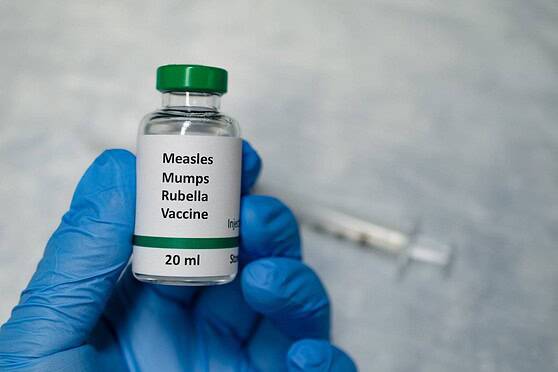
In 2019, the country of Samoa was making news for something other than its beautiful, tranquil scenery. This small nation of 200,000 people was in the midst of a catastrophic measles outbreak. According to the government, there were an estimated 4,200 cases of measles. The death toll as of December was more than 60 people. Tragically, more than 50 of the dead were children.
While the rate of measles infections has dropped significantly on a global scale since the 1960s, the disease has experienced a resurgence in recent years. The measles outbreak in Samoa is particularly troubling, but people worldwide have been infected. Here is what travelers and expats need to know about the resurgence of measles.

Whether you are traveling for a short stay or living abroad long-term, the right insurance helps protect your health and gives you access to care when you need it overseas.
Measles remains a common disease worldwide. An estimated 10 million people are infected each year. In 2018 alone, 140,000 died as a result.
While the measles outbreak in Samoa has been in the news recently, outbreaks have also occurred in Israel, the Democratic Republic of the Congo, Thailand, Vietnam, Japan, Ukraine, and the Philippines.
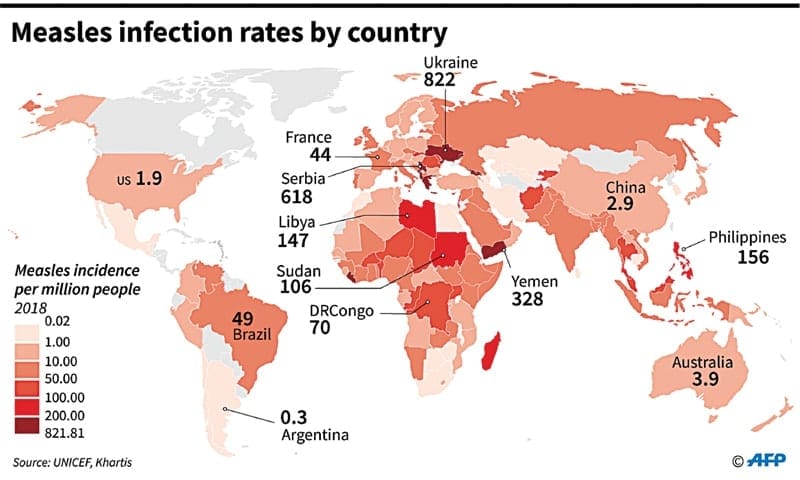
Source: UNICEF, Khartis, DAWN
Measles is more than just a rash; it can cause serious illness. The first sign is typically a high fever, often exceeding 104°F, which can lead to dehydration. This usually appears 10 to 12 days after exposure and lasts 4 to 7 days.
Other early symptoms include cough, congestion, and conjunctivitis, as well as small white spots on the inside of the cheeks.
A few days after the fever begins, the characteristic red rash appears, usually starting on the face and neck and spreading to the hands and feet over several days.
Secondary infections, such as pneumonia, are common, and even mild cases can leave patients feeling very unwell.
Travelers who suspect they may have measles, especially if white spots appear or after known exposure, should seek medical attention immediately.
Regardless of cause, the Mayo Clinic recommends seeing a doctor for any fever of 103°F or higher.
Contracting measles is more likely among children who are poorly nourished compared to those with adequate nutrition.
In particular, inadequate Vitamin A is a contributing factor in increased contraction levels for malnourished and vulnerable children.
As well, people with compromised immune systems, especially those living with HIV/AIDS, are more prone to contracting measles.
More than 95% of measles deaths occur in countries with low per capita incomes and inadequate public healthcare systems.
Measles outbreaks are especially deadly in the wake of natural disasters or conflict in low-income countries due to the added strain the already weak healthcare system experiences.
Not only are early warning signs of breakouts missed in the wake of more pressing catastrophes, but the resources to run vaccine programs are also compromised.

According to the Centers for Disease Control, most cases of measles in the United States are introduced by returning international travelers. When you travel to areas where measles is present, and you have not been fully vaccinated, you risk putting yourself and others in harm’s way.
In North America, the measles vaccine is typically offered as a combination shot, along with vaccines for mumps and rubella. One injection is considered 93% effective. Two shots boost efficacy to 97%. Therefore, while you should ideally have two shots before you depart, if you have little time to prepare, even one shot will offer significant protection.
Older travelers might recall that the standard for the measles, mumps, rubella – or MMR – vaccine used to be just one shot. If you only received one shot in childhood, you are eligible for a booster as an adult.

While most travelers associate vaccines with a trip to a travel medicine clinic, the MMR vaccine is available from your family doctor or any walk-in clinic. Many public health units also have vaccine awareness campaigns that offer free vaccinations and other health services.
Vaccinations are the primary line of defense against infectious diseases. Measles is so contagious that if one person has it, approximately 90% of non-immune individuals they come into contact with will also become infected.
However, as an airborne virus, it remains contagious for only two hours on surfaces. Thus, while handwashing and surface disinfection are both good general hygiene practices, they offer minimal protection against highly infectious diseases such as the measles.
There are numerous benefits to frequent hand washing with hot water and soap, but it is not an adequate strategy of defense.
Severe diarrhea, dehydration, ear infections, and respiratory infections, such as pneumonia, are the most common complications of measles. These complications contribute to measles-related deaths.
Unfortunately, there is no single treatment or medication that specifically treats the measles. Rest, rehydration, and fever medication are the most commonly prescribed treatments. Infected children should also receive Vitamin A supplements.
Travelers who suspect they have measles should contact their travel medical insurance provider immediately to seek advice and assistance.
Travelers who have been infected can expect a prolonged recovery period, marked by fatigue and low energy, even after the most severe period of infection has passed.
Once cleared to leave a clinic or hospital, upgrading your accommodations to surround yourself with more comfort can go a long way in making your recovery period more pleasant.

The Measles and Rubella (M&R) Initiative is a global partnership among the American Red Cross, the United Nations Foundation, the Centers for Disease Control and Prevention, UNICEF, and the World Health Organization.
The M&R Initiative is dedicated to ensuring that no child dies from measles or is born with congenital rubella syndrome.
Together with Gavi: The Vaccine Alliance, the M&R Initiative has helped vaccinate 346 million children through vaccination campaigns in 2018.
While the previous rate of MMR vaccination in Samoa sat at just 31%, a massive public vaccine campaign is underway in hopes of vaccinating nearly 60,000 people.
After two weeks of an emergency vaccination drive, there is hopeful news. Seventy-six percent of children under 4 years old on the main islands of Upolu and Savai’i have been vaccinated. As mobile vaccination teams go door to door, businesses and public bodies have closed as a show of support and to aid in the project’s logistics.
There is good reason to believe Samoa will soon reach its goal of 95% coverage and protection against a measles outbreak.
For travelers and expats seeking up-to-date guidance on measles vaccination, visit the US Department of Health & Human Services website.
Whether you are traveling for a short stay or living abroad long-term, the right insurance helps protect your health and gives you access to care when you need it overseas.