


Health Insurance in Hong Kong
Explore health insurance in Hong Kong for expats. Compare public and private coverage, find top plans, and get expert guidance to choose the policy that fits your needs and budget.

International medical cover for expats and their families.
Medical and trip cancellation coverage for international travel.
Life insurance for globally mobile individuals living or working abroad.
Comprehensive benefits for international teams.
Insights on international relocation and global mobility.
Download our brochures or follow us on socials.
Most Popular Country Guides
Healthcare, insurance, and living insights to plan life and travel in each destination.
Healthcare, safety, and practical guidance for living abroad.
Tips and guidance for safer, smarter international travel.
Resources for global mobility, HR, and international teams.
Popular and recently published guides from our team.
Learn everything you need to know about Hong Kong healthcare, including how to access public and private care as an expat or visitor, what costs to expect, and more.

If you’re planning to visit or move to Hong Kong, it’s essential to know how the healthcare system works, what services foreigners can access, and what costs to expect, whether for emergency care or routine check-ups. While Hong Kong healthcare is highly regarded, it can be confusing for newcomers. Many assume care is fully accessible and inexpensive, but for non-residents, the reality is more complex.
This article explains how to access public and private healthcare, what costs to expect, and how to make informed decisions for both routine and emergency medical care.

Find the Best International Medical Insurance
The healthcare system in Hong Kong is often ranked among the best in the world, with the 2025 CEOWORLD Health Care Index placing it 23rd out of 110 countries. This recognition reflects the system’s range of options, fiscal sustainability, strong public health campaigns, and overall affordability.
The city currently has 42 public hospitals and 11 private hospitals, along with numerous other medical facilities across both sectors. The healthcare system operates on a public-private model, with the public system receiving heavy government subsidies. Notably, private facilities handle about 68% of outpatient care in Hong Kong.
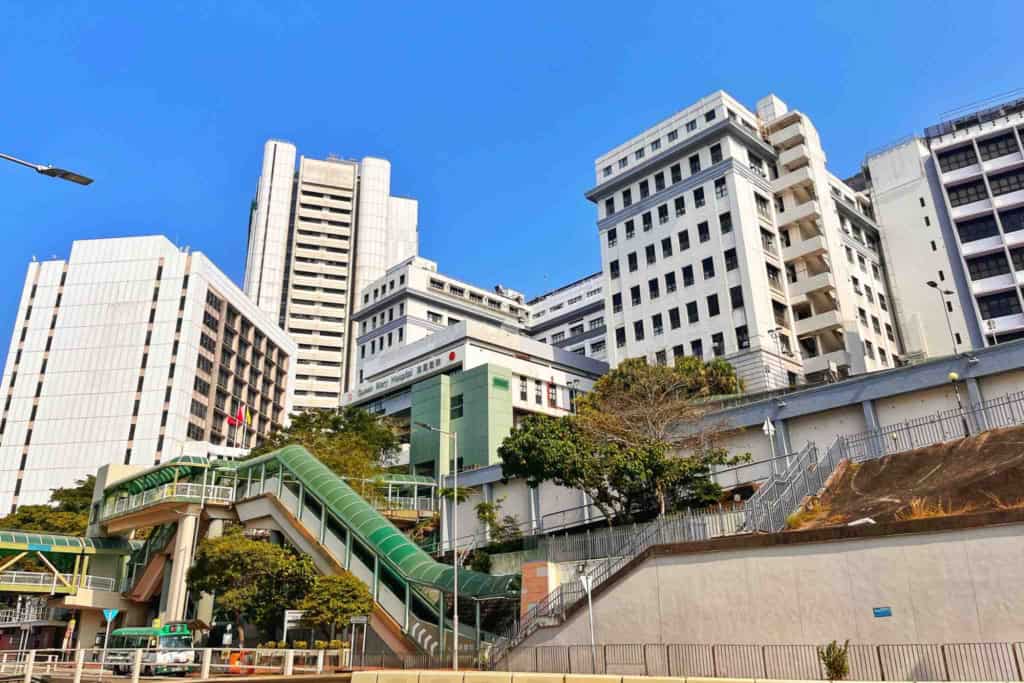
Approximately 90% of residents use the public system, particularly for inpatient care. All residents with a valid Hong Kong Identity Card (HKID) can access public hospitals and clinics at low rates. That said, expats often prefer private hospitals and clinics for faster, more personalized care, which usually requires upfront payment, making private health insurance highly recommended to help cover costs and provide peace of mind.
Public healthcare in Hong Kong also includes access to Traditional Chinese Medicine (TCM), and most private health plans typically cover TCM services. In addition to TCM, Hong Kong places significant emphasis on preventive healthcare, including routine cancer screenings, maternal and child health check-ups, and immunization programs.
Many services are offered at low or no cost through public clinics to encourage early detection and ongoing health management. The Department of Health oversees healthcare in Hong Kong, while the Hospital Authority manages the public system. The Hong Kong Health Bureau is responsible for local health policy and resource allocation.
Technically, healthcare in Hong Kong isn’t free. The public system is heavily subsidized, so residents pay only low fees for services such as emergency care, inpatient treatment, testing, and rehabilitation.
Non-resident foreigners can also access public healthcare in emergencies, though at higher rates. Private healthcare, on the other hand, requires full payment at substantially higher rates, either through private coverage or out of pocket by the patient.
Because private care can be expensive, a comprehensive health plan is highly recommended for expats and visitors to help cover costs and ensure timely access to treatment.
Public healthcare in Hong Kong is mostly funded through taxes and allocated via the government budget. In 2025/26, public healthcare spending in Hong Kong is estimated at approximately HKD 141.4 billion, accounting for about 17.2% of total government expenditure.
This reflects continued upward pressure on healthcare demand, driven mainly by an aging population, rising rates of chronic disease, and sustained reliance on public hospital services.
The public healthcare system also receives some private funding through out-of-pocket payments and voluntary insurance, including the Voluntary Health Insurance Scheme (VHIS).
Generally, public healthcare in Hong Kong has much to recommend it, though in recent years it has faced increasing challenges, particularly due to the city’s aging population.
Here are some of the advantages and disadvantages of Hong Kong’s public healthcare system:
In general, non-resident foreigners and visitors can access public healthcare in Hong Kong, but usually only in limited circumstances.
Expats are considered residents and can easily access public hospitals and clinics in Hong Kong. As long as you have a Hong Kong Identity Card (HKID), you can use public healthcare at very low subsidized rates. You don’t need a private plan unless you want to use private hospitals or clinics.
Read on to find out how to register for public healthcare and access the services you need.
Visitors to Hong Kong can access public healthcare only for essential or emergency care, and they must demonstrate an immediate need for treatment. Additionally, medical costs for visitors are significantly higher than for residents with an HKID. For example:
Importantly, Hong Kong does not have any reciprocal healthcare agreements with other countries, so you cannot rely on Medicare or public health coverage from your home country.
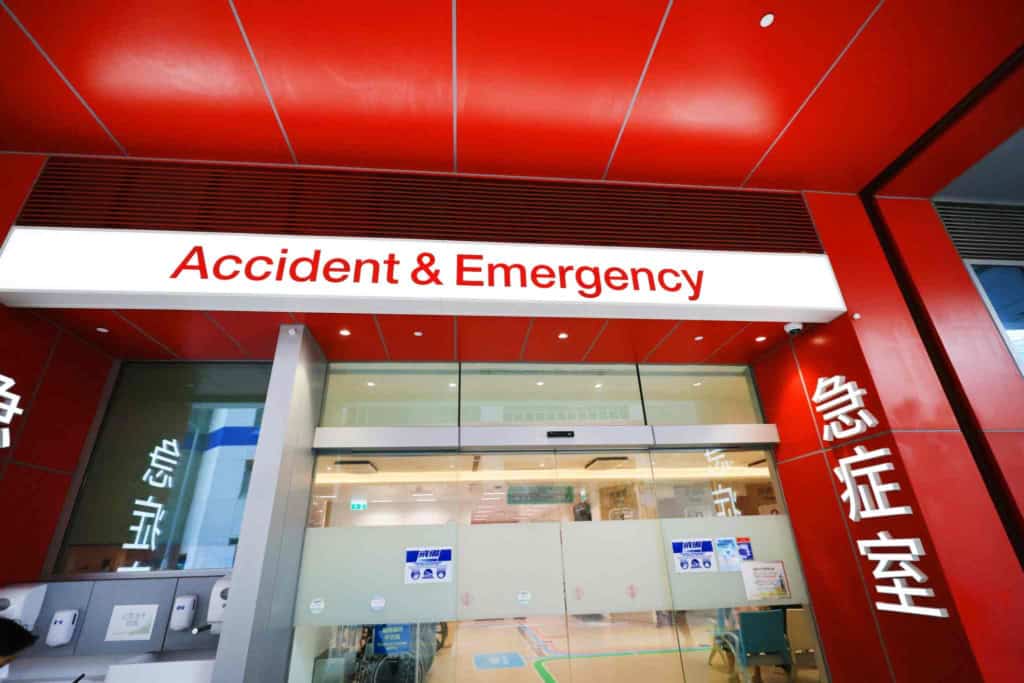
For this reason, it is highly recommended that visitors to Hong Kong have travel insurance that includes travel medical coverage to help manage unexpected medical costs. That said, even with coverage, you will typically need to pay upfront for treatment and then submit receipts to your insurer for reimbursement, so it’s essential to keep all receipts and documentation.
Expats and visitors can access Hong Kong’s public healthcare system, though access and procedures differ depending on residency status. Expats can access both routine and emergency care, while visitors are generally limited to emergency or essential care only.
You don’t need to pre-register to access public healthcare in Hong Kong. Expats can make appointments through the Hospital Authority app or online system and visit public hospitals or outpatient clinics for routine and emergency care.
Upon arrival, you will be asked to complete a registration form, so the hospital has your details. In an emergency, you can go directly to a public emergency room.

You will typically need to show the following identification and documents:
There are no registration fees – you only pay for consultations, treatments, and medications. While health coverage is not required for public care, many expats choose a private plan for faster access or private hospitals.
Visitors in Hong Kong can access public hospitals only for emergency or essential care. Routine appointments are generally not available.
Visitors must show their passport (and visa if applicable) and pay the higher non-resident fees upfront. Again, a travel plan is strongly recommended to help cover these costs, and you should keep all receipts to file a travel insurance claim later.
The Hong Kong healthcare system also has a robust private sector that plays a key role in the city’s medical services. Most expats choose to use private hospitals and clinics because they offer shorter wait times, more upscale facilities, and personalized care.
Some of the leading private hospitals in Hong Kong, which are all ACHS International accredited, include:
Private healthcare in Hong Kong is primarily funded by patients, either out of pocket or through private coverage. Many employers offer healthcare plans as part of their remuneration packages, and these often cover private facilities. In some cases, patients must pay immediately after treatment and then claim reimbursement from their insurer. Only a few insurers and employers offer direct billing.
The Hong Kong government regulates private facilities through the Private Healthcare Facilities Ordinance (Cap. 633) and the Department of Health, ensuring standards for patient safety, infection control, and staff qualifications. However, costs are not regulated, so pricing can vary and transparency can be limited. Despite this, the standard of care is among the best in the world and is comparable to that of the public system.
Because of its many advantages, private healthcare is a popular choice for residents, including expats, in Hong Kong. As such, most outpatient care occurs through the private system – about 68% of outpatient services and 10% of inpatient care – even though it employs roughly half of Hong Kong’s doctors.
Private healthcare generally offers faster medical care, more advanced technology, and better facilities. Additionally, Doctors are well-trained – usually with international credentials – and speak fluent English. However, because fees are unregulated in the private system, there are some concerns about price transparency.
Hong Kong currently has 12 private hospitals located across the city. Most are easily accessible in areas like Victoria Peak and residential districts, while fewer are found in the city’s outer reaches and islands.
Accessing private healthcare in Hong Kong is straightforward, though it can be expensive. Residents can make an appointment at any private outpatient clinic and show their HKID to complete registration in minutes.
If you are a visitor, you will need to show your passport. While you can usually book appointments directly with specialists, it’s generally best to go through a GP, as they can perform initial evaluations, run tests, and provide recommendations. You will need to pay as soon as your appointment is over, usually in full and out of pocket.

This can be very expensive, so having private coverage is strongly recommended, especially if you are living in Hong Kong.
If you have a private health plan, you will need to keep the receipts and any other pertinent documents and file a claim with your insurer to recover the expenses. Some employers may offer health plans that allow the clinic or hospital to bill them directly, so you won’t need to pay up front. However, this is generally limited to large companies and specific policies.
Understanding Hong Kong’s healthcare is one thing, but it’s crucial to know how much medical care costs there. These vary significantly between the public and private systems, and depending on whether you are a foreign resident or a visitor.
Public healthcare in Hong Kong is heavily subsidized for residents, meaning you pay only low fees for most services. Fees are generally paid upfront after treatment.
Subsidized services include doctor consultations, inpatient and emergency care, immunizations, and medications. However, certain auxiliary services, such as dental and optical care, are not subsidized and require payment in full or private coverage.
Here are some examples of fees at public hospitals for residents with an HKID:
| Service | Resident with HKID | Non-Resident / Visitor |
| Emergency consultation | $51 (HK$400) | $269 (HK$2,100) |
| Inpatient care (per day) | $25–$38 (HK$200–HK$300) | $949 (HK$7,400) |
| Rehabilitation (per session) | $13 (HK$100) | $243 (HK$1,900) |
| Pathology | Free–$25 (Free–HK$200) | $51–$2,065 (HK$400–$16,100) |
| Women’s health screening | $40 (HK$310) | $109 (HK$850) |
| Childhood vaccines | Free | $38–$64 (HK$295–$500) |
For public safety reasons, certain highly infectious or dangerous diseases are treated free of charge in public hospitals, including:
Private healthcare in Hong Kong is unregulated, so costs tend to be high and vary widely. While there aren’t usually “hidden fees,” consultation charges, lab fees, and medications can add up quickly. For this reason, most expats opt for a private health plan to provide financial protection and peace of mind. In most cases, you pay medical expenses upfront and then claim reimbursement from your insurer.
Here are some examples of private medical costs in Hong Kong:
Although public healthcare in Hong Kong is heavily subsidized, patients still need to pay for services. Fees are usually charged after treatment and must be paid upfront before leaving the facility. With very few exceptions, nothing in Hong Kong’s public healthcare system is entirely free. However, if you have coverage, you may be able to claim these costs from your insurer.

Costs in private healthcare are much higher, but the same payment terms – upfront payment followed by claims – generally apply.
The government also offers several subsidy programs, including:
Whether you’re moving to Hong Kong or just visiting, it’s essential to have a plan that covers your medical expenses. This helps ensure you are protected if you need to use the Hong Kong healthcare system, especially if you plan to use the city’s private healthcare facilities.
Of course, your specific coverage needs will vary depending on whether you’re visiting for a short time or becoming a long-term resident. For example, visitors may need only coverage for emergency care and evacuation, while residents may require a comprehensive plan that includes inpatient care, dental, and more.
Read more about health insurance for foreigners in Hong Kong and travel insurance for Hong Kong, and find the right coverage for your budget and needs.
Hong Kong offers a world-class healthcare system across both public and private sectors, providing excellent care for expats and visitors alike.
Understanding how the system works is key to making informed decisions. Expats can access low-cost care at public hospitals, while visitors may want a travel plan to cover higher fees in both public and private facilities.
Having the right coverage ensures peace of mind and helps you manage your health effectively while living in or visiting Hong Kong. With the proper preparation, you can confidently navigate the city’s healthcare system and focus on staying healthy and enjoying life.
Find the Best International Medical Insurance
Hong Kong has a well-regarded public-private healthcare system, which ranks 23rd out of 110 countries globally. Public facilities are heavily subsidized and affordable, while private hospitals and clinics tend to be more upscale, offer shorter wait times, and have more English-speaking staff, but they are also more expensive.
Expats and visitors often use a mix of public and private services depending on cost, convenience, and language needs.
Yes. Expats and visitors can use public healthcare facilities, but the costs differ. Expats who are residents can access public healthcare at the same low rates as locals by showing their HKID.
However, visitors can access public hospitals only for emergency or essential care and must pay higher fees upfront, so having travel insurance for Hong Kong is highly recommended to cover these costs and enable reimbursement.
Public healthcare is heavily subsidized for residents in Hong Kong. For example, an emergency consultation at a public hospital costs around $51 (HK$400) for residents with a Hong Kong ID Card, compared with $269 (HK$2,100) for non-residents and visitors.
Private healthcare is widely available but considerably more expensive, so having private health insurance in Hong Kong is strongly recommended if you plan to use private facilities.
Yes. Payment is usually required immediately after treatment. However, if you have a travel or health plan, you can file a claim for reimbursement. Be sure to keep all receipts and documentation to make the claims process easier.
Health insurance is not mandatory to access public healthcare in Hong Kong, but it is highly recommended if you plan to use private facilities, where treatment costs can be expensive.
Hong Kong health insurance can also help cover unexpected medical expenses, including emergency treatment, hospitalization, and, depending on the policy, medical evacuation or repatriation if specialized care isn’t available locally or you need to return home for treatment.