

International Health Insurance
Gain valuable insights and practical tips for navigating international health insurance while living abroad. From coverage details to expert advice, this comprehensive guide helps travelers…

International medical cover for expats and their families.
Medical and trip cancellation coverage for international travel.
Life insurance for globally mobile individuals living or working abroad.
Comprehensive international medical coverage for groups.
Medical, accident, and liability protection for global travel.
Financial protection for employees worldwide.
Most Popular Country Guides
Healthcare, insurance, and living insights to plan life and travel in each destination.
Healthcare, safety, and practical guidance for living abroad.
Tips and guidance for safer, smarter international travel.
Resources for global mobility, HR, and international teams.
Discover how to retire in Germany with expert tips on visas, healthcare, cost of living, and the best cities for a safe and affordable retirement.

With its high-quality healthcare, excellent public transportation, low crime, and clean cities, it’s no wonder so many expats choose to retire in Germany. Beyond the basics, the country offers a rich cultural scene, beautiful landscapes, and a variety of cities and towns suited to different lifestyles.
If you’re considering making the move, here’s everything you need to know about visas, healthcare, cost of living, the best cities for retirees, and more.

Germany offers many advantages for retirees, making it an appealing destination for those seeking an affordable, high-quality lifestyle in the heart of Europe.
However, as with any country, there are potential downsides to consider before making the move.
Germany offers numerous advantages that make it an appealing destination for retirees. Here are some of the key reasons why so many choose to retire in Germany.
Affordability is one of the biggest advantages of retiring in Germany. The country has a cost of living index of 68.7, lower than neighboring countries such as Switzerland (110.7), Austria (71.3), and Denmark (78.9).
For Americans, this is especially good news: the cost of living, including rent, is 12.5% lower than in the United States.

Rental prices are also 39.2% lower, making it easier to find comfortable housing while enjoying Germany’s high standard of living.
Safety is a major consideration for retirees. Germany ranks 20th in the 2025 Global Peace Index, making it an ideal place for retirees seeking peace of mind.
The country offers low crime rates, reliable law enforcement, and well-maintained public spaces. For retirees, this means daily life is secure, whether walking in your neighborhood, taking public transport, or exploring new cities.
Safe streets and communities allow you to enjoy your retirement fully, participate in social and cultural activities, and feel confident living independently or traveling within the country.
Foreigners looking to retire in Germany can also rest assured that they are in safe hands when it comes to healthcare.
Germany’s healthcare system ranks 8th globally in the 2025 CEOWORLD Health Care Index and is known for its excellent infrastructure and the availability of both public and private medical services.
While basic public healthcare covers essential needs, many foreign retirees opt for private health insurance to access a wider range of facilities and shorter wait times.
Germany offers a variety of living environments to suit different retirement lifestyles.
Charming villages provide a tranquil setting for those seeking peace and quiet, while bustling urban centers offer rich cultural activities, modern amenities, and plenty of social opportunities.
This diversity allows retirees to choose the environment that best fits their preferences and pace of life.
For retirees who love to travel, Germany’s extensive railway system makes it easy to visit neighboring EU countries like Austria, Switzerland, Spain, and France, with seamless connections to local networks.
That said, there’s plenty to explore within Germany itself. The country is home to 55 UNESCO World Heritage Sites (only Italy and China have more), from ancient cathedrals to Ice Age art and picturesque castles.
While Germany offers many advantages, there are some challenges retirees should consider before making the move.
While Germany is generally affordable, some cities, such as Munich, Frankfurt, and Hamburg, have high housing costs and daily expenses.
Retirees living in these urban areas may find rent and living costs significantly higher than in smaller towns, which could impact retirement budgets.
Germany can be wonderful in the summer, with crisp blue skies, abundant sunshine, and warm temperatures ideal for outdoor activities like hiking in the Alps or cycling through vineyards.
Summer highs typically range from 70–80°F (21–27°C), making it perfect for exploring the outdoors. However, winters can be cold, cloudy, and damp, particularly in the northern regions, where temperatures often range from 30–40°F (-1 to 4°C).

Southern and mountainous areas, including the Alps, can experience heavier snowfall, with winter temperatures sometimes dropping to 20–30°F (-6 to -1°C).
While picturesque, these conditions can make travel more challenging and may limit mobility for some retirees.
While many Germans speak English, learning the local language remains important for daily life, especially for retirees living outside major cities.
Mastering the finer points of German grammar can be challenging, and regional dialects may make communication more difficult in small towns and rural areas.
That said, around 56% of the population speaks English as a second language, so getting by in larger cities like Berlin, Munich, or Hamburg is generally manageable.
Retirees planning to live in urban areas will likely navigate daily life with relative ease, while those in smaller towns may benefit from taking language classes or practicing conversational German.
Germany’s tax system can be a drawback for some retirees. The top marginal income tax rate is 45%, compared with 37% in the United States, which may significantly impact retirement income for high earners or those with substantial pensions.
In addition to income tax, retirees should also consider social security contributions and local municipal taxes, which can add to overall expenses.
Expats may benefit from hiring an international accountant or financial advisor to navigate tax obligations in both countries, optimize their retirement income, and explore any tax treaties between Germany and their home country.
Germany is known for its efficient but sometimes complex bureaucracy, which can be daunting for retirees.
From visas and residency permits to health insurance enrollment and local registration, navigating these requirements often involves extensive paperwork and strict deadlines.
For retirees, this can mean time-consuming trips to government offices, long wait times, and unexpected delays that may disrupt settling into a new home or accessing essential services.
Many retirees find it helpful to work with relocation specialists, legal advisors, or local expat services to ensure compliance and reduce stress.

Germany does not offer a dedicated retirement visa. However, non-EU citizens, including Americans, can still move to Germany long-term through several other visa options.
Choosing the right visa is essential to meet requirements and ensure a smooth move.
The Family visa is intended for retirees with close family members living in Germany, whether as legal residents or citizens.
This visa allows you to join your family and can lead to long-term residency if the requirements are maintained.
For retirees who want to stay active in business, the Business or Investor visa offers a pathway. This visa is intended for those planning to start a business or invest in an existing German business.
While there is no fixed nationwide investment requirement, a significant investment may be needed to demonstrate economic benefit to Germany. This is often around €360,000, depending on the state and business plan.
This visa can lead to extended residency and eventual permanent residency.
The Self-Employed or Freelancer visa is another option for retirees who wish to work independently.
To qualify, applicants must demonstrate that their work will benefit Germany economically and meet certain financial requirements.
This visa can also lead to long-term residency.
To retire in Germany on a long-term visa, you must demonstrate financial stability, such as sufficient pension income, investment funds, or business revenue, depending on the visa type. You may also need to show that your stay will not place a burden on the German social system.
Health insurance in Germany is mandatory for all visa types. Retirees must enroll in either a public or private plan to qualify for a residence permit. You must show proof of coverage when you submit your visa application.

Once approved, residence permits are typically valid for one to three years, depending on the visa type, and must be renewed before expiration. Continuous residence in Germany under a valid permit can eventually lead to permanent residency.
In most cases, retirees may apply for permanent residency after five years of legal residence, provided they have sufficient income, health coverage, and integration into German society.
After holding permanent residency for the required period, retirees may become eligible to apply for German citizenship, subject to language proficiency and other legal requirements.
Germany generally allows dual citizenship only in specific circumstances, so retirees should check their eligibility before applying.

Check Official Sources Early! Always consult the German embassy or consulate for the latest requirements. Working with a relocation specialist or an immigration lawyer can help ensure you complete the forms correctly and ensure a smooth process.
Retiring in Germany requires some planning and paperwork, but following a clear sequence of steps can make the process much smoother.
Below are the key actions retirees need to take to establish long-term residency and enjoy life in Germany.
Many retirees hire a German immigration lawyer or relocation specialist to navigate the paperwork and understand local requirements.
If you are comfortable with German bureaucracy, you can complete much of the process yourself, though professional assistance is often advisable.
Depending on your circumstances, you may qualify for a Family visa, Business/Investor visa, Self-Employed/Freelancer visa, or a Work visa if you plan to continue working briefly before retiring. Selecting the right visa is essential to ensure a legal pathway to long-term residency.
Preparation typically takes one to three months. You will need documents required for general residency, including proof of identity, financial stability, and health coverage.
Certain documents, such as birth certificates, marriage certificates, or background checks, may require an Apostille or official authentication.
Submit your completed application and all required documents to the German embassy or consulate in your home country.
Police clearance certificates and proof of financial resources are often required. It is advisable to register with your country’s embassy in Germany after arrival for consular support.
Processing times vary by embassy or consulate and visa type. Some retirees wait until residency is fully approved before relocating, while others enter Germany as tourists and finalize paperwork on-site.
Before or shortly after arrival, retirees should secure long-term housing. Rental contracts are typically required for visa approval in some cases, especially for self-employed or family visas.
Health insurance is mandatory in Germany. Retirees must enroll in either a public (gesetzliche Krankenversicherung) or private medical plan.
You must provide proof of coverage for residence permits, which ensures your access to healthcare while living in Germany.
Once in Germany, apply for your residence permit (Aufenthaltstitel) at the local Ausländerbehörde (foreigners’ office).
You will need identification, proof of accommodation, financial proof, and health insurance documentation. The permit is typically valid for one to three years and can be renewed.
Opening a local bank account is essential for managing finances and receiving pensions or other income.
Once you register your residence at the local Bürgeramt (citizen registration office), you will receive a German tax identification number (Steueridentifikationsnummer), which is necessary for financial and tax purposes.
Residence permits must be renewed before expiration. Continuous legal residence can eventually lead to permanent residency, usually after five years, and later, eligibility for German citizenship if language and integration requirements are met.
Processing times vary by visa type and the embassy’s workload. For most retirees, applications take between 3 to 6 months, though it can be longer for business or family visas.
During processing, you may enter Germany on a tourist visa if permitted, but check the entry rules for your nationality.
Germany offers a wide range of housing options for retirees, from apartments in vibrant cities to peaceful countryside homes.
Your choice will depend on your preferred lifestyle, budget, and how close you want to be to cultural amenities and healthcare services.
Many expats initially choose to rent when moving to Germany, as it offers flexibility while you settle in and explore different regions.
Rental contracts are generally straightforward, though some landlords require proof of income, a Schufa credit report, and, in some cases, a guarantor.

Buying property is also an option, particularly for those planning to stay long-term. Foreigners can purchase real estate in Germany without restrictions.
However, property taxes, notary fees, and real estate agent commissions (typically 5–7% of the purchase price) should be considered in the budget.
Housing costs vary between major urban centers and smaller towns. Larger cities tend to have higher demand and more amenities, while smaller towns and rural areas offer quieter settings, often with more space and green surroundings.
Retirees can choose the environment that best fits their lifestyle, from bustling city life to serene villages.
Renters may pay utilities and “Nebenkosten” (additional costs) separately, which typically include water, heating, garbage collection, and building maintenance.
Homeowners should account for property taxes (Grundsteuer), building insurance, and maintenance costs. Real estate transfer taxes vary by state, so it’s important to understand local regulations when buying property.
Germany’s housing market is generally stable, with high-quality construction, reliable utilities, and well-maintained neighborhoods, which are important considerations for retirees seeking security and comfort.
Hire a Local Real Estate Agent! Work with a licensed relocation or real estate professional to navigate leases, understand additional costs, and choose a neighborhood that fits your retirement lifestyle. Start your search early to explore different areas and compare options before committing.
Whether you plan to live off savings, a retirement fund, social security, or a private pension, understanding the cost of living is essential before moving to Germany.
Naturally, your expenses will depend on your lifestyle and location. Urban centers such as Berlin, Munich, and Cologne are more expensive, while smaller towns like Leipzig and Freiburg are more affordable.
According to Numbeo data for 2026, the estimated monthly cost for a single person (excluding rent) in Germany is roughly $1,156.
Rent varies by city and apartment size. A one-bedroom apartment in the city center costs around $943.40, while a similar property on the outskirts costs $732.77.
Smaller towns typically offer lower rental costs, making them an attractive option for retirees seeking affordability.
Day-to-day expenses for retirees typically include:
Retirees can enjoy a comfortable lifestyle in Germany while keeping expenses manageable, especially by choosing smaller towns or suburbs, without sacrificing access to healthcare, public services, or cultural amenities.
Germany offers one of the highest-quality healthcare systems in the world, but navigating it as a foreign retiree can feel complex at first due to the mix of public and private options.
All residents, including expats, are required by law to have health coverage, either public or private. Notably, U.S. Medicare is not accepted in Germany, so retirees must arrange coverage before relocating.
The public system (Gesetzliche Krankenversicherung, or GKV) is funded through taxes and social contributions and provides comprehensive coverage for essential healthcare services.
While non-EU retirees may eventually be eligible to join the public system, most must first purchase private health insurance to qualify for a residence permit. EU citizens may have additional agreements allowing them to maintain some coverage from their home country.

Despite the extensive public system, certain services, such as dental care, cosmetic procedures, or specialized treatments, may not be fully covered. Waiting times for non-urgent care can also be longer, and availability can vary by region.
For this reason, many retirees choose a private plan for faster access to care, English-speaking doctors, and more comfortable facilities.
You must show proof of coverage for all visa applications, making it essential to arrange insurance before relocating.
Understanding Germany’s tax and inheritance rules is important for retirees, particularly those moving from abroad. Proper planning can help protect your retirement income.
You are considered a German tax resident if you have a permanent home or spend more than 183 days per year in the country.
Tax residents pay income tax on worldwide income, while non-residents are taxed only on German-sourced income.
Pensions and retirement income are generally taxable in Germany. The taxation rate depends on whether the income is from a German pension, a foreign pension, or private savings. For example:
Germany has agreements with countries, including the U.S., U.K., and others, to prevent double taxation. Retirees should review their home country’s treaty with Germany to determine their obligations.
Germany has an inheritance tax that applies to assets passed to heirs, including property, bank accounts, and investments. Tax rates depend on the relationship between the deceased and the beneficiary:
Planning inheritance carefully can help retirees minimize potential tax burdens and ensure assets are passed on in accordance with their wishes.
Get Expert Advice! Tax rules can be complex, especially for retirees with cross-border income or assets. It’s best to consult a tax or financial advisor familiar with German and international law. Official guidance is available from the German Federal Ministry of Finance.
We reviewed several quality-of-life factors to pinpoint the best places for foreign retirees in Germany.
These include cost of living, crime rates, healthcare quality, access to nature and urban green spaces, walkability, cultural attractions, and more.
With a population of over three million, Germany’s capital, Berlin, is the largest city in the country and one of its most dynamic.
Known for its vibrant nightlife, outstanding restaurants, and family-friendly activities, it’s also a welcoming destination for immigrants.
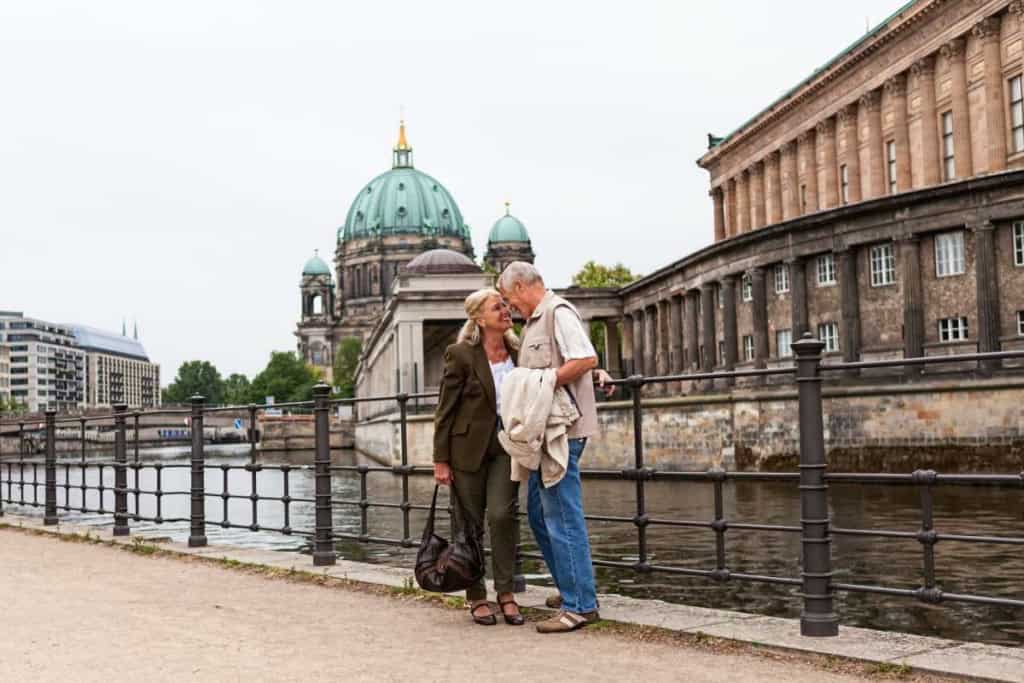
More than 800,000 expats have made Berlin their home, drawn by the city’s multicultural atmosphere and cosmopolitan vibe.
Crime rates are low, public transportation is fast and reliable, and the city’s green spaces, such as Tiergarten, are unmatched.
Located on the Rhine River, Cologne is a lively, welcoming city with a population of 1 million. It is famous for its stunning botanical gardens and iconic Kölner Dom (Cologne Cathedral), a UNESCO World Heritage site and one of Europe’s largest Gothic cathedrals.
The city offers a unique blend of history and modernity, with renowned festivals like Karneval and traditional Christmas markets attracting people worldwide. Compared to larger cities like Munich or Frankfurt, Cologne is also a more affordable option for retirees.
With over 20 hospitals, an extensive public transport system, and tranquil parks, it offers everything they might need.
Nestled along the scenic Saale River, Jena is a quiet and affordable city with a population of 100,000. While it may not be as well-known as other German cities on this list, it offers numerous advantages for retirees.
As one of Germany’s safest cities, Jena provides a welcoming environment for newcomers, making it particularly popular with retirees.
Its lively, walkable streets are lined with cafes, restaurants, and shops, and just beyond the city limits, nature lovers can enjoy peaceful surroundings, including wild orchids growing in the landscape.
Jena also boasts a thriving cultural scene, featuring attractions such as the Optical Museum and the Zeiss Planetarium.
The city is also home to some of Germany’s top doctors and medical researchers, ensuring retirees can access excellent healthcare.
Leipzig is a small yet charming city with a lot to offer. Located about 100 miles from Berlin, it features centuries-old Renaissance buildings and was once one of Germany’s wealthiest cities.
Its affordable cost of living attracts many foreigners, including retirees looking to avoid big-city prices.

Today, Leipzig is famous for its vibrant arts and music scene, bustling nightlife, year-round festivals, and numerous parks and gardens.
It is also one of Germany’s greenest cities, with flat terrain and a compact layout that makes it easy to walk around and explore.
Munich was recently named the “most walkable city in the world,” with nearly 86% of its population living within 1 kilometer (0.62 miles) of a car-free zone and a healthcare facility.
The city features excellent public transport and extensive walking and cycling paths, making it ideal for those who want to retire in a mid-sized city without needing a car.
This picturesque city also offers a mild climate, world-class museums, and inviting public parks like the famed Englischer Garten.
Food enthusiasts will delight in the city’s 20-plus Michelin-starred restaurants, while nature lovers can enjoy hiking and skiing in the nearby Munich Alps.
Whether you dream of an early retirement abroad or plan to continue working into your later years, relocating to Germany is definitely worth considering.
The country offers a safe, stable environment and a world-class healthcare system. With both public and private options, retirees can rest assured they’ll have access to excellent medical care nationwide.
Germany is also a great destination for those who enjoy culture, history, and lifelong learning. The country offers low-cost or even free higher education for both citizens and immigrants, making it an ideal place for retirees who want to continue their studies.
If you’re ready to retire and join the nearly 14 million immigrants already living in Germany, it’s important to plan your move carefully.
From understanding the visa and residency requirements to securing the right healthcare coverage, there’s much to consider.
Ready to make the move? Speak with a health insurance expert to find coverage that aligns with your retirement plans, budget, and long-term needs, so you can fully enjoy life in Germany.
Yes. Germany offers a high quality of life for retirees, with excellent healthcare, low crime rates, reliable public transportation, a variety of cities and towns, and abundant cultural and recreational opportunities. While your experience will depend on your lifestyle and location, overall, it is considered a very attractive retirement destination.
The exact amount depends on your lifestyle and location. The estimated monthly costs for a single person are $1,156.0 (excluding rent), in 2026. Larger cities like Munich, Berlin, and Cologne tend to be more expensive, while smaller towns like Leipzig and Jena are more affordable.
Yes. U.S. citizens can retire in Germany if they obtain a long-term visa or residence permit, such as a family, business/investor, self-employed/freelancer, or work visa converted to retirement. Staying longer than 90 days without the proper visa is not allowed.
Yes. U.S. citizens can receive Social Security benefits while living in Germany. Payments can be directly deposited into a U.S. or German bank account.
Yes, but the U.S.–Germany tax treaty prevents double taxation. Social Security benefits are generally taxed in Germany, but you won’t pay U.S. tax on the same income.
All residents, including retirees, must have health insurance. Germany provides a high-quality public system (GKV) and private options. Coverage is mandatory for residency, and U.S. Medicare is not accepted. Many retirees choose private plans for faster access, English-speaking doctors, and broader coverage.