
The Cost of Living in China

Key Takeaways
- China's average cost of living is 62% lower than that of the United States, according to Numbeo data updated in May 2026.
- Average rent in China compared with New York City is 77% lower in Beijing, 78% lower in Shanghai and 90% lower in Chengdu.
- Dairy products are the exception to low grocery prices in China, with a gallon of milk costing $5.30 to $11.60 and a pound of local cheese $3.30 to $14.70.
- International primary school tuition in China costs $8,830 to $36,792 a year on average for one child.
Explore Living Costs in China’s Most Popular Cities
China blends ancient history with modern innovation, offering a unique mix of culture, landscapes, and fast-growing cities. As one of the world’s largest economies, it remains an attractive destination for expats, students, and professionals. This guide to the cost of living in China will help you understand what to expect for everyday Chinese expenses, including housing, food, transport, and more. All prices in yuan (RMB) have been converted to U.S. dollars, with data sourced from Numbeo and updated as of May 2026.

Planning a Move to China?
Compare international health insurance plans designed for expats living, working, and studying abroad.
Is China Expensive?
In short, China is generally more affordable than many Western countries, especially for housing, transportation, and local dining. However, the cost of living in China can vary widely depending on the city and lifestyle you choose.
While major cities like Shanghai and Beijing can feel expensive due to international demand and higher rent prices, many everyday expenses remain low compared to the U.S. or Europe.
Smaller cities and inland regions offer even greater affordability, making China a flexible destination for a wide range of budgets.
Living Abroad
The Cost of Living in China Versus the US
Living expenses in China can vary by location and type of purchase. According to Numbeo, China’s average cost of living is 62% lower than that of the United States.
Rent in China is 74% lower than in the U.S. on average. But certain costs, such as gasoline and the cost of buying city-center apartments, are actually higher in China.
Many products commonly used in the West are imported into China, which makes them more expensive. Therefore, you can expect to pay as much, or more, than you would at home for dairy products like cheese and milk.
The Most Expensive and Cheapest Places in China
China is the fourth-largest country in the world. Over 3,200 miles east to west and north to south, its geography is almost as varied as the regional cuisine.
Deserts and towering mountain ranges dominate the west. Even with the influence of the Silk Road, most of China’s major cities have formed in the east.
As with other countries, the cost of living in Chinese cities is much higher than in rural areas. However, the cities offer immigrants a more international community.
The Most Expensive Cities in China
China has the largest population in the world. This means you’ll find high population density in major cities like Shanghai and Beijing while also paying a premium.
When deciding where to live, balance cost savings with access to amenities and an international community.
Shanghai
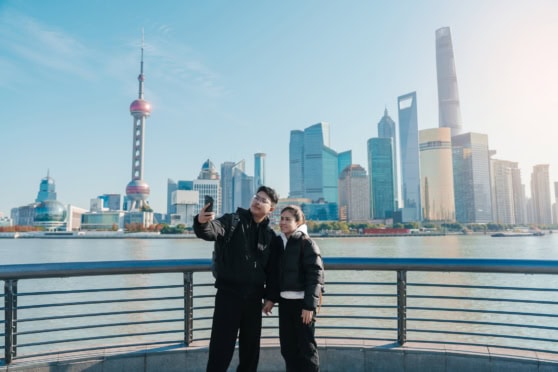
As China’s financial hub and largest city, Shanghai has drawn expats and travelers from around the world for centuries.
Today, skyscrapers with neon lights, high population density, and unique local cuisine fuel comparisons with Tokyo and New York City.
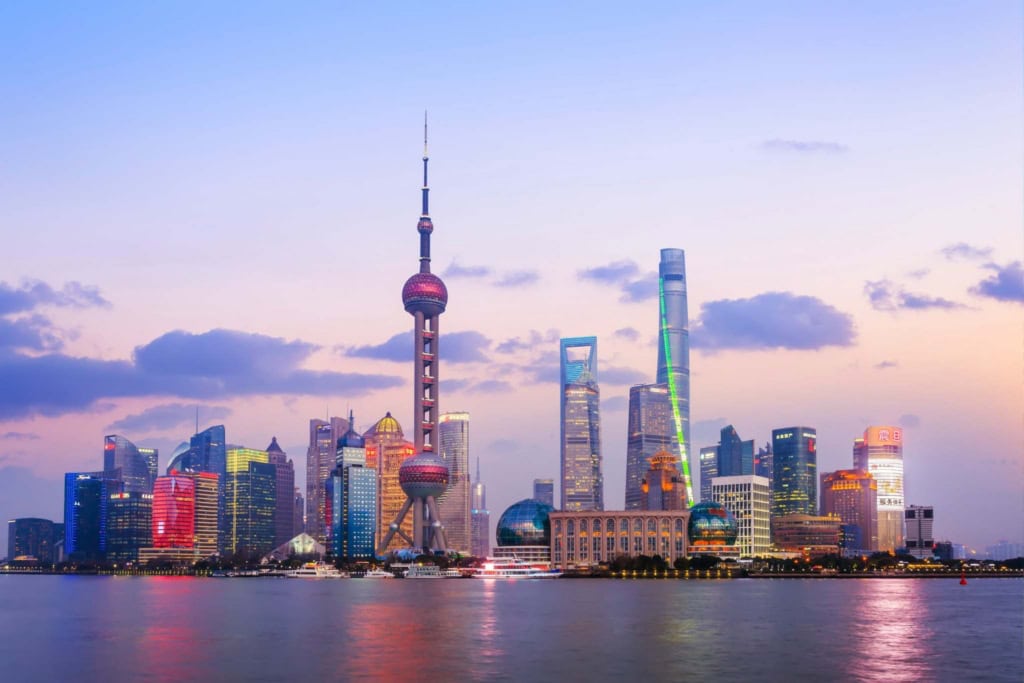
While Shanghai’s rent is 78% lower on average than New York City’s, it ranks as China’s most expensive city, and the 401st most expensive city in the world.
Beijing
The grand capital of China spans more than 6,000 square miles. Next to imposing modern architecture, you’ll find historic palaces, tombs, and temples.
Beijing’s landmarks tell the story of Imperial China through the upheaval of the 20th century. Some double as public spaces for residents. Rent in Beijing is 77% lower on average than in New York City.
Shenzhen
Just north of Hong Kong, Shenzhen is known for its modern design and world-class shopping. Known as China’s original hotbed of tech manufacturing, its influence and production facilities have only grown.
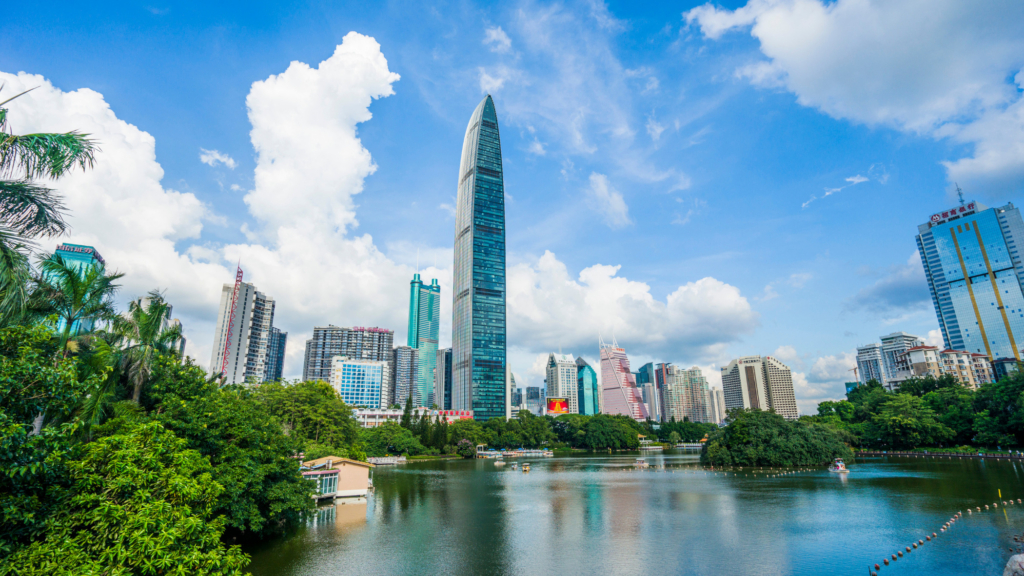
High-end malls are a focal point along with amusement parks and skyscrapers. Access to train lines, highways, and a major airport make it a prime location. Yet rent is 83% lower on average than in New York City.
Living in One of China’s Largest Cities?
Find expat health insurance plans with worldwide coverage and flexible benefits.
Hangzhou
In the north of Zhejiang province is the lakeside city of Hangzhou. Its architectural significance and beauty have been preserved since 1949.
It’s home to Zhejiang University, one of the largest in China, and tourists flock to the well-known monasteries in the hills. Despite its waterfront location, rent is 75% lower on average than in New York City.
Guangzhou
Located at the intersection of major rivers, Guangzhou was an important trade hub for centuries.
In riverfront skyscrapers, the financial and high-tech sectors dominate alongside one of China’s major film studios.
Guangzhou is one of the most densely populated cities in China, and it has a subtropical monsoon climate. Rent is 88% lower on average than in New York City.
The Most Affordable Cities in China
With some exceptions, China’s most affordable cities tend to be more inland and rural. Most still have modern city centers despite a higher number of historic structures and older neighborhoods.
Airports and train lines are also common and steadily increasing. These cities attract fewer immigrants than Shanghai or Beijing, but they often provide a close-up view of Chinese temples, pagodas, and beautiful natural landscapes. Population density varies.
Suzhou
This beautiful, ancient port city in Jiangsu province sits on the Yangtze River Delta. Known as the “Venice of China,” it is the most expensive city in the country overall.
Suzhou has a 4,700-year history of silk production, as well as canals, stone bridges, and picturesque gardens, including a UNESCO World Heritage Site.
Qingdao
The seaside city of Qingdao – meaning “Green Island” – is known for its beautiful beaches and Zhongshan Park alongside modern skyscrapers.
It is home to Tsingtao Brewery, prestigious universities, and China’s Blue Silicon Valley, a hub for marine science.
A Gothic cathedral is just one example of lingering German influence. Mild weather and rent that is 81% lower on average than in New York City make this a highly sought-after home.
Chengdu
If you’re looking for giant pandas, you’ll find them in Chengdu’s panda sanctuaries and breeding facilities. The capital of Sichuan province has a history of luxury and sophistication.
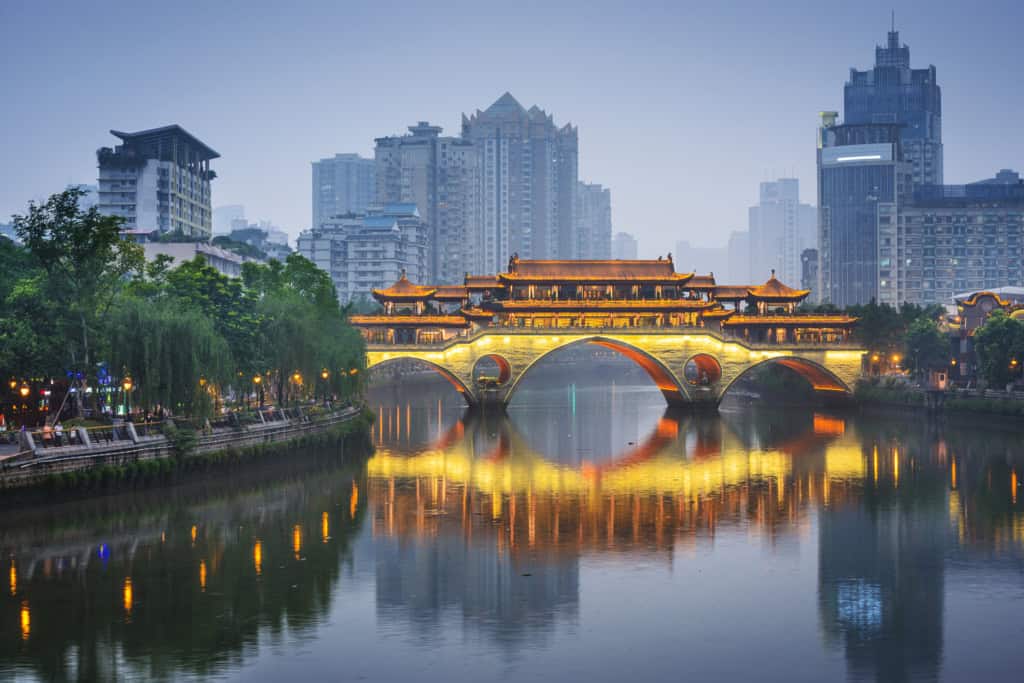
Multiple major universities and museums operate there today. Its ancient Chinese irrigation system continues to sustain a large agrarian community, but the high-tech industry is rapidly growing.
Rent is 90% lower on average than in New York City.
Nanjing
The former capital of the Ming Dynasty on the Yangtze River is filled with historic monuments from China’s storied past.
This includes the massive 14th-century Zhonghua Gate, also known as the Gate of China. Surrounded by hills and waterways, Nanjing offers multiple public parks and a more rural, traditional way of life.
Rent is 89% lower on average than in New York City.
The Average Cost of Living in China
To better understand the cost of living in China, it’s useful to look at housing, food, transportation, and entertainment in major cities.
Below is an overview of typical expenses in some of China’s most popular expat destinations.
Housing Costs in China
While Shanghai has the highest overall cost of living in China, Hangzhou has the highest housing costs. Beijing is close behind.
Rent in these popular cities is significantly more expensive than in most other Chinese cities. That said, rent in both cities is more than 70% lower on average than in New York City.
Apartments are the norm in China. Land in cities is expensive, and the large population makes high-rises more efficient.
If you want a larger kitchen and the possibility of a stand-alone house, you will need to go to more rural areas. Foreigners often have different housing requirements and standards.
You may want to use one of the many housing agent services available for expats to help you find a home. These can be found on the popular Chinese social app WeChat.
Shanghai and Beijing both offer bustling environments and efficient transportation. Impressive architecture and influences from the foreign concession era add even more international appeal.
More people will speak English, and you’ll have more access to familiar food, products, and stores. Cities with lower housing costs still offer modern amenities, but fewer English speakers.
Expats and locals alike rely on phone apps to help them with daily life in China. Luckily, China ranks 16th among countries with the fastest mobile internet speeds (162.67 Mbps).
Broadband internet speeds are also fast. Compared with the U.S., internet costs in China are low. You can expect to pay about $7 to $18 per month on average in China for unlimited data at speeds of 60 Mbps or more.
The cost of broadband in larger cities is about $5–10 higher. Due to China’s censorship laws, expats will face limitations on internet browsing. Arriving with a strong virtual private network (VPN) service is recommended.
Here are the average monthly prices you can expect to pay for living expenses in the most popular Chinese cities for expats:
Shanghai
- One-bedroom apartment rental in city center: $589 to $1,472; outside city center: $328 to $883
- Three-bedroom apartment rental in city center: $1,472 to $3,532; outside city center: $883 to $1,776
- Basic utilities (electricity, heating, cooling, water, garbage) for a 915 sq ft apartment: $31 to $94
- Internet (60 Mbps or more, unlimited data, cable/ADSL): $6 to $19
Hangzhou
- One-bedroom apartment rental in the city center: $324 to $957; outside the city center: $221 to $662
- Three-bedroom apartment rental in city center: $883 to $2,208; outside city center: $442 to $883
- Basic utilities (electricity, heating, cooling, water, garbage) for a 915 sq ft apartment: $29 to $82
- Internet (60 Mbps or more, unlimited data, cable/ADSL): $7 to $88
Beijing
- One-bedroom apartment rental in city center: $736 to $1,913; outside city center: $294 to $1,030
- Three-bedroom apartment rental in city center: $1,766 to $2,943; outside city center: $736 to $1,766
- Basic utilities (electricity, heating, cooling, water, garbage) for a 915 sq ft apartment: $33 to $88
- Internet (60 Mbps or more, unlimited data, cable/ADSL): $12 to $19
Shenzhen
- One-bedroom apartment rental in the city center: $589 to $1,472; outside the city center: $265 to $736
- Three-bedroom apartment rental in city center: $1,251 to $3,091; outside city center: $662 to $1,472
- Basic utilities (electricity, heating, cooling, water, garbage) for a 915 sq ft apartment: $36 to $94
- Internet (60 Mbps or more, unlimited data, cable/ADSL): $4 to $18
Chengdu
- One-bedroom apartment rental in the city center: $294 to $612; outside the city center: $182 to $427
- Three-bedroom apartment rental in city center: $662 to $1,531; outside city center: $330 to $765
- Basic utilities (electricity, heating, cooling, water, garbage) for a 915 sq ft apartment: $23to $59
- Internet (60 Mbps or more, unlimited data, cable/ADSL): $7 to $18
Food Costs in China
Foreigners quickly realize that Chinese food in China is very different from take-out restaurants back home, and that food is a key part of the culture.
Specialties, cooking style, and core ingredients vary by region and city. Certain Chinese foods, when eaten at the right time of year, are said to bring luck, wealth, and happiness.
The Chinese greeting “Have you eaten yet?” (吃饭了吗 /chī fàn le ma?) is often used instead of “how are you?” to show care and concern for others.
Eating Out
Eating out is common in China, and tipping is not part of the culture. Good food can always be found, from cheap street food to fine dining.
You will spend more time in the major international cities of Shanghai and Beijing. On average, a three-course meal for two people at a mid-range restaurant in Shanghai will cost you $22 to $59. Other cities fall within the national average of $15 to $44.

A meal at an inexpensive restaurant will cost just $2 to $6 on average. For that price, you can get a satisfying lunch of xiaolongbao, or soup dumplings – a Shanghai and Suzhou favorite.
Street food is popular, but expats should check for health certificates to ensure a safe meal. Popular dishes include savory Chinese breakfast crepes called jianbing and Chinese dumplings called jiaozi. Each region and city has its own spin on common dishes.
Eating In
Cooking at home is affordable and a chance to experiment with Chinese comfort food. White rice is a staple of the Chinese diet, and a pound will cost just $0.30 to $0.81. Eggs are another staple, and a dozen will cost $0.88 to $2.65.
Add some garlic, tomato, and scallions to make fānqié chǎo dàn (tomato egg stir-fry) – a satisfying standard in Chinese homes.
The exception to cheap groceries in China is dairy products. One gallon of milk costs $5.30 to $11.60, and a pound of local cheese costs $3.30 to $14.70.
Entertainment Costs in China
Depending on your activities, a night out in most Chinese cities is affordable. Chinese karaoke bars (known as KTVs) were hit hard by the pandemic but are still widespread.
Some expats might need a little liquid courage to get up and sing. If the popular local drink baijiu isn’t your style, a pint of domestic beer on draft, like Snow, costs just $0.74 to $2.65.
A bottle of mid-range wine for the group will cost $5.89 to $23.25. If you’d prefer a quieter evening, you can buy a single ticket to see a movie for $5.15-$8.83. However, Chinese censorship laws limit the number of international releases.
Some foreigners feel that delicious Chinese cuisine tends to focus more on taste and texture than on nutrition.
To look after your health and avoid exercising in polluted air, you may need a gym. A monthly fitness club membership in China costs an average of $14.72 to $117.73.
Transportation Costs in China
The Chinese government’s multi-decade development plans have connected this vast country like never before.
China is now known for its abundant and efficient transportation. Currently, it has the most high-speed rail mileage in the world.
The bullet trains are clean and comfortable, connecting major cities such as Shanghai, Beijing, Shenzhen, and Guangzhou. Prices vary depending on the distance of your trip.
High-speed rail from Beijing to Hong Kong costs around $150-$180. Passengers should book ahead when traveling over the holidays, especially during the Lunar New Year celebrations.
Receiving the traditional Lunar New Year gift of a lucky red envelope (hóngbāo) filled with money might help with smooth travel and offsetting your ticket price.
While highways are also being built, subway systems are rapidly expanding. They are the best way to get around China’s largest cities.
A one-way ticket on local public transport costs an average of $0.29 to $0.74. A monthly pass costs $13-$44 and includes buses in major cities. Transport costs in Shanghai and Beijing are higher than the national average.
Taxis are also available in most cities. On average, a one-mile taxi ride costs $0.45 to $0.75, plus a start fee of $1.20 to $2.10.
Uber does not operate in China, but other Chinese ride-hailing apps, such as Didi Chuxing and Hello Chuxing, are popular. Unless you have a Chinese driver’s license, you cannot rent a car in China.
The Costs of Education in China
Public school is compulsory and free for children in China from grade one through nine. Additional costs for items like uniforms, food, and extracurriculars are not covered.
Grades 10 through 12 (senior secondary school) are not compulsory, and tuition is not covered. International students can attend Chinese public schools, but they must meet additional requirements.
These may include an interview, an entrance exam, and the presentation of certain documentation. The quality of public schools in rural areas is often much lower than that of schools in the cities.
Most immigrants prefer to send their children to private international schools. These are sometimes known as “Experimental Schools” or “Bilingual Schools.” These institutions charge hefty tuition fees.
One year of international primary school for one child can cost $8,830 to $36,792 on average. If you’re moving to China with very young children, prepare to pay for preschool and kindergarten.
A full-day, private preschool or kindergarten can cost $221 to $1,429 per month for one child. International private schools are more often found in major cities popular with expats.
Healthcare Costs in China
The Chinese healthcare system comprises public and private institutions. In the last decade, China has invested heavily in healthcare to improve rural access and cost.
While improved, quality and cost still vary depending on location. In the major cities, private institutions offer exceptional care at a premium.
Expats should purchase private health insurance in China to avoid large bills and access the best possible treatment experience.
Access Private Healthcare in China
Looking for access to private hospitals in China and English-speaking doctors? Explore expat health insurance plans designed for life in China.
Research nearby facilities and make note of where you would want to be treated in an emergency. Some large public Chinese hospitals in major cities have “international wings” that provide Western-style care.
Foreigners can use these public hospitals, but the service is expensive. All the more reason to have health insurance.
Ready to Experience Life in China?
From the Great Wall of China to high-speed rail, China’s multi-millennial history and thrilling race toward the future intertwine at every turn.
China’s well-connected and livable cities offer green spaces, delicious food, and international communities. But a front-row seat to China’s growth and nonstop development also comes with challenges.
Getting access to reminders of home means living in crowded cities with a higher cost of living. Shanghai and Beijing are the most expensive cities in China. However, they are significantly cheaper than their counterparts in America and Europe.
If you’re looking for a more natural landscape, you can save even more. Cities like coastal Qingdao and historic Chengdu offer modern amenities and vibrant local culture in stunning environments.
The cost of living in China vs. the U.S. is quite low, though there are exceptions. Even so, China can offer an affordable life to expats eager to step out of their comfort zone. You’re sure to find more than a little good luck along the way.
Start Your Life in China with Confidence!
Get personalized international health insurance quotes tailored to your destination, budget, and coverage needs.
Cost of Living in China FAQs
-
The amount you need depends on your lifestyle and where you live. A single person can often live comfortably on $1,200 to $2,500 per month, including rent, in many Chinese cities. Living in Shanghai or Beijing will usually cost more than living in smaller cities. Your housing choice and spending habits will have the biggest impact on your monthly budget.
-
Yes. China is generally much less expensive than the United States. Rent, public transportation, dining out, and many everyday services usually cost less. However, imported goods, dining out on Western foods, international schools, and private healthcare can be just as expensive as they are in the U.S.
-
A good salary depends on your city and profession. In major cities such as Shanghai and Beijing, a higher income is often needed because housing costs are higher. In smaller cities, the same salary can provide a much more comfortable lifestyle because everyday expenses are lower.
-
Yes, but there are restrictions. Foreigners are generally allowed to buy one residential property for their own use if they meet certain residency requirements. Rules vary by city, so it is important to check local regulations before purchasing a home
-
China can be an affordable place to live, with low transportation costs, fast internet, and excellent public transit. However, digital nomads should consider visa requirements, internet restrictions, and access to the websites and online tools they use for work before making the move.
-
Family expenses vary depending on your lifestyle. While groceries, transportation, and local services are often affordable, international schools, larger homes, imported food, and private healthcare can significantly increase your monthly budget. Families should plan for these additional costs before relocating.
-
Yes. It is a good idea to have extra savings to cover one-time moving expenses, such as a rental deposit, furniture, utility setup, and visa-related costs. Having an emergency fund can also help you manage unexpected expenses during your first few months.
-
Not always. China relies heavily on mobile payment apps for everyday purchases. While major hotels and international businesses often accept credit cards, many local shops and restaurants prefer digital payment platforms. Expats should be prepared to set up a local payment method after they arrive.
-
Yes. Many expats find it easier to save money in China than in their home country, especially if they earn a competitive salary. Choosing a city with a lower cost of living, using public transportation, and eating local food can help you keep your monthly expenses low and your savings account growing.