

The Ultimate International Travel Checklist
Plan your overseas trip with ease using this essential international travel checklist, covering visas, flights, insurance, packing, and more.

International medical cover for expats and their families.
Medical and trip cancellation coverage for international travel.
Life insurance for globally mobile individuals living or working abroad.
Comprehensive international medical coverage for groups.
Medical, accident, and liability protection for global travel.
Financial protection for employees worldwide.
Most Popular Country Guides
Healthcare, insurance, and living insights to plan life and travel in each destination.
Healthcare, safety, and practical guidance for living abroad.
Tips and guidance for safer, smarter international travel.
Resources for global mobility, HR, and international teams.
Discover essential tips for traveling safely amid terrorism risks and how travel insurance can safeguard you against potential risks.
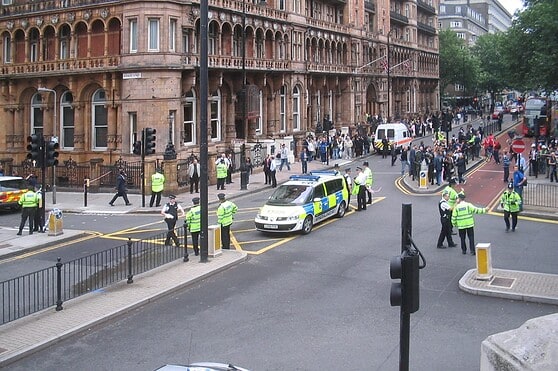
While international travel is more accessible than ever, it’s essential to acknowledge that safety concerns, particularly those related to terrorism, are more pressing than they once were. Sadly, this threat is growing worldwide, even in popular European destinations like Paris, London, and Brussels, which have experienced attacks in recent years.
Although such incidents are unpredictable, you can enhance your safety by staying informed, following local guidelines, and avoiding high-threat areas. Securing the right kind of travel insurance can also offer a helpful safety net, offering reimbursement for trip cancellations and assistance in emergencies.
To help you stay safe during your travels, this article provides practical tips and resources for navigating high-risk areas and managing potential threats while enjoying your adventures overseas.

The nature of terrorist threats has changed significantly over the past two decades. Since the early 2000s, especially after the 9/11 attacks, the tactics used by terrorists have shifted.
While large-scale coordinated bombings were more common in the past, recent years have seen an increase in smaller, localized attacks.
Today, attackers often use methods like driving vehicles into crowds or using knives. These attacks are usually carried out by individuals acting alone and motivated by extremist beliefs.
The rise in mass shootings with terrorist motives in the United States underscores the need for travelers to be vigilant about safety threats when abroad.
Research and planning ahead are essential for staying safe while traveling. Many governments provide travel advisory systems that identify high-risk areas and suggest safety precautions.
For travelers from the U.S., joining programs like the Smart Traveler Enrollment Program (STEP) can also improve your safety while you’re away.
You can also follow guidelines to enhance your safety while traveling, which we will discuss later in this article.
We’ll also share practical tips and actions to take in case of an emergency situation, helping you feel prepared and informed during your travels.
When planning international travel, it’s essential to stay informed about the safety of your destination.
Countries like the U.S., Canada, Australia, and the U.K. provide up-to-date travel advisories that assess the safety of various locations and offer valuable safety tips.
These advisories provide insights into a destination’s overall safety, including its history of terrorist attacks.

Below are some of the most recognized and frequently used travel advisories and resources to help you stay informed while traveling overseas:
These resources are excellent for obtaining up-to-date information on potential risks in various countries, enabling travelers to make informed decisions based on their destination.
The Department of State Bureau of Consular Affairs offers the Smart Traveler Enrollment Program (STEP) for U.S. citizens traveling abroad.
This program allows all U.S. citizens and nationals to register their trip with the closest U.S. Embassy or Consulate.
Participating in STEP is easy and only requires a simple online enrollment. Frequent travelers can even create a secure account to manage all their trips in one place.
Some of the benefits of enrolling in STEP include:
Terrorist attacks often result from a deliberate strategy, but individuals or groups can sometimes become “targets of opportunity.”
The U.S. Department of State provides practical tips on avoiding such situations. These practices can enhance your safety and potentially deter would-be terrorists:

Suppose you checked all the alerts and advisories and stayed away from dangerous places, but still got caught in a terrorist incident.
It’s an unsettling thought, but if it happens, there are steps you can take to prepare yourself and stay as safe as possible.
Family and friends at home will naturally be worried if they know you’re in an area affected by an attack. Before your trip, share a detailed itinerary with them, including your contact information.
After an incident, consider using tools like Facebook’s Safety Check. This allows loved ones to mark themselves as safe during emergencies, which can be especially helpful if you can’t text or call.
If you are injured or require emergency help, check your destination’s emergency response procedures. In the U.S., you can dial 911 for emergency services.
Our healthcare system guides provide information on getting emergency care while traveling in various countries.
If emergency services are disrupted, contact your local embassy for help. You can locate the nearest embassy or consulate by visiting:
In an emergency, U.S. residents can call 888.407.4747. The U.S. State Department operates this number 24 hours a day, 7 days a week.
After a terrorist incident, it’s also common for people to need psychological support. Once the immediate danger has passed, don’t hesitate to seek counseling or other mental health care.
Before you travel, it’s a good idea to secure travel insurance that covers war and terrorism. Most travel health insurance plans include coverage for injuries resulting from terrorist acts, ensuring your medical expenses are taken care of if you’re injured during an attack.
Many trip cancellation and interruption insurance plans also offer coverage, so you can cancel or change your plans if an attack happens before your arrival.
Remember that each insurance plan has different rules regarding when you need to purchase it and how far in advance you can cancel. Therefore, make sure to ask questions and thoroughly research the best insurance options for your needs.
Securing the right travel insurance for terrorism at the appropriate time can provide peace of mind during your trip.
We recommend the Atlas Travel and IMG Patriot Platinum travel medical plans, both of which include coverage for terrorism and political evacuation benefits:
We’ve explored the importance of planning and securing adequate travel insurance before you go, but what happens if an emerging threat disrupts your travel plans?
For instance, what if you’ve booked a trip to a destination that suddenly appears unsafe? Perhaps your government issues a travel alert, prompting you to rethink your plans.

In such cases, standard travel insurance may not cover cancellations if an actual attack hasn’t occurred. This is where Cancel for Any Reason (CFAR) travel insurance becomes a crucial option.
This type of coverage reimburses you for up to 75% of your prepaid expenses if you cancel your trip at least 48 hours before your scheduled departure date.
If you’re considering a CFAR plan, be sure to check the rules carefully. You must purchase it well in advance of your trip and before the U.S. government issues a terrorist travel alert or warning.
If you plan to travel to a destination that occasionally experiences high alert levels, a CFAR plan can provide peace of mind.
As you research your destinations and consider the best insurance options for your needs, reflect on these scenarios to better understand how travel coverage for terrorism can protect you:
You plan a second honeymoon to Europe, covering all the major sights. You purchase travel insurance with terrorism coverage, and none of your destinations currently has a travel alert.
However, an attack occurs just a week before you arrive at your first stop. If you cancel, your travel insurance will reimburse you, as the policy was secured before the incident occurred.
Your dream tour through Turkey turns into a nightmare when a terrorist explosion happens a couple of weeks before your trip. You decide to purchase insurance, but another terrorist incident occurs a week later, leading you to want to cancel your trip.
Unfortunately, since you purchased your coverage within 30 days of a terrorist event, trip cancellation coverage will not apply.
This highlights the importance of planning far in advance and checking travel advisories before booking, especially when traveling to higher-risk destinations.
You’re preparing for a trip or getting ready to return home when a terrorist attack occurs on another airplane operated by the same airline you’re flying. Unfortunately, this isn’t a covered reason for trip cancellation.
However, if a terrorist attack causes your airline to stop service for 24 hours or more, it may be covered by your travel insurance.
Be sure to check with your provider to confirm if this benefit is included. If this happens while you are abroad, contact the U.S. embassy or consulate to arrange your safe return home.
After contentious election results, you’ve just arrived at your hotel when riots break out on the street below.
You want to return to the airport and head home, but civil unrest typically differs from a terrorist attack and may not be covered by trip cancellation insurance.
However, if your tour is interrupted for more than 24 hours, your travel insurance would likely cover that. As always, review the fine print before purchasing a policy.

Travelers should be aware that even violent civil unrest might not fall under their travel insurer’s definition of terrorism.
There is a clear distinction between terrorism and civil disorder. Typically, the U.S. government needs to declare that a situation is an act of terrorism.
In certain circumstances, your travel insurance company may be able to assist with evacuation. Many providers offer a Political Evacuation benefit that helps cover the costs of leaving a country during periods of unrest.
While it’s a good idea to get travel medical insurance that covers terrorism, providing crucial medical care during an attack and helping you recover your money for canceled trips, it’s essential to be aware that your coverage may be affected by the current safety situation in your destination.
For instance, after the October 2023 attack in Brussels, where a man inspired by the Islamic State shot three Swedish nationals, the country raised its terror alert level. Such events can lead travel insurance providers to reassess the risks associated with that location.
Insurance companies often consider government advisories and travel warnings when deciding on the validity of terrorism-related claims. Therefore, a travel warning issued after an attack could limit or even exclude coverage for incidents in that area.
Being aware of these potential changes in coverage can help ensure you are fully protected during your travels.
As the world becomes more connected, it’s harder to find a place that’s completely safe from terrorist attacks. However, you can reduce the risks and travel more safely if you are informed and prepared. Having travel insurance that covers terrorism is a crucial way to protect yourself.
However, before purchasing a plan, ensure that you read the details carefully. Our licensed brokers can help you find the best coverage for your needs, allowing you to enjoy your trip or receive a refund if you need to cancel.