
Global Travel Disruptions Highlight the Growing Need for Travel Insurance
Cruise ship illness outbreaks and geopolitical instability highlight the growing need for comprehensive travel, medical, and evacuation coverage.

International medical cover for expats and their families.
Medical and trip cancellation coverage for international travel.
Life insurance for globally mobile individuals living or working abroad.
Comprehensive benefits for international teams.
Insights on international relocation and global mobility.
Download our brochures or follow us on socials.
Most Popular Country Guides
Healthcare, insurance, and living insights to plan life and travel in each destination.
Healthcare, safety, and practical guidance for living abroad.
Tips and guidance for safer, smarter international travel.
Resources for global mobility, HR, and international teams.
Popular and recently published guides from our team.
Discover essential tips on dealing with air quality and smog in China, and how to stay safe and healthy during your trip.
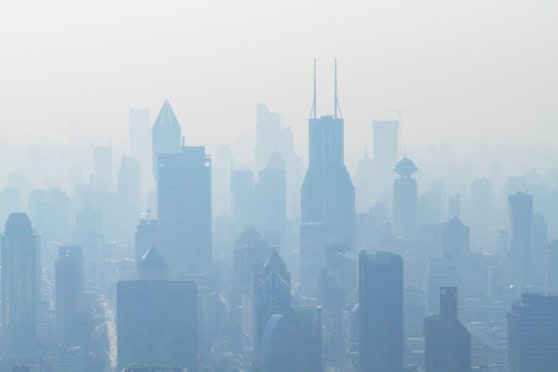
Chinese Premier Li Keqiang said in a speech that China was ‘waging war’- a war against air pollution and smog in China. Suddenly, one of China’s best-known but rarely acknowledged problems was out in the open. The country’s long-standing position that there was nothing to be discussed was suddenly reversed. Smog, pollution, and air quality were all open for debate.
Since then, the Chinese government has stated that more than 4 million homes have been converted from “dirty” fuels, such as coal and wood, to “clean” fuels like natural gas and electricity. Progress is indeed being made – but how fast and how thoroughly remains a question mark. For the majority of travelers and expats in China, air quality and smog remain a significant concern.
In a word: Deadly. China accounts for more than 40% of global air pollution deaths. This amounts to more than 1.3 million people each year. Burning coal alone has been linked to some 366,000 premature deaths in 2013. And in 2015, some residents of Beijing went viral for being ‘smog refugees’, leaving the city because they feared for their lives on account of massive levels of air pollution. Smog has closed schools, caused agricultural complications, and led to major attractions being shuttered. In short, it’s dangerous and it’s disruptive.
Ask anyone in China what their opinion is about the source of smog, and you’ll likely hear a strong argument. Everyone has a theory about what the problem is. But the truth is that a combination of factors is in play. In Beijing, more than 50% of all energy production has been moved out of the city in an effort to clean up the capital’s air. Unfortunately, the plan didn’t necessarily proceed as expected. For instance, there is now increased water scarcity in rural areas, which have to provide water to the relocated coal plants. Rural residents, with fewer financial resources and far less political clout than their urban counterparts, are now bearing the brunt of the pollution. In effect, pollution hasn’t been reduced. It’s just been relocated and further compounded by water shortage problems.
Complicating the problem of smog and visibility is the use of natural gas. While cleaner than coal, natural gas produces water and carbon dioxide when burned. This sounds much better than the smoke and dust of coal. However, the increased number of water molecules in the atmosphere is thought to accelerate chemical reactions. There is indeed less coal dust in the air, but there are still consequences to high fuel use, even when that fuel is natural gas.
Another hopeful project, the establishment of large-scale wind farms, also appears to have had unwanted complications. One theory suggests that the interruption of natural wind patterns by windmills has led to a decline in near-surface wind speeds, hindering air circulation and allowing smog to accumulate. In Beijing, the situation is further complicated by the fact that the Xishan and Yanshan mountains border the city. When a high-pressure weather system moves in, it is difficult for it to leave.
The situation in China is getting better. The danger of smog can be partially measured by examining a person’s exposure to PM2.5, a unit of measurement for the most hazardous, microscopic particles contained in air pollution, which can damage lung tissue. China’s efforts to transition to cleaner fuels have cut the average person’s PM2.5 exposure by 30% to 47% – a vast improvement. By 2017, particulate air pollution in Beijing had been reduced by 25 percent. These are all hopeful signs for the future.
From “dirty” fuel like coal being used to heat houses in rural areas to massive power plants and factories, there’s not one easy culprit to point to when assessing the sources of smog in China. And most travelers will feel the effects, regardless of where they go. Individuals with asthma and other respiratory conditions should consult their doctor before traveling to ensure they are prepared for their trip. They should also bring along an extra supply of medication in case they use more than usual. A comprehensive travel insurance policy will provide additional peace of mind should you need to access emergency services.
Travelers with mild asthma or sports-induced asthma will also want to bring along both preventative medications and relief medications. It might feel like overkill for travelers who are used to never having to use this kind of medication while on the road, but if there’s ever a location where they might have a flare-up, this is it.
Visiting during the winter months is generally considered the worst, as both urban and rural areas still rely heavily on coal for heating. Additionally, during winter, the demand for electricity for both heat and light increases significantly.
Wearing a face mask is both a help and a hindrance in China. It is undoubtedly beneficial in filtering out some, if not all, environmental pollutants. Looking at a used mask at the end of the day, and seeing it covered in dusty airborne particles, will make you mighty glad that the dirt was trapped on the mask and not in your lungs. However, some travelers feel a sense of false confidence. They feel like they can go anywhere and do anything just because they are wearing a mask. And that’s definitely not the case! Whether you wear a mask or not, you need to be cautious of your health.
3M manufactures the hugely popular 9332 face mask. It has several key advantages, including being cheap, accessible, easy to travel with, comfortable, and form-fitting. Travelers who want to combine clean air with cute designs will love Vogmask. These fashionable masks feature a wide variety of jaunty designs, generally last 6 months, are washable, and are made with organic cotton. Finally, the Respro brand offers masks that may appear somewhat intimidating (“Darth Vader” is a common descriptor). Still, they provide superb performance for individuals engaged in cycling, hiking, and other high-intensity activities. They’re also machine washable and come with replacement filters, so you don’t have to dispose of the entire mask when it gets dirty.
Before you travel, connect with local, ecologically friendly businesses and social organizations. They often host environmentally-minded activities, such as guided hikes, nature walks, market tours, and lectures. These programs combine education, community building, and sightseeing in a fun, accessible way. And they can be a great way to discover a destination in a sustainable way, free from crowds.
A flexible schedule is key for traveling in a smog zone like China. Make a list of all the outdoor activities you want to experience and have an alternative day for each in case you are ‘smogged-out’. The Air Matters app is a terrific source of environmental information and is popular with expats. It will help you plan your days closer to your trip. Museums, art galleries, cooking classes, theatre performances, and social clubs are all, for the most part, indoor activities. They offer fun and memorable ways to explore China’s cities and towns, requiring little to no time outside.