International Health Insurance
Gain valuable insights and practical tips for navigating international health insurance while living abroad. From coverage details to expert advice, this comprehensive guide helps travelers…

International medical cover for expats and their families.
Medical and trip cancellation coverage for international travel.
Life insurance for globally mobile individuals living or working abroad.
Comprehensive international medical coverage for groups.
Medical, accident, and liability protection for global travel.
Financial protection for employees worldwide.
Most Popular Country Guides
Healthcare, insurance, and living insights to plan life and travel in each destination.
Healthcare, safety, and practical guidance for living abroad.
Tips and guidance for safer, smarter international travel.
Resources for global mobility, HR, and international teams.
Explore the cost of living in Portugal in 2026, including housing, groceries, healthcare, transportation, and more across popular expat cities, to help you budget for your move abroad.

With its old-world charm, spectacular scenery, and vibrant culinary scene, it’s no surprise that Portugal has become such a popular expat destination in recent years. But if you’re considering moving to this small European nation, you’ll want to understand the cost of living in Portugal and whether you can afford it.
To help you decide, this article answers the question “How affordable is it to live in Portugal?” Using the latest 2026 Numbeo data (with costs shown in USD), we break down everyday expenses – including housing, healthcare, groceries, transportation, and more – to give a realistic picture of what living there might cost.

Work with an insurance expert to find the right coverage for your needs and budget. Compare free quotes from leading international insurers and choose your plan with confidence.
Generally speaking, Portugal is one of the most affordable countries in Western Europe. In fact, in some metrics, this gem of a country comes out cheapest, which has helped fuel Portugal’s popularity as a destination for internationals seeking a new home.
However, if you’re moving to Portugal, it’s important to understand that there are significant regional disparities that affect the cost of living, which you should consider.
For example, the largest two Portuguese cities, Porto and the capital, Lisbon, while generally cheaper than similar Western European cities, are often substantially more expensive than other parts of Portugal.

Similarly, the southern region of the Algarve has a higher cost of living than some inland areas due to its popularity with tourists and expats alike, which has pushed up prices for housing and dining out.
However, even in these more expensive parts of Portugal, the cost of living is still cheaper than in other countries.
Coupled with fantastic weather, great healthcare options, and a way of life, it’s understandable why so many expats fall in love with this sun-soaked European destination.
When compared to the cost of living in the US, Portugal offers a much cheaper alternative, alongside, some would argue, a higher standard of living.
As of February 2026, Portugal ranks 60th among the most expensive countries in the world according to the Numbeo Cost of Living Index (CLI).
The CLI measures how the costs of housing, groceries, transportation, and other essential expenses vary across countries and cities.
For comparison purposes, a rank of 60 places Portugal behind Taiwan, Slovakia, and the Maldives, and just ahead of Senegal, Brunei, and Palestine.
According to the CLI, the cost of living (including rent) in Portugal is 30.7% lower than in the United States, while rent prices alone are 36.7% lower in Portugal than in the U.S., which is considerably lower.
To put that in context, the average rent for a one-bedroom city-center apartment in Portugal is $1,066, compared to $1,681 in the US, a difference of 36.6%.
Meanwhile, a three-bedroom apartment outside the city center in Portugal averages $1,369, compared to $2,246 in the United States, a difference of 39.1%.
Away from rent prices, dining out in Portugal can be up to a third cheaper than in the US, while grocery prices for essential items can come in up to 60% cheaper in Portugal when compared to the US.
That said, Portugal’s local purchasing power is significantly lower (54.7% lower) than that of the United States. This may be something to consider, as you may not be able to get as much bang for your buck as you are used to back home.

As mentioned, there are high cost-of-living disparities between cities and regions within Portugal. Therefore, it’s important to conduct localized research before deciding where to move.
To give you a helping hand, here are a few pointers on the most expensive and cheapest places to live in Portugal.
The following are some of the most popular cities for expats moving to Portugal. Each city’s CLI is compared to New York City’s CLI of 100, which helps contextualize relative cost differences.
Lisbon is the capital of Portugal and one of Europe’s hippest destinations. This city of hills has a lively culinary scene, an endlessly Instagrammable public transit system, and an easy-going charm that’s hard not to fall in love with.
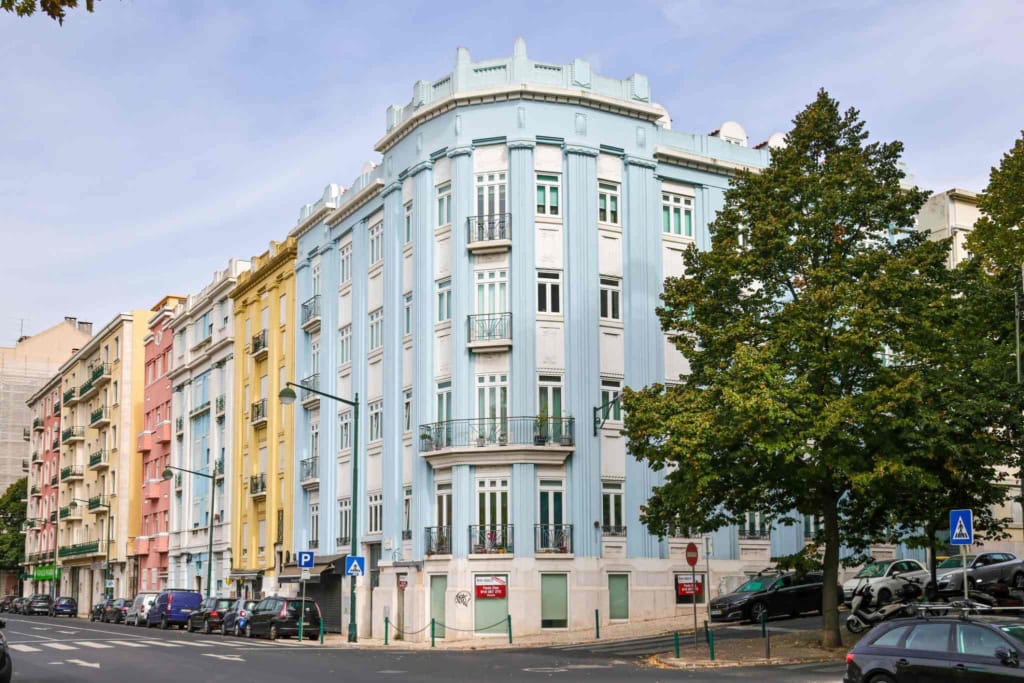
Lisbon also has a growing population of expats and digital nomads, which has pushed up local rents and made homes unaffordable for many locals. This housing crisis has led to several high-profile protests in Lisbon and elsewhere.
However, despite being the most expensive city in Portugal, Lisbon has a CLI rating of 55.2 and remains relatively cheap for internationals looking to move abroad, particularly when compared to other European capitals.
A city overflowing with history and culture, Porto is the country’s second-largest city and offers a more laid-back version of Portuguese city life than its counterpart down the coast.
Porto is a city of diverse neighborhoods that come together to form an eclectic patchwork of old-world charm, lively eateries, and artistic expression, all washed down with a glass of the city’s most famous export – port wine.
As its population grows, the city has also seen problems similar to those in Lisbon regarding the housing crisis, although Porto maintains a lower cost of living than the capital, with a CLI rating of 51.
The island of Madeira lies closer to Morocco than to the coast of mainland Portugal, and this Atlantic outpost remains an intriguing prospect for expats considering a unique place to call home in Portugal.

Funchal is the island’s capital and main economic hub, offering more job opportunities than other towns on Madeira, though internationals are most likely to find work in the tourism industry.
Due to its remote location, the cost of living in Funchal is relatively high compared to some mainland regions, with a CLI rating of 48.8.
The southern region of Portugal is wildly popular with tourists from the UK and other northern European countries, and it’s easy to see why.
Beautiful beaches, friendly locals, and year-round sunshine also make it an alluring choice for U.S. citizens seeking a relaxed lifestyle, coastal living, or a warm-weather retirement destination.
However, the Algarve is a very mixed bag when it comes to the cost of living. On one hand, exclusive resort towns are often tailored to an international community and can be among the priciest places in Portugal.
On the other hand, larger towns like Portimao and Lagos, as well as smaller towns away from more touristy areas, offer a more varied cost of living, so it pays to look around to see if you can find your dream home in the Algarve.

While many expats will head to Portugal’s larger cities or the towns and resorts along the beautiful Algarve coast, those seeking a more affordable slice of the Portuguese dream may prefer to look to Portugal’s often-overlooked interior.
Indeed, the cost of living drops significantly when you move away from the Portuguese coastline, where Lisbon and Porto are located.
For example, Coimbra and Braga, two cities that lie just inland but have easy access to the Atlantic coast, rank 48.1 and 48.7, respectively.
Venture further inland towards the Spanish border and you’ll find many small towns with cheaper costs of living.
However, be aware that job opportunities will be limited to those who speak Portuguese, and there will be many fewer expats.
If you’re convinced that Portugal could be your new home, you’ll probably want to know just how much money you can expect to spend on certain aspects of everyday life in the country.
Here’s a closer look at what life costs in Portugal, from the big-ticket items like housing and healthcare to the smaller pleasures, such as dining out, entertainment, and the occasional football match.
It uses 2026 Numbeo data across six key categories – housing, food and groceries, transportation, entertainment, education, and healthcare – and examines three representative cities: Lisbon, the capital; cosy Coimbra; and Faro, the heart of the popular Algarve region.
When it comes to the cost of living in Portugal, the most important factor to consider is housing.
Wherever you decide to settle, rent will be your biggest monthly outlay, so it pays to know what to expect, especially when costs can vary so vastly between places.
The table below shows average rental prices and utility costs in three popular expat cities:
Expense | Lisbon | Coimbra | Faro |
1-Bed Apartment in the City Center | $1,613.51 | $911.88 | $1,076.86 |
3-Bed Apartment in the City Center | $3,020.04 | $1,504.66 | $1,829.19 |
1-Bed Apartment outside City Center | $1,207.36 | $671.32 | $938.20 |
3-Bed Apartment outside City Center | $1,952.57 | $1,086.50 | $1,581.37 |
Basic Utilities Electric, Heat, and Water | $179.36 | $137.72 | $146.63 |
Home Internet | $37.64 | $41.19 | $38.47 |
Mobile Phone Plan | $18.67 | $22.21 | $20.65 |
As well as enjoying the unique pleasure of grocery shopping in a foreign supermarket, you’ll soon find that a significant chunk of your monthly budget in Portugal will go towards groceries.
However, as with all European countries, it’s easy to shop smartly when it comes to your weekly grocery shop in Portugal by shopping around, as there are many discount retailers available that could help you save money.
Expense | Lisbon | Coimbra | Faro |
Milk (1 Liter) | $1.21 | $1.12 | $1.09 |
Eggs (12, large size) | $3.96 | $3.28 | $3.54 |
White Rice (1 lb) | $0.78 | $0.84 | $0.84 |
1 Bottle of Wine (Mid-Range) | $5.90 | $6.12 | $5.31 |
Chicken (1 lb) | $3.77 | $3.65 | $2.90 |
Portugal is a relatively small country; however, if you’re planning to relocate there, you’ll need to consider your transport needs ahead of time as part of your cost-of-living research.
In larger cities, you’ll find that trams, buses, and metros are often the easiest ways to get around, especially around the downtown areas. That said, you may prefer a car if you’re living in more suburban areas of these cities.
However, should you move to one of the many Portuguese islands, such as Madeira or those islands within the Azores, you’ll typically find that having your own car is the most effective and efficient way to get around your new home.
Expense | Lisbon | Coimbra | Faro |
One-Way Ticket (Local Transport) | $2.36 | $2.36 | $3.54 |
Monthly Public Transport Pass (Regular Price) | $47.20 | $35.40 | $43.66 |
Gasoline (1 Liter) | $2.10 | $2.04 | $2.05 |
Volkswagen Golf 1.5 (Compact Car) | $35,400 | $35,400 | $35,400 |
Portugal’s healthcare system delivers high-quality services at a reasonable cost. However, while basic medical treatments are affordable, expenses can rise quickly if you face significant health challenges.
For this reason, many expats choose private healthcare insurance in Portugal to ensure comprehensive coverage for every eventuality and peace of mind for their family.
In addition, if you’re moving to Portugal on certain visas, you must secure private health coverage in advance to demonstrate that you won’t be a burden on the local healthcare system.
Legal residents can enroll in the Serviço Nacional de Saúde (SNS), Portugal’s public healthcare system. While healthcare is universal, only certain services are free, and many treatments incur fees.
For example, services such as eye care and dental care are not covered by the SNS, which is why around 20% of Portuguese citizens carry private health insurance.
Finally, although English is increasingly common in some areas, you may not always find a health professional who can confidently treat you in English, even in international cities like Lisbon and Porto.
For these reasons, comparing global health plans is a great idea for expats. Private coverage allows treatment in private facilities with English-speaking doctors and extends coverage to other European countries should you wish to travel from your new home.
Work with an insurance expert to find the right coverage for your needs and budget. Compare free quotes from leading international insurers and choose your plan with confidence.
If you’ve relocated to Portugal, you’ll want to get out and enjoy everything your new home has to offer, from its bars and restaurants to its many theaters and clubs, and even a football match, the most popular sport in Portugal.
However, you might want to research what you can expect to spend on your entertainment options in your new home to understand how much bang you can get for your buck. Here is a brief summary:
Expense | Lisbon | Coimbra | Faro |
Meal at an Inexpensive Restaurant | $14.16 | $11.80 | $14.16 |
Meal for 2 at Mid-Range Restaurant | $59.01 | $47.20 | $42.48 |
Domestic Draft Beer (0.5 Liter) | $3.54 | $2.36 | $2.95 |
Cappuccino | $2.58 | $1.74 | $1.92 |
Cinema Ticket (International Release) | $9.44 | $8.56 | $11.80 |
If you’re moving abroad with children, you’ll want to know precisely what you can expect to pay out for childcare or schooling, depending on the age of your children and what kind of education you choose.
The Portuguese education system is generally of good quality. However, many expat families prefer international schools for their children, which can be significantly more expensive.
Below is an overview of childcare and education costs in Lisbon, Coimbra, and Faro, three popular expat destinations in Portugal:
Expense | San José | Escazú | Grecia |
Private Full-Day Pre-School or Kindergarten per Month | $909.34 | $536.98 | $909.34 |
International Primary School Annual Tuition | $16,931.65 | $16,935.43 | $16,931.65 |

Thinking about making the move? Connect with an insurance expert to find coverage that aligns with your plans, budget, and long-term needs, so you can fully enjoy your new life in Portugal.
Whether you’re a first-time expat or a seasoned international citizen, understanding the cost of living in Portugal is key to planning a successful move.
For many, Portugal offers the ideal balance of affordability and quality of life. How it works for you, however, will depend on your personal circumstances and how you want to live your life.
This includes your income, tax liabilities, financial obligations, and any childcare or education needs. Therefore, you may wish to seek professional financial advice before making decisions that could impact your long-term well-being.
With the right preparation, Portugal can be an enchanting and relatively affordable home, especially compared to other European countries.
Keep in mind that regional differences in cost of living may lead you to find your dream home in an unexpected city or town.
Do your research, plan carefully, and contextualize costs with your own circumstances, so you’re ready to make the very best of your new life abroad. With thoughtful preparation, your dream life in Portugal could be closer than you think.
Work with an insurance expert to find the right coverage for your needs and budget. Compare free quotes from leading international insurers and choose your plan with confidence.