
International Health Insurance
Gain valuable insights and practical tips for navigating international health insurance while living abroad. From coverage details to expert advice, this comprehensive guide helps travelers…

International medical cover for expats and their families.
Medical and trip cancellation coverage for international travel.
Life insurance for globally mobile individuals living or working abroad.
Comprehensive international medical coverage for groups.
Medical, accident, and liability protection for global travel.
Financial protection for employees worldwide.
Most Popular Country Guides
Healthcare, insurance, and living insights to plan life and travel in each destination.
Healthcare, safety, and practical guidance for living abroad.
Tips and guidance for safer, smarter international travel.
Resources for global mobility, HR, and international teams.
Dreaming of moving to Costa Rica? Learn everything you need to know, from visa options and residency pathways to the cost of living, jobs, healthcare, and the best places to call home.

Whether you’re moving to Costa Rica for work, retirement, or simply a change of scenery, this beautiful Central American country has something for everyone. Known for its stunning beaches, lush rainforests, and abundant wildlife, Costa Rica also offers a lower cost of living than many countries, making it an attractive destination for expats seeking an affordable lifestyle.
Relocating is relatively straightforward for foreigners, including U.S. citizens, especially if you have a remote job, retirement income, or other steady sources of funds. This article covers everything you need to plan your move, from visa requirements and residency options to healthcare, housing, and the best places to live.
Costa Rica offers clear pathways for foreigners, from temporary residency to permanent residency and eventually citizenship, allowing you to live and work legally.
For those planning a long-term stay, Costa Rica provides several residency categories, including work, retirement (Pensionado), Rentista, study, and Digital Nomad visas.
To live in Costa Rica long-term, you must apply for a residency visa or special permit through Costa Rica’s immigration authorities.

Many of these visas, such as the Digital Nomad, Pensionado, Rentista, and Student visas, require proof of health insurance, so it’s important to confirm the specific insurance obligations for your chosen visa before planning your move.
Notably, U.S. citizens can enter Costa Rica as tourists without a visa, typically for up to 180 days. However, the exact length of stay is determined by the immigration officer upon entry. It may also vary depending on your passport validity and onward travel plans.
Americans traveling directly from the United States do not need to show proof of vaccination to enter Costa Rica. However, travelers arriving from certain South American or African countries may need to present a yellow fever vaccination certificate depending on their recent travel history.
Because entry and health regulations can change, both U.S. and non-U.S. citizens should check the latest official guidance when planning to move to Costa Rica.
If you’re planning to move to Costa Rica, it’s important to understand the different types of visas available and the requirements for each.
Below is an overview of the main options available to foreign nationals, including U.S. citizens.
Obtaining a work visa in Costa Rica can be challenging due to the country’s restrictions on foreign workers, which are designed to ensure locals have access to jobs.
To secure a work visa, applicants must demonstrate that the position cannot be filled by a Costa Rican citizen.
Because of this requirement, most expats who move to Costa Rica are either full-time digital nomads or have substantial savings.
Since applications for work permits typically take three to eight months to process, it is important to apply early to avoid delays.
The visa requirements are the same for all foreign nationals, but U.S. applicants should pay particular attention to providing proof of financial stability, a clean criminal record, and all necessary documentation to ensure a smooth application process.
Costa Rica offers a retirement visa called the Pensionado. To qualify, you must show that you receive retirement benefits or a steady income of at least $1,000 per month, which must continue for life.
Acceptable income sources include social security benefits, pensions, retirement accounts, and annuities. Unlike many countries, there is no minimum age requirement.
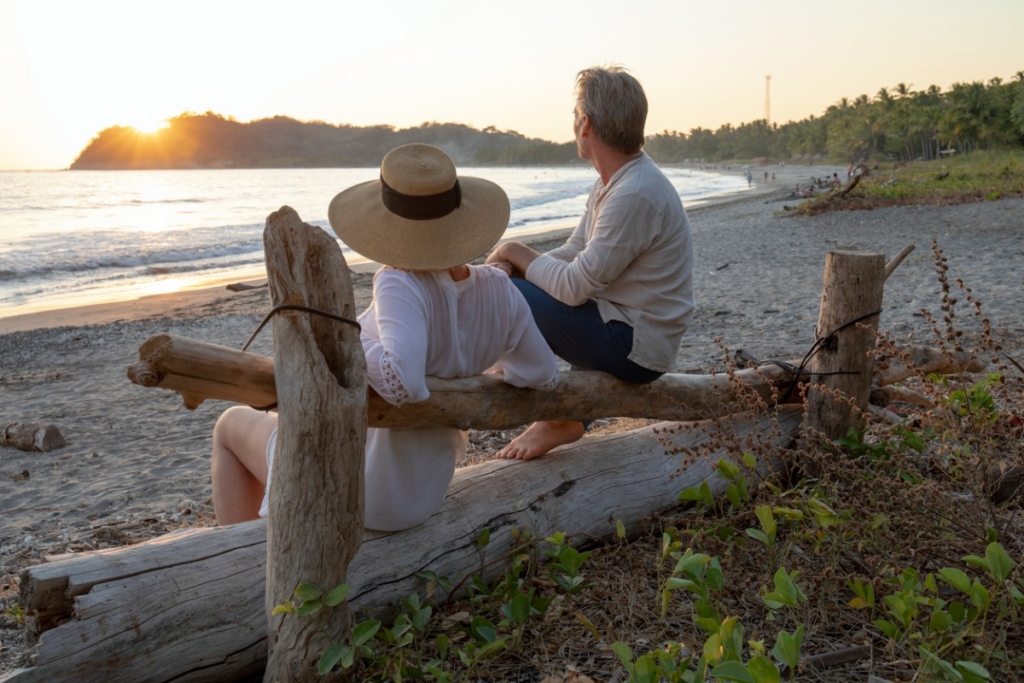
All applicants should ensure their income documentation is certified and, if required, translated. For U.S. retirees, this often includes Social Security statements or annuity documents.

Students wishing to study in Costa Rica must apply for a study visa. Schools provide a certificate of enrollment, which must be submitted with the application, and applicants must demonstrate sufficient funds to support themselves during their studies.
Acceptable proof can include scholarships, personal savings, or certified financial statements, and any documents may need to be translated.
For U.S. students, this often means ensuring financial documents meet Costa Rican requirements and are properly certified or translated.
Costa Rica offers a Digital Nomad Visa for remote workers and freelancers employed by companies based outside the country. This visa is intended for temporary stays and is separate from the Rentista program.
To qualify, applicants must:
The Digital Nomad Visa is typically issued for one year and can be renewed once for a second year.
Importantly, this visa does not automatically lead to permanent residency. Therefore, those wishing to stay long-term must later apply for a temporary or permanent residency category.
If none of the official residency visas suit your situation, some expats choose to stay in Costa Rica on a tourist visa and extend their stay by leaving and re-entering the country.
Costa Rica allows foreigners to stay as tourists for up to 180 days. In theory, a short trip home or to a neighboring country, such as Nicaragua or Panama, may allow you to re-enter and obtain a new tourist visa.
However, re-entry is not guaranteed. Immigration officers have discretion to deny entry if they suspect someone is attempting to live permanently in Costa Rica on a tourist visa.
While some expats successfully use this strategy, it carries legal and logistical risks and is not a substitute for official residency. This applies to all foreign nationals, including U.S. citizens, who want to live in Costa Rica without a formal visa.
Foreigners moving to Costa Rica have several pathways to live and work legally, from temporary to permanent residency, and eventually citizenship.
These options are available to all nationalities, including U.S. citizens, making it easier to plan both short- and long-term stays.
To live in Costa Rica legally, most people begin with a temporary residency category, such as Pensionado (retirement), Rentista, Inversionista (investor), study, or another approved category.
Temporary residency grants the legal right to live in Costa Rica for a set period (often one to three years) and must be renewed before it expires.
After holding temporary residency continuously for at least three years, most foreign nationals, including Americans, are eligible to apply for permanent residency.
Permanent residency allows you to live indefinitely in Costa Rica and provides broader rights, such as the ability to work freely.
Certain family relationships, such as being the parent or child of a Costa Rican citizen, can allow applicants to apply directly for permanent residency without first holding temporary status.
Once you have permanent residency, you may be eligible to apply for Costa Rican citizenship (naturalization) if you meet certain requirements:
Costa Rica allows dual citizenship, so U.S. citizens can retain their American citizenship. However, anyone pursuing Costa Rican naturalization should also be aware of their home country’s laws and tax obligations.
For instance, U.S. citizens remain subject to federal taxes and reporting requirements even when holding dual citizenship.

Foreigners moving to Costa Rica can take comfort in knowing that the country ranks 54th globally on the 2025 Global Peace Index (GPI). This is significantly higher than the United States, which ranks 128th.
This relatively high level of safety makes Costa Rica appealing to families and expats from around the world, including Americans seeking a top destination for living abroad.
Notably, Costa Rica is the safest country in Central America. That said, some areas face challenges related to violent crime and drug trafficking, with pickpocketing and petty theft being the most common offenses.

Like all countries, some regions are safer than others. For example, according to 2026 Numbeo data, San José, the country’s largest city, has a Safety Index of approximately 44.41. This reflects moderate safety concerns.
By contrast, Cartago, located about an hour away, scores around 50.14, while the small coastal town of Jaco scores approximately 58.67. In the Numbeo Safety Index, higher numbers indicate safer locations.
One of the most appealing aspects of living in Costa Rica is its affordability. For many foreigners, everyday expenses are significantly lower than in their home countries, allowing for a comfortable lifestyle at a fraction of the cost.
For U.S. citizens, the cost of living in Costa Rica is typically 40–50% lower than in the United States, making housing and essential costs particularly manageable. Many Americans are surprised at how little money they need to cover rent, groceries, and other necessities.
Housing offers some of the biggest savings. For example, the average rent for a one-bedroom apartment in a U.S. city center is $1,682 per month. By contrast, a comparable apartment in a Costa Rican city center costs around $886, a difference of $796 per month.
The gap is similar outside major cities. A one-bedroom apartment outside a U.S. city center averages $1,365 per month, compared with about $617 in Costa Rica. This cuts typical housing costs by more than half.
These lower living costs allow expats from the United States and other countries to enjoy a comfortable lifestyle while spending far less than they would at home, whether renting or buying.
Costa Rica is one of the few countries in the world where foreigners can purchase real estate.
Since property prices are generally lower than in many home countries, including the United States, many expats planning an indefinite or permanent stay prefer buying rather than renting.
Rentals are available throughout the country, but finding long-term options in tourist-heavy areas can be challenging, as landlords often earn more from short-term vacation rentals.
Popular expat regions include the Central Valley (San José, Escazú, Heredia), Guanacaste, the Nicoya Peninsula, and coastal towns such as Jacó and Manuel Antonio.

Local property options range from small, traditional “Tico” houses to luxurious beachfront villas. Regardless of your budget, it’s important to exercise caution.
Real estate agents in Costa Rica do not need a license, so working with a reputable agent or advisor is essential.
If you plan to buy, it’s advisable to hire a local attorney to handle due diligence and property registration with the Registro Nacional to avoid fraud.
For rentals, always sign contracts in Spanish, pay deposits through secure channels, and verify landlord references. Many landlords prefer contracts in the official language, and translations may be necessary.
If you’re looking for safe and reliable housing in Costa Rica, these trusted websites and agencies can help:
These resources are ideal whether you’re renting long-term or buying property, but always exercise due diligence and check legal documents before signing anything.
Costa Rica offers a wide range of living options, from quiet mountain towns to lively beach communities. To help you decide where to settle, we’ve highlighted some of the best places to live in Costa Rica.
These locations were chosen based on safety, cost of living, healthcare, walkability, access to nature, and other lifestyle amenities popular with expats.
For those seeking a quiet, small-town lifestyle, Atenas in Costa Rica’s Central Valley is a top choice.
Famous for its perfect year-round climate and low crime rates, Atenas is especially popular among retirees and expats.
Thanks to its higher altitude, the climate is mild, meaning most homes don’t need heating or air conditioning.
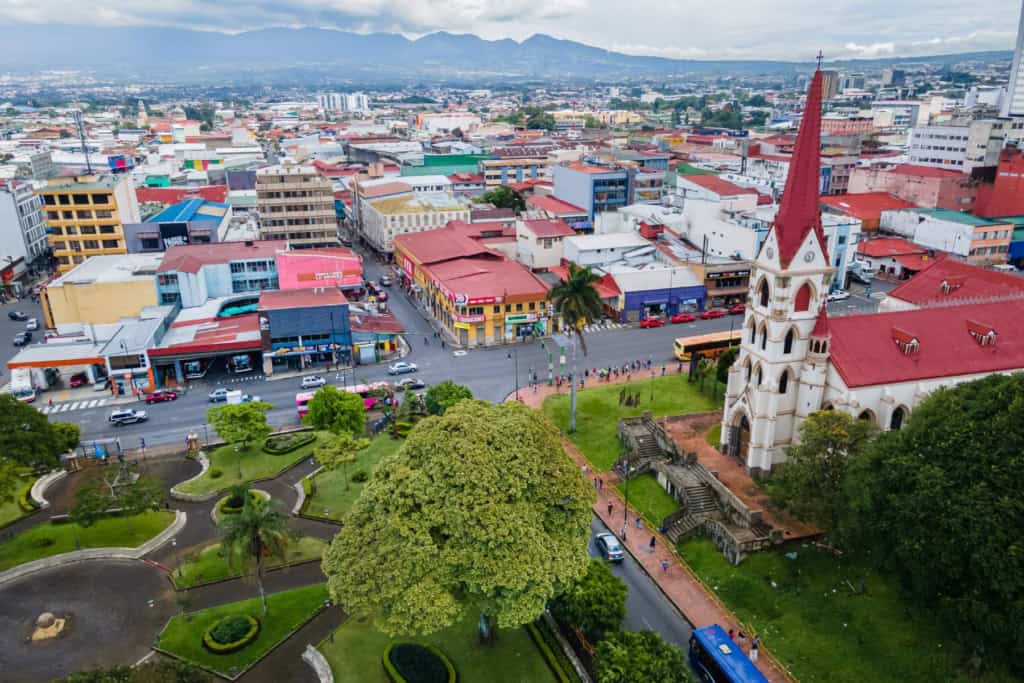
The cost of living is generally lower than in coastal towns, while the nearby cities of San José and Escazú are less than an hour away, providing easy access to urban amenities.
Atenas is also surrounded by lush coffee plantations and natural landscapes, offering plenty of opportunities for outdoor recreation.
Once Costa Rica’s capital, Cartago offers a high quality of life and a welcoming expat community, making it easy for newcomers to feel at home. The city is known for its safety, affordability, and walkability.
Cartago perfectly blends history and culture with natural beauty, including the stunning Volcán Irazú National Park.
Numerous Wi-Fi cafes and co-working spaces throughout the city make it appealing to digital nomads, while its pedestrian-friendly streets make daily life easy without a car.
Costa Rica is famous for its beautiful beaches, and Jaco’s shoreline is one of the most charming in the country. This Pacific coastal town is also a safe and family-friendly place to live.
Jaco also offers lively nightlife, excellent restaurants, and volcanic-sand beaches, making it ideal for expats seeking an active lifestyle.
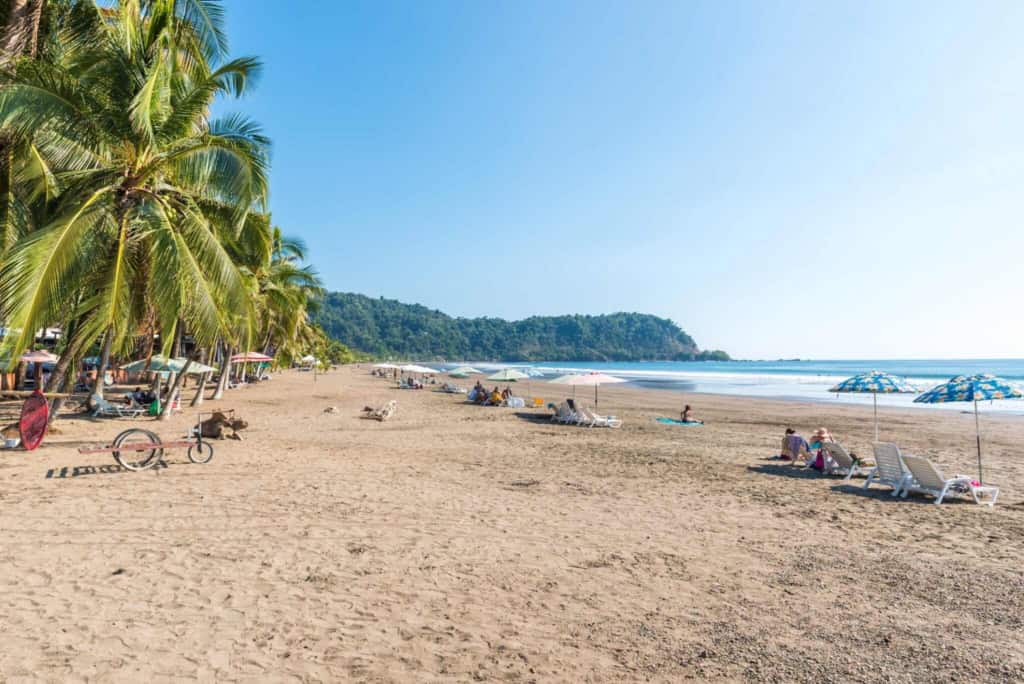
Fast, reliable internet ensures connectivity for remote work, while the scenic surroundings offer endless recreational opportunities.
Tamarindo is a bustling beach town on Costa Rica’s Pacific coast, known for its golden sand beaches, surfing spots, and growing expat community.
Its laid-back lifestyle, combined with restaurants, shops, and nightlife, attracts both retirees and remote workers. The town also offers reliable internet and co-working spaces, making it especially appealing to digital nomads.
While the cost of living is higher than in inland towns, Tamarindo’s mix of coastal beauty, active outdoor lifestyle, and social opportunities makes it a top choice for those seeking sun, surf, and community.
For expats moving to Costa Rica, it’s important to note that the law prioritizes local workers.
Foreign nationals generally cannot be employed by Costa Rican companies unless they have permanent residency or a specific work permit demonstrating that no qualified local candidate is available.
This means most immigrants need highly specialized skills to compete in the local job market, which is one reason many foreigners in Costa Rica are retirees, remote workers, or digital nomads.
That said, those with the right qualifications sometimes find opportunities in high-demand sectors, including:

Many expats also choose to work remotely for companies outside Costa Rica or to start their own business, which often bypasses local employment restrictions while still allowing them to live in the country.
To find opportunities, it helps to know where to look and how to navigate the local job market.
Several job boards list positions in Costa Rica, including those welcoming English-speaking candidates:
Checking English-language media such as The Tico Times can also uncover niche or expat-friendly jobs that aren’t listed on other portals.
For specialized roles, recruitment firms can help match candidates with employers:
Many job openings never appear online, making connections critical:
Costa Rica offers free, universal healthcare through the public system, the Caja Costarricense de Seguro Social (CCSS), for citizens and permanent residents.
However, foreigners who are not permanent residents or citizens are generally not eligible for full access to the public health system. Therefore, if you are moving to Costa Rica, it is advisable to purchase private health insurance.

Private-sector hospitals and medical clinics typically offer higher-quality medical services, shorter wait times, and access to English-speaking staff, particularly in San José and other popular expat areas.
It is not uncommon to wait several hours for non-emergency care in the public system. Private insurance allows you to choose your doctor, schedule appointments faster, and avoid language barriers when seeking care.
There are several private health insurance plans available for expats, and costs vary depending on the provider and factors such as age and coverage level. It’s important to compare different plans to find one that suits your needs and budget.
Many plans also include emergency coverage and medical evacuation options. These are especially important for expats living in more remote areas or traveling within the country.
Costa Rica’s official currency is the Costa Rican Colón (CRC), but U.S. dollars and other major currencies are widely accepted in tourist areas and major cities.
That said, many smaller businesses, local markets, and public transport usually prefer colones, so carrying some local currency is wise.
If you plan to live in Costa Rica long-term, it’s best to open a local bank account. This makes it easier to pay bills, receive income, and manage your finances efficiently. Furthermore, it is also important to understand local tax rules, including residency status and how foreign income may be treated. For additional background, see this overview on the Tax Outlook for Expats Moving to Costa Rica.
Most banks require residency status to open an account, though some offer limited options for non-residents.
To open an account with a Costa Rican bank, you will typically need:
Costa Rica’s education system is considered strong for the region. It performs well across multiple international indicators, including compulsory schooling hours and participation rates.
Costa Rica invests approximately 8% of its GDP in education, the highest in Central America. It maintains a literacy rate of around 98% thanks to free public education policies in place since the 19th century.
Families moving to Costa Rica can choose from public, private, or bilingual international schools. Many international schools offer U.S., Canadian, or International Baccalaureate (IB) curricula.
Homeschooling is also permitted, providing additional flexibility for families. Notably, public schools primarily teach in Spanish, while bilingual and international schools often use both Spanish and English.
For higher education, students can attend one of the country’s five main public universities, such as the University of Costa Rica (UCR) or the Costa Rica Institute of Technology (TEC).
Alternatively, they can choose from more than 50 private universities. Many private institutions offer bilingual or international programs, making them popular among expat students.
Costa Ricans live by the motto “pura vida,” which translates to “pure life.” This saying reflects the country’s positive attitude and enjoyment of life. Many expats find it easy to adapt to Costa Rica’s friendly, laid-back culture.
Like most Latin American countries, Spanish is the official language, and learning it can help you connect with locals and better understand their way of life.
While English is widely spoken in tourist areas, only about 10% of adults speak it fluently, so knowing even some basic phrases can make daily life easier. It’s a good idea to start learning the language before you arrive.
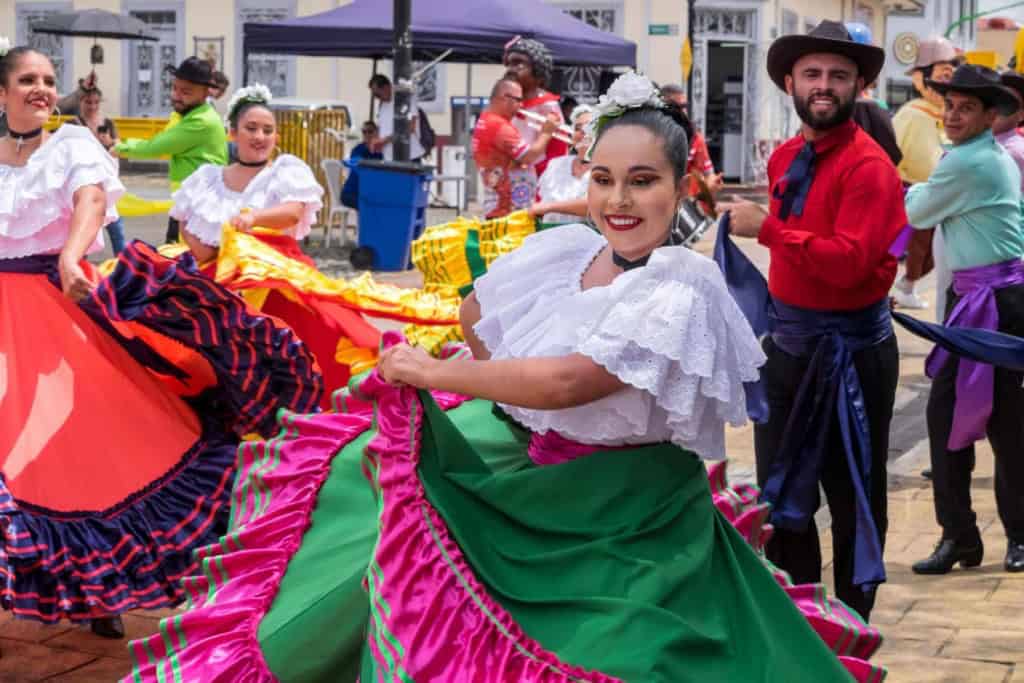
Costa Rica has a rich culture shaped by its history and traditions. The country celebrates many festivals throughout the year, such as Fiestas de Palmares and Independence Day, which showcase local customs.
Music and dance are also important, with traditional styles like marimba, cumbia, and salsa enjoyed across the country.
Nature is central to Costa Rican culture. The country is famous for its rainforests, volcanoes, and beautiful beaches, and locals place a strong value on environmental conservation. This makes it particularly appealing to nature lovers and outdoor enthusiasts.
There’s nothing quite like the pura vida lifestyle in Costa Rica, where every day offers a chance to enjoy stunning beaches, lush rainforests, and vibrant culture.
With careful planning, the right visa, and a reliable private health insurance plan, moving to Costa Rica can be the adventure of a lifetime.
You’ll have the opportunity to explore breathtaking landscapes, immerse yourself in local traditions, and connect with friendly locals who truly embody the spirit of pura vida.
Whether you’re seeking relaxation, adventure, or a fresh start, Costa Rica welcomes you with open arms and endless possibilities.