International Health Insurance
Gain valuable insights and practical tips for navigating international health insurance while living abroad. From coverage details to expert advice, this comprehensive guide helps travelers…

International medical cover for expats and their families.
Medical and trip cancellation coverage for international travel.
Life insurance for globally mobile individuals living or working abroad.
Comprehensive international medical coverage for groups.
Medical, accident, and liability protection for global travel.
Financial protection for employees worldwide.
Most Popular Country Guides
Healthcare, insurance, and living insights to plan life and travel in each destination.
Healthcare, safety, and practical guidance for living abroad.
Tips and guidance for safer, smarter international travel.
Resources for global mobility, HR, and international teams.
Discover the cost of living in Costa Rica in 2026, including housing, groceries, transportation, healthcare, and entertainment across several popular expat cities.
Costa Rica remains a top destination for expats, thanks to its inviting climate, relaxed pura vida lifestyle, and stunning natural beauty. Whether you’re a digital nomad seeking a beachfront workspace, a family looking for safety, excellent schools, and a nature-filled lifestyle, or a retiree dreaming of a peaceful retreat, the Central American country truly has it all.
But how much does it actually cost to live there? To give you a clear picture, this article breaks down the 2026 cost of living in Costa Rica in US dollars, covering housing, groceries, transportation, and entertainment using the latest Numbeo data.

Work with an insurance expert to find the right coverage for your needs and budget. Compare free quotes from leading international insurers and choose your plan with confidence.
Many expats considering a move ask themselves, “Is Costa Rica expensive to live in?” but the answer isn’t simple.
While Costa Rica is generally considered budget-friendly and significantly cheaper than the United States, Australia, the U.K., and much of Europe, it remains one of the most expensive countries in Latin America.
Therefore, anyone planning to move to Costa Rica should carefully consider their budget and lifestyle preferences.
As with any country, the cost of living in Costa Rica depends largely on where you live and how you choose to live. Big cities and popular areas offer the best infrastructure, high demand, and greater safety – and are therefore among the most expensive places to live.

This includes the capital city of San José, Central Valley neighborhoods such as Escazú and Santa Ana, and coastal hotspots like the Papagayo Peninsula, Tamarindo, and Santa Teresa.
Conversely, smaller towns and rural areas, particularly those inland or along the Caribbean, are far more affordable. These include parts of the Southern Zone, such as San Isidro de El General, and Caribbean towns like Puerto Viejo and Cahuita.
That said, infrastructure, including high-speed internet and specialized services, may be less developed in these regions.
Lifestyle choices also play a major role in the cost of living. Shopping at ferias (local farmers’ markets), eating at sodas (local diners), and living inland in a small town can keep your budget modest.
On the other hand, living in a luxury home, enrolling children in private school, and dining at high-end restaurants will significantly increase your monthly costs.
Living in Costa Rica is generally much more affordable than in the United States. According to Numbeo’s 2026 Cost of Living Index, Costa Rica ranks as the 48th most expensive country in the world, while the United States ranks 23rd.
The index, which compares housing, groceries, transportation, and other expenses across 155 countries, shows that overall living costs, including rent, are about 15% higher in the U.S. than in Costa Rica.
For example, rent in Escazú – one of Costa Rica’s more expensive areas – is about 74% lower than in New York, and restaurant prices are nearly 50% cheaper.
A one-bedroom, city-centre apartment in Escazú averages around $1,100, compared with $4,500 in New York. Similarly, a typical restaurant meal in Escazú ranges from $10 to $60, while in New York it can cost $25 to $140.
Some items, however, can be more expensive in Costa Rica due to limited availability or higher transport costs. Gas, for instance, costs about $1.43 per liter in Escazú compared with $0.89 per liter in New York, and a liter of milk averages $2.13 versus $1.28 in New York.
Local purchasing power also differs significantly. Numbeo’s Purchasing Power Index ranks Costa Rica at 49.5 and the U.S. at 146, meaning expats moving from the U.S. may find their money doesn’t go as far in Costa Rica.

The following cities are among the most expensive and popular destinations for expats in Costa Rica, based on typical rents, everyday prices, and general living costs.
Located just west of San José, Escazú is an affluent suburb known for upscale shopping centers, international schools, and some of the country’s most desirable gated communities.
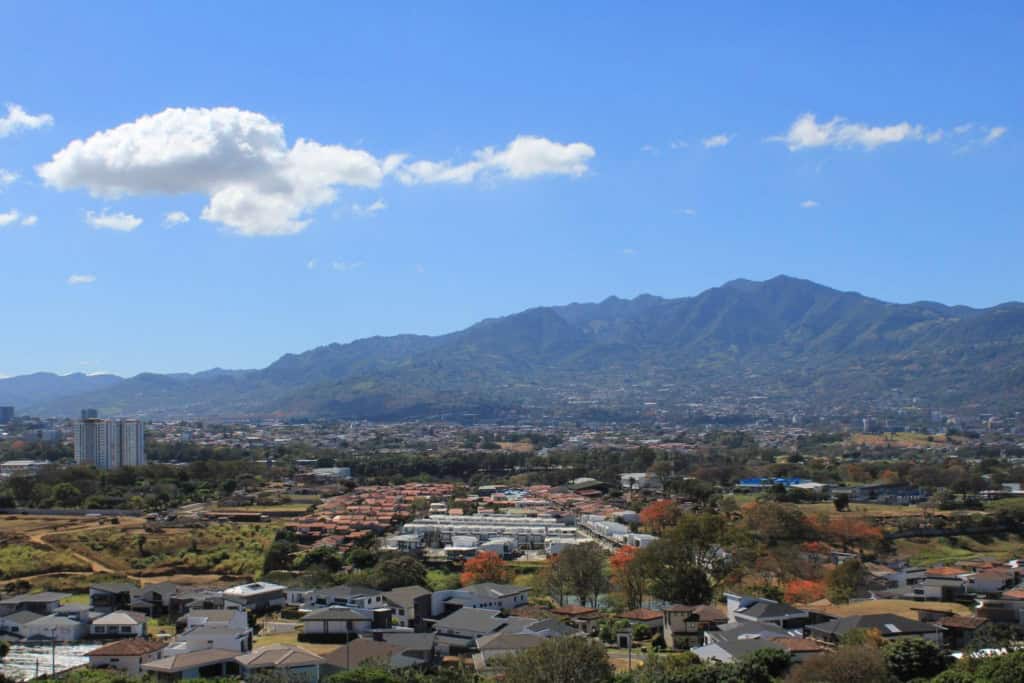
Housing and lifestyle costs are higher than in central San José, driven by strong demand from expats and higher‑income locals seeking safety, modern infrastructure, and proximity to city amenities.
Overall, Escazú’s cost of living is about 15–16% higher than the Costa Rica average, with property prices and rents among the highest in the country.
Located just outside San José in the Central Valley, Santa Ana is a well-established suburb offering modern infrastructure, highly regarded international schools, and convenient access to shopping, healthcare, and business districts.
The cost of everyday living is above the national Costa Rica average and can rise substantially for families or those seeking an upscale lifestyle, with housing often accounting for 35 to 45 % of expenses.
Condos, townhomes, and single-family houses range from moderate to luxury prices, making Santa Ana one of the pricier Central Valley destinations for expats.
San José, the capital and largest city of Costa Rica, regularly ranks as the most expensive city in the country, with a Cost of Living Index (CLI) of 55.88, compared to New York City’s CLI of 100.
It offers the best access to jobs, culture, museums, international hospitals, and shopping, making it a hub for expats who want urban convenience.
Compared with New York City, San José overall costs significantly less – about 56 % of the cost for similar basic expenses – though it’s still high by Central American standards.
Located on the Pacific coast, Tamarindo is a bustling beach town famous for surfing, outdoor recreation, and a vibrant expat and tourism community.
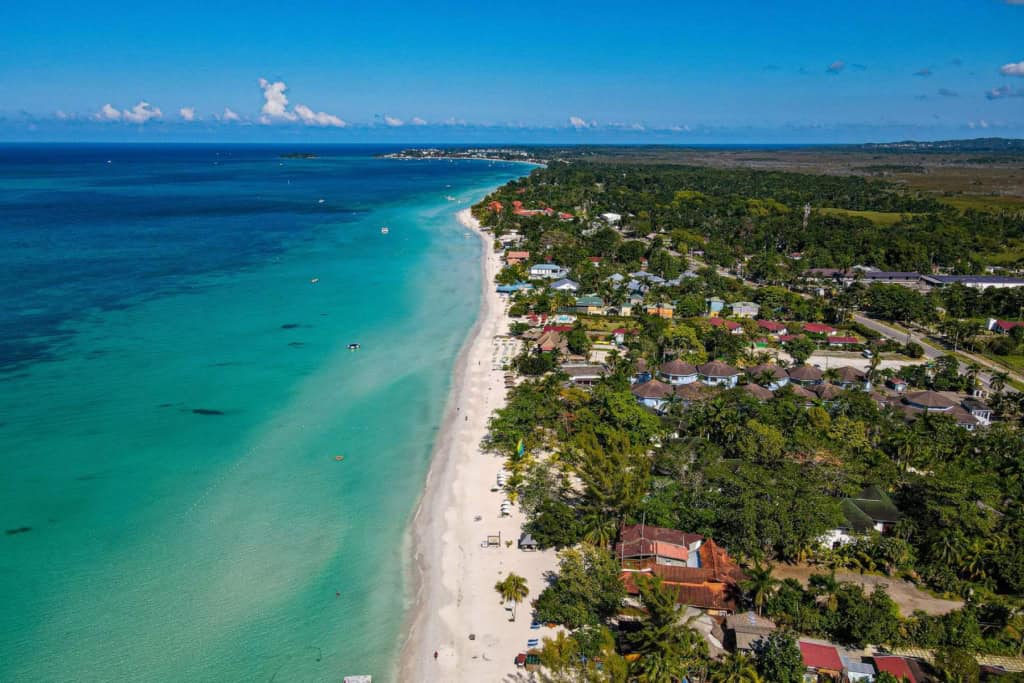
The cost of living is significantly higher than in many inland Costa Rican towns. Housing prices are often above the national average, and rentals carry a “resort-style premium” due to beach proximity and high demand.
Everyday expenses, including restaurant meals and groceries, are also typically higher than in inland towns because goods and services in popular tourist areas command a premium.
For expats seeking a more affordable life, smaller inland towns and quieter communities often provide lower rents, cheaper everyday costs, and a relaxed lifestyle.
These towns offer excellent value without sacrificing access to essential services or local culture.
Located in the Central Valley, Grecia is one of the most affordable expat towns in Costa Rica. Rent and living costs are significantly lower than in San José, making day-to-day expenses very manageable.

The town is known for its friendly community, weekly farmers’ markets, low-traffic streets, and convenient access to healthcare and services.
A one-bedroom apartment here costs far less than in the capital, giving residents a notably lower overall cost of living.
Also in the Central Valley, San Ramón is popular with budget-conscious expats due to its lower rent and grocery costs compared with San José.
The town boasts a lively local culture, weekly markets, and close proximity to nature, all without the tourist premiums of coastal areas.
Typical living expenses here are well below the national average, making it a great choice for those seeking an affordable yet vibrant lifestyle.
Known for its “perfect climate,” Atenas enjoys mild year‑round temperatures, which keep utility costs low since residents rarely need air conditioning or heating.
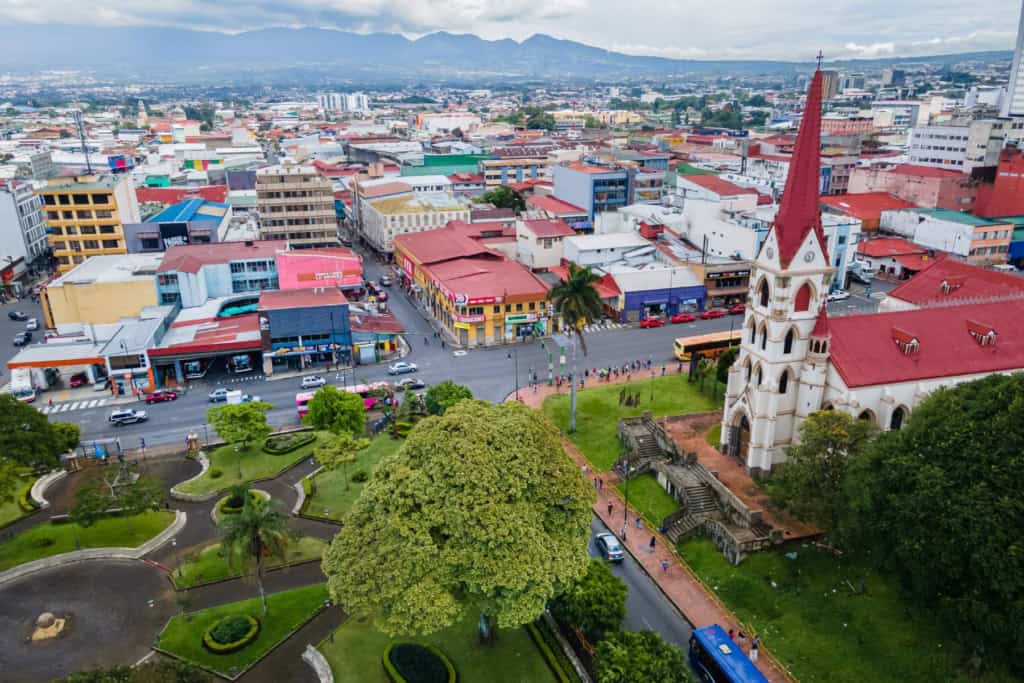
Popular with retirees and budget-minded expats, Atenas offers a peaceful, scenic base while remaining close enough to San José for travel and services.
Housing and everyday expenses here are generally lower than in the high-priced Central Valley suburbs, making it an attractive option for those seeking comfort on a budget.
Located near Arenal Volcano, La Fortuna combines natural beauty with affordable living. While tourism can keep some prices moderate, rent and food costs remain lower than in coastal hotspots.
Many expats enjoy outdoor activities such as hot springs, hiking, and waterfalls, while day-to-day expenses remain more affordable than in San José.
This makes La Fortuna a compelling choice for those prioritizing outdoor living over big-city amenities.
Understanding the everyday cost of living in Costa Rica makes budgeting for life in the country much easier.
To help with this, we’ve compared average costs across key categories – including housing, groceries, transportation, entertainment, and healthcare – in three popular expat destinations: San José, Escazú, and Grecia.
Housing prices vary greatly across the country and should be a key factor when evaluating the cost of living in Costa Rica.
Bigger cities, coastal areas, and popular expat destinations tend to be the most expensive. In contrast, smaller inland towns and locations away from the beach generally offer more affordable accommodations.
For example, Escazú has some of the highest urban rents, driven by modern infrastructure and international schools. Coastal towns such as Tamarindo and Nosara command premium rents due to their proximity to the beach and tourism.
Meanwhile, towns like Puerto Viejo, Grecia, and Cartago provide more budget-friendly housing options.
The table below shows average rental prices in San José, Escazú, and Grecia:
Expense | San José | Escazú | Grecia |
1-Bed Apartment in the City Center | $979 | $1,111.18 | $421.99 |
1-Bed Apartment outside City Center | $668 | $1,111.18 | $617.41 |
3-Bed Apartment in the City Center | $1,722 | $1,952.05 | $738.48 |
3-Bed Apartment outside City Center | $1,169 | $1,425.50 | $650.57 |

Save on Housing Costs! Even in the most affordable towns, you can often save on rent by avoiding English-only listings. Check local Facebook groups or look for “Se Alquila” signs in neighborhoods, which often list lower prices than global platforms.
Utilities and personal care can affect your cost of living in Costa Rica, though personal choices, such as clothing, grooming, and other lifestyle expenses, often have a greater impact on your budget.
To help you gauge typical costs, the table below shows average utility and personal care prices:
Expense | San José | Escazú | Grecia |
Basic Apartment Utilities per Month | $97.99 | $97.99 | $85.80 |
Broadband Internet per Month | $64.51 | $57.77 | $64.05 |
Mobile Phone Plan per Month | $32.09 | $29.54 | $26.66 |
Pair of Jeans (Levi's 501 or Similar) | $73.31 | $73.31 | $73.31 |
Summer Dress in a Chain Store (Zara or Similar) | $54.05 | $54.05 | $54.05 |
For expats wondering, “Is food expensive in Costa Rica?” the answer depends on where you shop.
Buying groceries at a local feria (farmers’ market) can save you significantly compared with higher-end grocery stores. Imported goods are often more expensive, while seasonal and tropical fruits are typically very affordable.
Below is a comparison of typical grocery prices:
Expense | San José | Escazú | Grecia |
Milk (1 Liter) | $2.24 | $2.16 | $1.93 |
Eggs (12, large size) | $3.06 | $3.06 | $3.06 |
Local Cheese (1 kg) | $9.84 | $9.84 | $6.33 |
Chicken (1 kg) | $9.64 | $9.64 | $4.22 |
Bananas (1 kg) | $1.65 | $1.53 | $1.65 |
Lettuce | $1.05 | $1.05 | $1.05 |
Bottled Water (1.5 Liters) | $3.04 | $3.04 | $2.11 |
Bottle of Wine (Mid-Range) | $18.99 | $17.93 | $12.13 |
Domestic Beer (0.5 Liter) | $2.70 | $1.67 | $2.00 |
One surprising aspect of the cost of living in Costa Rica is the contrast between the very affordable public transportation and the comparatively high cost of car ownership.
Costa Rica has an extensive bus network that connects different parts of the country and locations within a destination.
However, taxis and rideshares are readily available in bigger cities and tourist hubs. Buying and maintaining a car in Costa Rica can be expensive due to high import costs.
Below is a comparison of average transportation costs:
Expense | San José | Escazú | Grecia |
One-Way Ticket (Local Transport) | $1.05 | $0.99 | $1.84 |
Taxi Start (Standard Tariff) | $2.34 | $1.81 | $1.89 |
Gasoline (1 Liter) | $1.46 | $1.45 | $1.46 |
Volkswagen Golf 1.5 (Or Equivalent Compact Car) | $21,990 | $22,013 | $21,990 |
Healthcare in Costa Rica is relatively affordable and of high quality. Costa Rica ranks 48th in Numbeo’s 2026 Healthcare Index, ahead of countries like Greece, Hungary, and Ireland.
The country operates a dual public-private system. The Caja Costarricense de Seguro Social (CCSS) is the national public healthcare system and is mandatory for all legal residents.
Premiums are based on monthly income, typically 7% to 11%, and cover most procedures and prescriptions. While the system is comprehensive, wait times for certain services can be long.
As a result, many expats prefer to buy comprehensive private health insurance in Costa Rica to access premium facilities, shorter wait times, and English-speaking staff. This is an important consideration when planning your budget.
On average, a standard doctor’s visit in Costa Rica costs $60 to $75, while specialist consultations run around $100. Diagnostic tests, such as blood work and X-rays, typically cost under $100. Although these prices are much lower than in the U.S., costs can accumulate quickly if you’re paying out of pocket.
Work with an insurance expert to find the right coverage for your needs and budget. Compare free quotes from leading international insurers and choose your plan with confidence.
Those wondering “Is Costa Rica expensive?” should consider their discretionary spending habits. This is one of the biggest influences on your budget, since your lifestyle choices significantly affect it.
Even if you live in a luxury home in the expensive enclave of Escazú, it’s possible to minimize your monthly expenses with careful budgeting for entertainment and eating out.
Conversely, you can live in a cheap apartment in Grecia and blow your budget by eating out every day and going out all the time.
Below is a comparison of average dining and entertainment costs:
Expense | San José | Escazú | Grecia |
Meal at an Inexpensive Restaurant | $10.55 | $10.55 | $10.55 |
Meal for 2 at a Mid-Range Restaurant (Three Courses, Without Drinks) | $61.65 | $61.68 | $50.64 |
Domestic Draft Beer (0.5 Liter) | $2.85 | $2.85 | $2.53 |
Cappuccino | $4.12 | $4.12 | $2.94 |
Cinema Ticket (International Release) | $8.44 | $8.44 | $7.38 |
Gym Membership per Month | $63.26 | $107.22 | $47.83 |
For families with children, the cost of education in Costa Rica is another important consideration for expats.
While most expats choose to enrol their children in private or international schools, public schools are also an option.
Below is an overview of average childcare and education costs:
Expense | San José | Escazú | Grecia |
Private Full-Day Pre-School or Kindergarten per Month | $909.34 | $536.98 | $909.34 |
International Primary School Annual Tuition | $16,931.65 | $16,935.43 | $16,931.65 |
Ready to make the move? Speak with an insurance expert to find coverage that aligns with your plans, budget, and long-term needs, so you can fully enjoy your new life in Costa Rica.
Whether you’re a seasoned expat or moving abroad for the first time, it’s important to choose a country and city that fit your budget before making the move.
Most expats find the average cost of living in Costa Rica affordable. However, expenses can vary depending on whether you live in one of the country’s more affordable towns or its pricier cities, as well as the lifestyle you want to maintain.
When deciding where to settle, be sure to consider not just basic living costs but also factors such as culture, lifestyle, healthcare coverage, and tax obligations. Consulting an international tax firm can help you understand your responsibilities as an expat.
It’s also important to account for broader financial considerations, such as exchange rates, banking fees, and health insurance premiums, which can all impact your overall budget.
With proper planning, living in Costa Rica can be an exciting and rewarding adventure.