Is Costa Rica Safe for Expats and Travelers?
Is Costa Rica safe for expats and travelers? Learn about crime rates, common risks, and safety tips for living and traveling in the country.

International medical cover for expats and their families.
Medical and trip cancellation coverage for international travel.
Life insurance for globally mobile individuals living or working abroad.
Comprehensive benefits for international teams.
Insights on international relocation and global mobility.
Download our brochures or follow us on socials.
Most Popular Country Guides
Healthcare, insurance, and living insights to plan life and travel in each destination.
Healthcare, safety, and practical guidance for living abroad.
Tips and guidance for safer, smarter international travel.
Resources for global mobility, HR, and international teams.
Popular and recently published guides from our team.
Discover the safest places to live in Costa Rica for expats in 2026, with top towns, safety tips, and community insights to enjoy a peaceful lifestyle in the Land of Pura Vida.
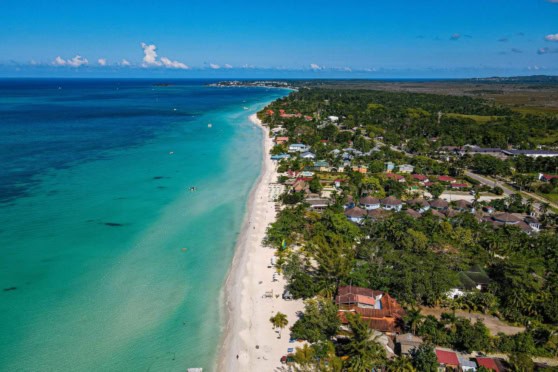
Costa Rica has long been a top choice for expats, particularly U.S. citizens, thanks to its affordable cost of living, high-quality healthcare, and year-round pleasant weather. Whether you’re planning to retire, work remotely, or relocate with your family, this Central American gem offers a welcoming atmosphere and a variety of towns where you can quickly feel safe and at home.
But naturally, many newcomers wonder: how safe is Costa Rica, and which towns offer the best balance of security, comfort, and quality of life for expats? To answer that question, this article draws on 2026 data to highlight the safest places to live in Costa Rica.

Find the Best International Medical Insurance
Costa Rica is widely regarded as the safest country in Central America. This makes it a top destination for expats seeking both security and a high quality of life.
According to the 2025 Global Peace Index, the country ranks 54th out of 163 nations for overall safety, which is significantly higher than the United States, which ranks 128th.
While these rankings point to a generally safe environment, expats should still practice common-sense safety precautions.
This is particularly important in larger urban areas and along parts of the Caribbean coast, where crime rates tend to be higher than in many Pacific coastal towns.
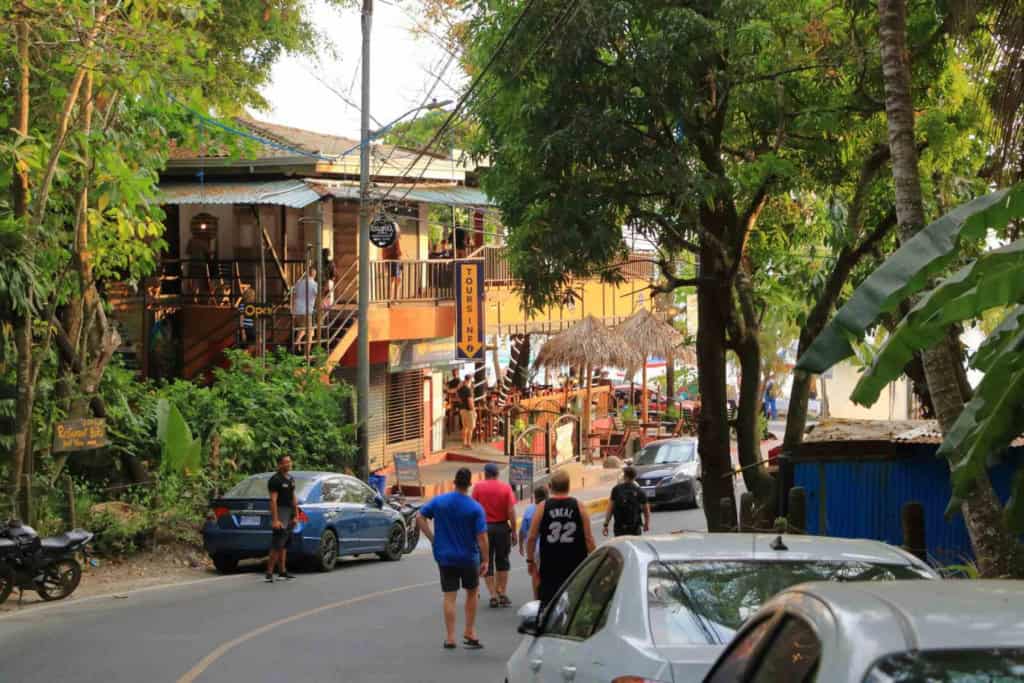
The majority of crime in Costa Rica is classified as “opportunistic acts of theft”. This includes incidents of pickpocketing, bag snatching, or petty property crimes, rather than violent offenses.
Therefore, taking simple measures can make a big difference in reducing risk. This means staying aware of your surroundings, avoiding poorly lit areas at night, and keeping valuables secure.
That said, even in a relatively safe country, accidents and unexpected health issues can happen. That’s where comprehensive health insurance in Costa Rica can provide added peace of mind.
Having immediate access to private hospitals and clinics, along with protection from high out-of-pocket costs, ensures expats can fully enjoy the unique Pura Vida lifestyle without worry.
To determine the safest towns and cities for expats in Costa Rica, we analyzed data from Numbeo’s Crime Index and Safety Index.
The Crime Index measures the level of crime in each location – covering petty theft, property crime, and violent crime – while the Safety Index reflects how safe residents and visitors feel.
Both indices use a scale from 0 to 100, with higher Crime Index values indicating more crime and higher Safety Index values indicating greater safety. This makes it easy to compare relative safety across cities and countries.
We also incorporated insights from expats currently living in these towns to capture real-world experiences. We focused on expat-friendly locations with established communities, access to healthcare, and essential amenities that make relocating both practical and comfortable.
Notably, we excluded very small towns with extremely low crime if they lack the resources and services that expats typically need.

Guide
Based on the sources above, below are the top five safest places to live in Costa Rica. These towns offer expats a blend of safety, comfort, and community.
With a moderate Crime Index of 57.8 and a Safety Index of 42.2, Tamarindo is generally considered one of the safest places to live in Costa Rica. Indeed, most crime is petty theft or property-related rather than violent.
That said, expats should still remain vigilant for pickpocketing, particularly in tourist-heavy areas. They should also take precautions when using ATMs, as opportunistic scams can occur.
Women travelers should exercise common-sense safety, avoiding isolated or poorly lit areas after dark and using reputable taxis or rideshares. Overall, Tamarindo remains a relatively safe and welcoming town for residents.
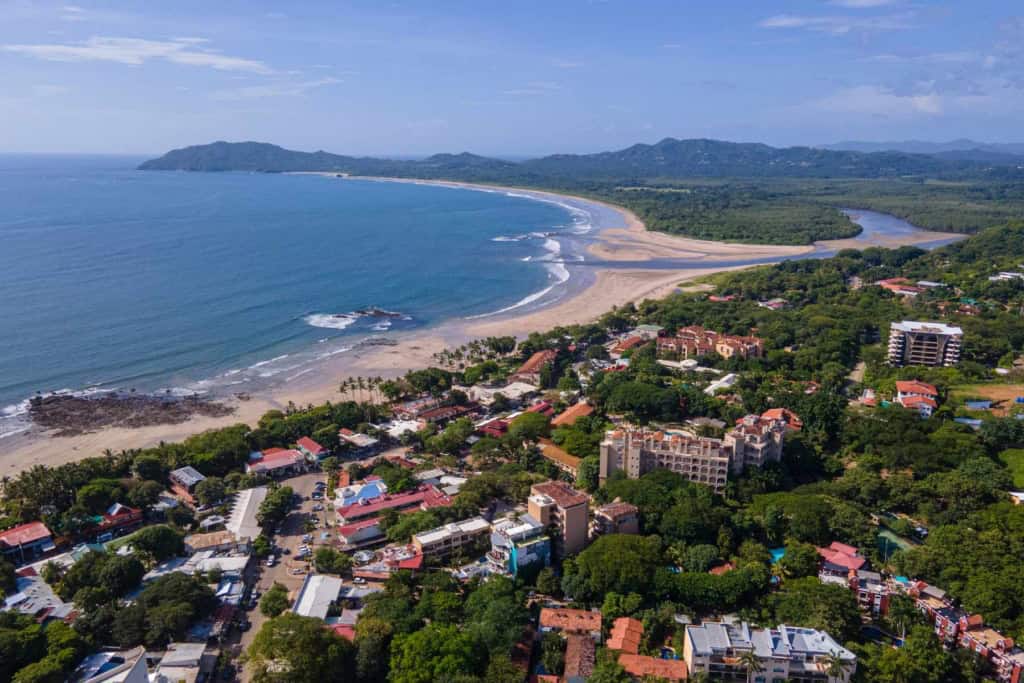
Located on Costa Rica’s Pacific coast, the town is home to several beautiful beaches. This includes the popular Playa Tamarindo, Playa Langosta, and Playa Grande.
Residents enjoy a lively lifestyle and a wide range of daily activities. This includes snorkeling, kayaking, sportfishing, surfing, sailing, and other water-based pursuits.
The town is also home to over 150 restaurants and a lively bar scene. This makes it easy to build a community and maintain an active social life.
The Arenal region is best known for its majestic lake and iconic volcano, as well as its rural lifestyle and strong sense of safety.
The town of La Fortuna and the surrounding Arenal area are generally regarded as low-crime destinations. Most safety concerns are limited to opportunistic petty theft targeting tourists rather than violent crime.
Local safety assessments and resident reports consistently describe the area as a safe place to live in Costa Rica. Police presence and strong community vigilance further contribute to a secure environment.
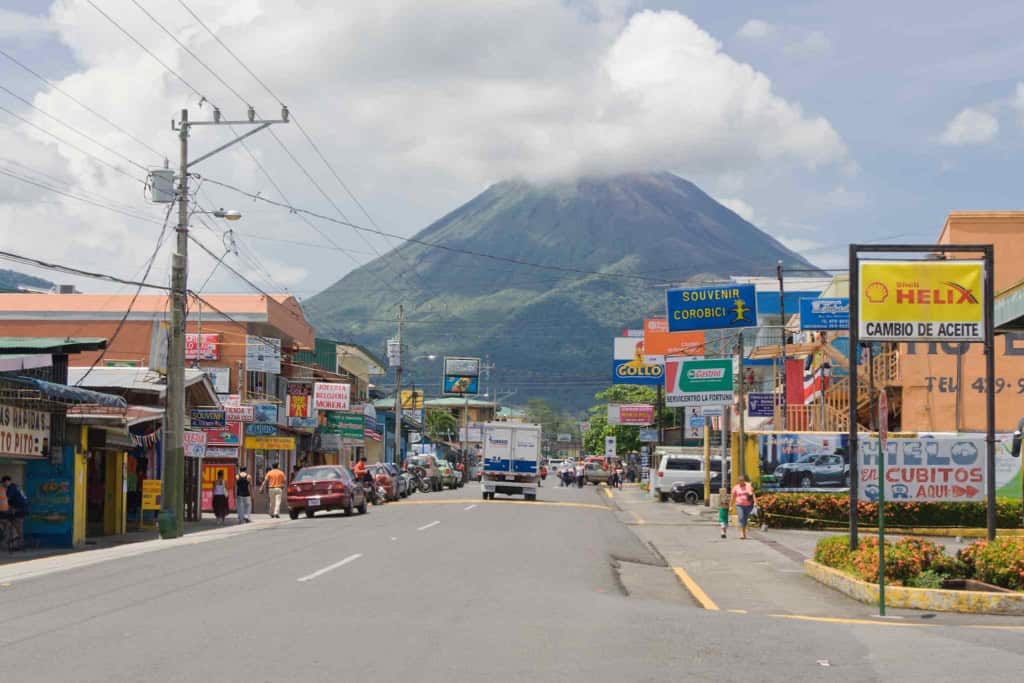
By taking basic precautions, such as keeping valuables secure and exercising caution on isolated trails, residents can enjoy a comfortable and relaxed daily life.
Arenal has a relatively large American expat community. For those considering a move, this can make settling in feel welcoming and familiar from the start. While the Arenal Volcano remains active, it is closely monitored, and serious volcanic events are rare.
From a lifestyle perspective, Arenal is especially appealing to nature lovers and adventure seekers. The region offers extensive hiking trails, thermal hot springs, zip-lining, and water activities, including kayaking and paddleboarding on Lake Arenal.
Located between San José and the Pacific coast, Atenas is a small agricultural town known for its relaxed pace of life and welcoming atmosphere.
With a moderate Crime Index of 40.5 and a Safety Index of 59.5, Atenas is one of the safest places to live in Costa Rica.
This makes it ideal for families and expats seeking a calm, secure environment. Most incidents involve opportunistic theft rather than violent crime.
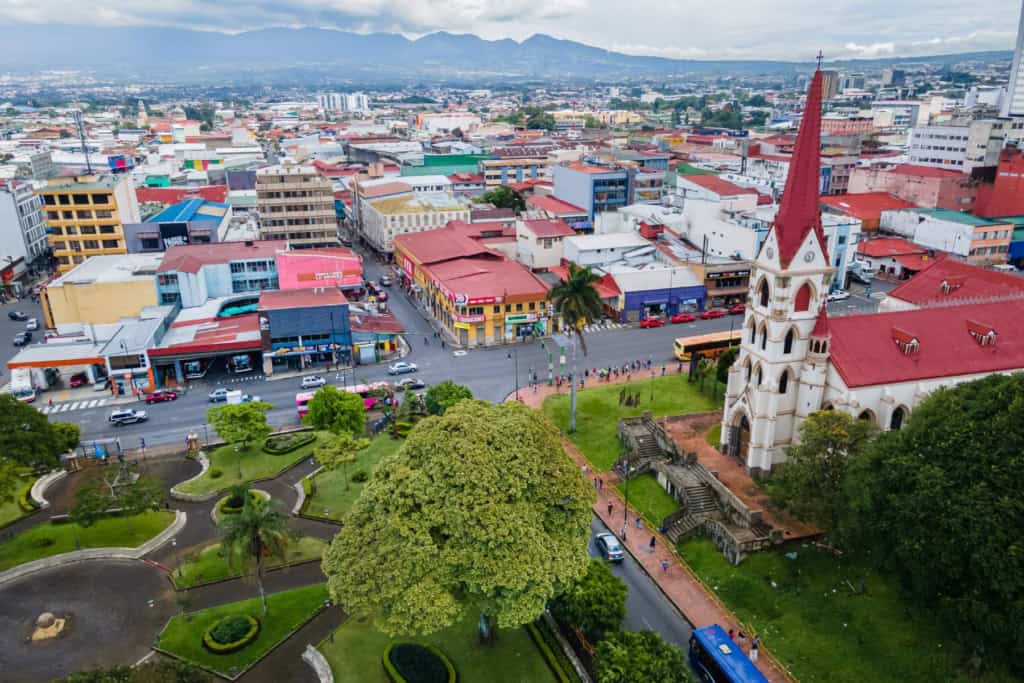
The town has several established expat communities, which makes settling in easier and helps newcomers build connections.
Atenas is about a 35-minute drive from San José, giving residents convenient access to hospitals, the airport, and other urban amenities while maintaining distance from the hustle and bustle of the capital.
The town enjoys the “perfect temperature” year-round, without extremes of heat or cold. Its mild climate and fertile volcanic soil make it ideal for growing coffee. This allows expats to enjoy fresh, local coffee every day.
Atenas also features a handful of popular restaurants and cafés, as well as a lively Friday Farmer’s Market. This provides plenty of opportunities to socialize and engage with the local community.
Heredia is the capital of the province of the same name and is located just outside San José. It offers a slower pace of life and more green space than Costa Rica’s capital city.
With a Crime Index of 50.83 and a Safety Index of 49.17, Heredia is moderately safe and generally safer than central San José, particularly for residential living.
If you work in San José, Heredia is about a 15–20-minute drive away. This provides convenient access to major hospitals, Juan Santamaría International Airport, and other essential services while avoiding the congestion of the capital.
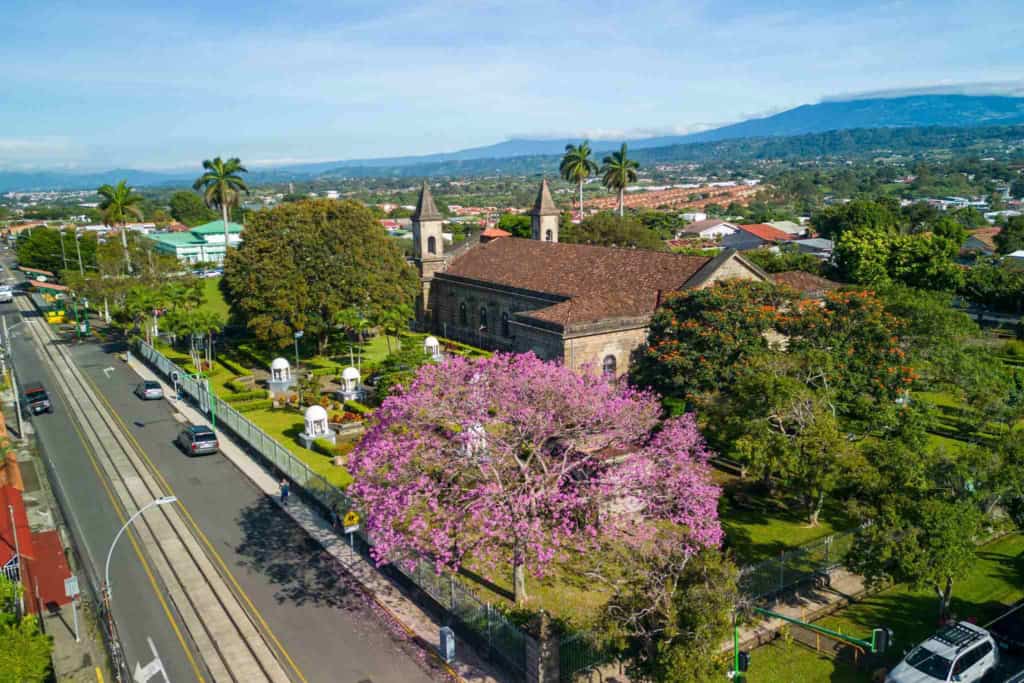
The city’s largely residential character and lower tourist traffic help reduce opportunistic crime compared to downtown San José.
Heredia is especially popular with expat families, as the American International School (AIS) is located nearby in Ciudad Cariari.
One of the oldest cities in Costa Rica, Heredia also features architecture dating back to the 18th century. This adds an element of historic charm to its safe, community-oriented atmosphere.
San José, Costa Rica’s capital, has higher overall crime rates than many other regions. This is particularly true of petty theft and pickpocketing in busy tourist and commercial areas.
However, most incidents are opportunistic rather than violent, and the city is generally safe during the day and in well-populated neighborhoods.
For expats seeking a more secure and comfortable living environment near the capital, the upscale suburbs of Escazú and Santa Ana are popular alternatives and are among the safest places to live in Costa Rica.
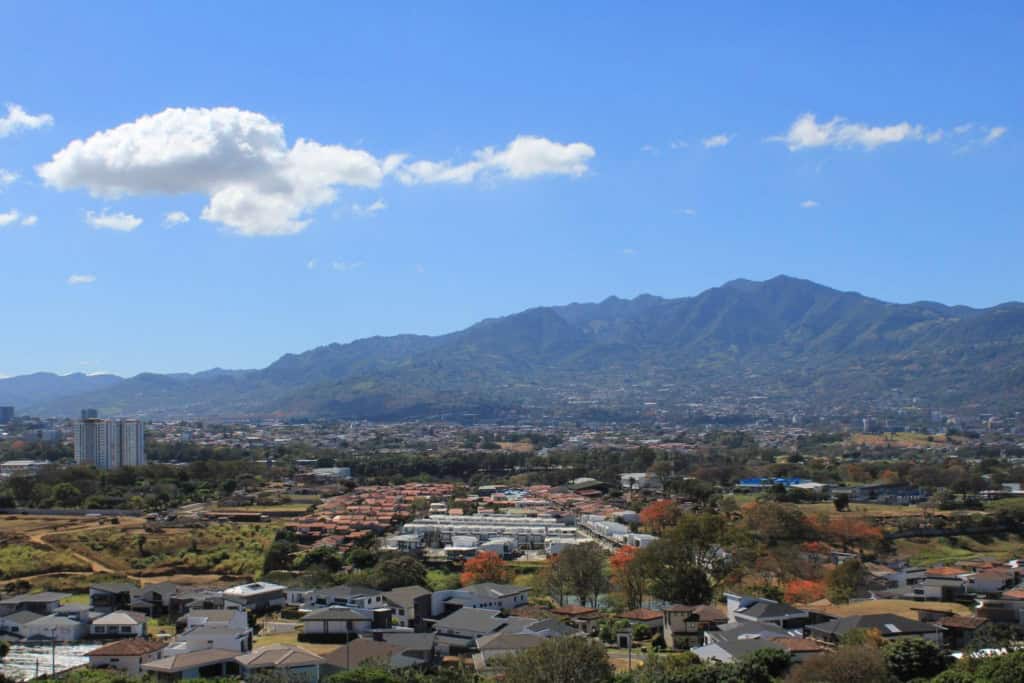
This is thanks to their gated communities, modern infrastructure, and lower exposure to street crime compared to central San José.
Escazú, in particular, is one of the wealthier suburbs. It offers convenient access to shopping malls, restaurants, bars, healthcare facilities, and other everyday services, all within a short drive of downtown San José. Strong expat networks in the area also help newcomers settle in and navigate neighborhood safety.
With a Crime Index of 55.6 and a Safety Index of 44.4, San José is considered moderately safe overall. Meanwhile, nearby suburbs like Escazú provide added peace of mind for residents who prioritize security alongside urban convenience.
In addition to the five safest places to live in Costa Rica mentioned above, several other locations offer expats a combination of safety, community, and lifestyle benefits. These include:

Country Guides
While Costa Rica is generally safe for expats, certain neighborhoods have higher rates of petty theft and opportunistic crime.
These areas are generally safe during the day and on well-populated streets. That said, expats should still approach them with more caution compared to other towns and neighborhoods in the country:
Even in these higher-risk neighborhoods, practicing basic precautions, such as securing valuables, traveling in groups, and using trusted transportation, can significantly reduce your risk.
Costa Rica is generally safe for expats, but practicing common-sense precautions can help ensure a smooth and secure experience. Here are some key tips to keep in mind:
Guide
Making a life-changing decision to move to another country is never easy, especially when safety is a concern.
However, in Costa Rica, knowing which areas to avoid, practicing common sense, and connecting with local expat communities is usually enough to live there happily and without issues.
Of course, having solid health insurance in Costa Rica provides extra peace of mind, ensuring that you and your family are protected and can focus on enjoying your new life without worry.
And once you’re settled, Costa Rica truly lives up to its reputation as the “Land of Pura Vida.” With its natural beauty, welcoming communities, and generally safe environment, it offers expats a unique opportunity to enjoy a high quality of life in a variety of settings.
Whether you prefer coastal beaches, mountain towns, or lively suburban life near the capital, there’s a place for every lifestyle and pace of life.
Each town combines safety, community, and access to essential services. This gives newcomers the confidence to settle in, explore, and thrive, while making the most of everything Costa Rica has to offer.
Find the Best International Medical Insurance