
The Ultimate International Travel Checklist
Plan your overseas trip with ease using this essential international travel checklist, covering visas, flights, insurance, packing, and more.

International medical cover for expats and their families.
Medical and trip cancellation coverage for international travel.
Life insurance for globally mobile individuals living or working abroad.
Comprehensive international medical coverage for groups.
Medical, accident, and liability protection for global travel.
Financial protection for employees worldwide.
Most Popular Country Guides
Healthcare, insurance, and living insights to plan life and travel in each destination.
Healthcare, safety, and practical guidance for living abroad.
Tips and guidance for safer, smarter international travel.
Resources for global mobility, HR, and international teams.
Discover surprising World Cup facts and essential travel advice for attending the 2026 tournament hosted by the U.S., Canada, and Mexico.

Around the world, people are passionate about football, though depending on where you’re from, you might call it something else. In the United States and Canada, “football” typically refers to the hard-hitting, gridiron version played with helmets and touchdowns. But everywhere else, it’s the world’s game: played with a round ball, two goals, and the hopes of entire nations on the line.
Whether you grew up kicking a ball through the streets of Buenos Aires, Dakar, Tokyo, or Berlin – or are just discovering the magic of the sport – there’s no event bigger than the FIFA World Cup.
In 2026, the tournament returns in spectacular fashion, jointly hosted by the United States, Canada, and Mexico – the first time three countries will share the honor. It’s a celebration that transcends language and borders: a month-long showcase of skill, pride, and unforgettable moments. From packed stadiums in Mexico City to buzzing fan zones in Toronto and roaring crowds in New York, the world will come together to witness football at its finest.
For diehard fans and first-timers alike, here are 12 surprising facts about why the World Cup remains the planet’s most beloved sporting event – plus travel advice for those lucky enough to attend in 2026.

Get ready to discover some fascinating insights that show just how unique and massive the World Cup truly is. Whether you’re a lifelong fan or just starting to follow the beautiful game, these surprising details will deepen your appreciation for football’s biggest stage.
FIFA claims the World Cup is the “largest single-event sporting competition in the world,” and it’s true. Unlike the NFL, which has 32 teams competing for a chance at the Super Bowl, over 200 national teams enter the qualification process for a chance to reach the World Cup final tournament. In 2026, the final tournament will feature an expanded field of 48 teams.
The Super Bowl might be broadcast worldwide, but it still hasn’t reached the total viewing audience the FIFA World Cup final had. The 2022 final in Qatar reached an estimated 1.5 billion viewers globally, dwarfing the Super Bowl’s 115 million. When FIFA says it’s the biggest event in the world, it’s not exaggerating!
Like the Olympics, the FIFA World Cup is only played every four years. However, while the Olympics encompass many sports, the World Cup focuses on just one, and it’s one that nearly every country participates in. During the three years in between, teams compete for one of the 48 places available in the final month-long competition.
Since the FIFA World Cup is a national competition, the tournament was not held in 1942 or 1946 due to World War II. These cancellations have been the only ones in the competition’s 94-year history.
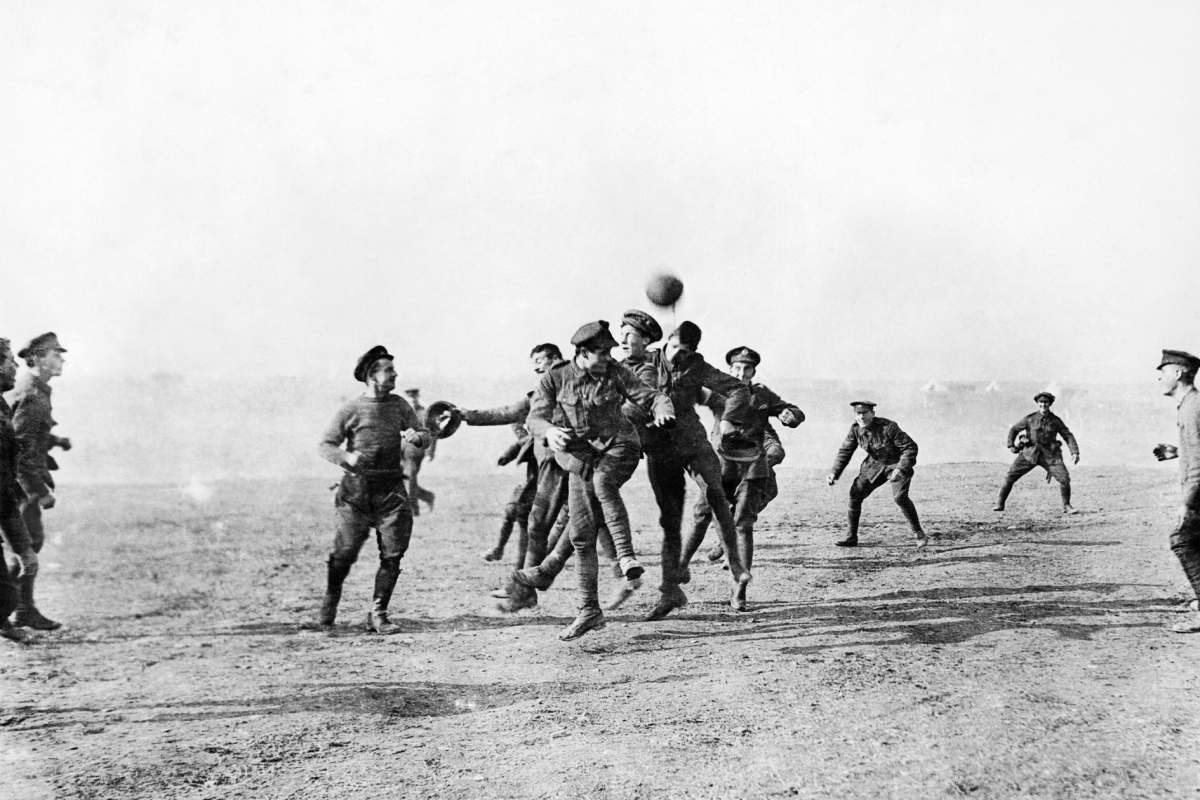
However, football did make an appearance during World War I, when British and German soldiers famously paused fighting on Christmas Eve in 1914 to share carols, exchange small gifts, and play an informal match in no man’s land. The Christmas Truce, as it became known, was a brief but powerful reminder of the sport’s unifying spirit.
The U.S., Canada, and Mexico will co-host the 2026 World Cup, the first time three countries have done so. Fans can look forward to packed stadiums across iconic cities, from Toronto to Mexico City, and Los Angeles to New York.
During the 2010 World Cup finals held in South Africa, fans consumed 390,600 hot dogs and washed them down with 198,129 gallons of beer at official venues alone. North American spectators will likely top that!
Russian goalkeeper Lev Yashin played in three World Cups from 1958 to 1966. When asked what made him such a formidable contender, Yashin replied that he liked a cigarette to calm his nerves and a shot of alcohol to tone his muscles. Not exactly part of modern sports science, but it worked for him.
Some players might pull off their shirts at the end of a game, but in 1950, India qualified for the World Cup and declined to play. Team finances were one reason, but the team played barefoot and didn’t want to wear the mandatory footwear.
Italy’s Giuseppe “Peppino” Meazza made World Cup history in 1938 when his penalty kick took Italy to the final. What was so special about that? Meazza’s shorts fell as he ran to the ball. He quickly pulled them up and kicked anyway, surprising Brazil’s goalie, who failed to block the shot, helping Italy secure a win and eventually go on to win the tournament.
World Cup victories don’t come in threes. No team has ever won the championship three times in a row. Only Brazil (1958 and 1962) and Italy (1934 and 1938) have pulled off back-to-back titles. While repeat champions are fairly common, a true three-peat remains out of reach.
No single team has ever won the World Cup three times in a row, but Brazil’s Pelé — arguably the greatest footballer of all time — won three titles on his own. He remains the only player in history to do so.

His legacy is so legendary that he has been honored on postage stamps in Brazil and worldwide, including one celebrating his 1,000th goal and others commemorating his World Cup achievements.
The 2030 FIFA World Cup locations have been set. For the first time, three countries from two continents will host the competition: Morocco, Portugal, and Spain. To commemorate the 100th anniversary of the first World Cup, Argentina, Paraguay, and Uruguay will each host one match.
Whether it’s your first World Cup or your fifth, attending this incredible event is an adventure, but traveling abroad always comes with risks. That’s why travel insurance is essential to protect yourself, your family, and your friends throughout the journey.
Most domestic health insurance plans don’t cover medical expenses overseas or emergency medical evacuations. Without proper coverage, a sudden illness or accident could cost tens of thousands of dollars. Simply put: if you can’t afford travel insurance, you likely can’t afford to travel safely.
Lock in your coverage as early as possible! Many of the best policies tailored specifically for World Cup travelers sell out quickly or have strict purchase deadlines. Don’t wait until the last minute – secure your coverage ahead of time so you can focus on the excitement, not the what-ifs.
Before traveling, visit your doctor at least eight weeks in advance to discuss vaccinations and potential health risks, especially if you have pre-existing medical conditions.
The World Health Organization (WHO) and the Centers for Disease Control and Prevention (CDC) offer valuable, up-to-date health information and vaccination recommendations.
It’s also important to keep an eye on official travel advisories from your government and international health agencies as your trip approaches, since conditions can change rapidly.
For instance, at past World Cups like Qatar 2022, visitors faced risks from insect-borne diseases such as yellow fever, malaria, and dengue fever, and were advised to:
Medical facilities in major cities usually meet high standards, but care outside those areas can be limited and expensive. Hospitals may require cash upfront for treatment, so having travel insurance that covers medical evacuation is critical.
The roar of the crowds and the passion of football fans worldwide make the World Cup an unforgettable experience. While some of these facts were fun and others more serious, they all show that football – or soccer to Americans – is truly one of the most celebrated sports on Earth.
The global competition and national pride rival that of the Olympics, while its passionate fans match the fervor of NCAA and NFL football. FIFA was right when it said the World Cup is the biggest single sporting event in the world.
And if you’re lucky enough to attend in 2026, prepare well, soak in every moment, and join a worldwide celebration unlike any other. Just be sure you have the right coverage so you can focus on the excitement without any worries.
Curious about the World Cup’s history, format, and global impact? These trusted resources offer helpful background for fans at every level: